Skip to content

ChatGPT vs Google Gemini

ChatGPT is better for creative writing and conversational tasks; Gemini wins on multimodal reasoning and integration with Google Workspace.

ChatGPT vs Google Gemini: The Verdict

⚡ Quick Verdict:

ChatGPT is better for creative writing and conversational tasks; Gemini wins on multimodal reasoning and integration with Google Workspace.

ChatGPT and Google Gemini are the two AI assistants that most people will actually use daily, and the choice between them comes down to whether you live inside Google's ecosystem or not. ChatGPT is the more polished conversationalist with a deeper plugin ecosystem; Gemini is the better researcher with native access to Google's entire product suite. For most knowledge workers, the right answer is to subscribe to one and use the other's free tier for its specific strengths.

Architecture and Philosophy Differences

OpenAI launched ChatGPT in November 2022 and built it conversation-first. The entire product is designed around a chat interface where you iterate on ideas, refine outputs, and build context over a session. GPT-4o (the current flagship model as of 2024) was trained with a heavy emphasis on instruction-following, creative generation, and maintaining coherent long conversations. The architecture prioritizes being helpful and engaging over being cautious or hedging.

Google launched Bard in March 2023 and rebranded it to Gemini in February 2024. Gemini is built on Google's multimodal foundation models (Gemini 1.5 Pro and Ultra), which were designed from the ground up to process text, images, video, and audio natively rather than bolting on multimodal capabilities after the fact. The philosophical difference is significant: Google built Gemini to be an information retrieval and reasoning system first, a conversationalist second. It has native access to Google Search, which means it can ground its responses in real-time web data rather than relying solely on training data.

The training approaches differ meaningfully. OpenAI uses extensive RLHF (Reinforcement Learning from Human Feedback) to make ChatGPT engaging and creative, sometimes at the cost of accuracy. Google uses a combination of RLHF and their own grounding techniques that prioritize factual accuracy, sometimes at the cost of personality. You'll notice this immediately: ChatGPT gives you confident, well-structured prose. Gemini gives you more hedged, citation-heavy responses that feel more like a research assistant than a creative partner.

Feature Deep-Dive

Conversational Quality: ChatGPT produces noticeably more polished prose. Ask both to write a blog post, email, or creative piece, and ChatGPT's output requires less editing. It better understands tone, audience, and implicit instructions. Gemini tends toward more generic, safe outputs that read like they were written by committee. For any task where the quality of the writing itself matters, ChatGPT has a clear edge.

Real-Time Information: Gemini wins decisively here. Because it has native Google Search integration, it can answer questions about events that happened today, check current stock prices, find recent news articles, and provide cited sources. ChatGPT added browsing capabilities, but the implementation feels bolted-on compared to Gemini's seamless integration. If you regularly need current information, Gemini saves you from the "my knowledge cutoff is..." frustration.

Context Window: Gemini 1.5 Pro offers a 1-million-token context window (with 2-million available in some configurations). ChatGPT's GPT-4o offers 128K tokens. This is not a subtle difference—Gemini can process entire books, full codebases, or hours of video in a single prompt. For tasks like "summarize this 500-page PDF" or "find the bug in this 50,000-line codebase," Gemini's context window is a genuine competitive advantage that ChatGPT cannot match.

Multimodal Capabilities: Both handle images well, but Gemini's multimodal processing is more deeply integrated. Gemini can analyze video content natively, understand audio, and process complex visual reasoning tasks (charts, diagrams, handwritten notes) with higher accuracy. ChatGPT handles images through GPT-4V and generates images via DALL-E 3, giving it the edge on image creation. Gemini can generate images through Imagen but with more restrictions.

Code Generation: Roughly comparable for day-to-day coding questions. ChatGPT's Code Interpreter (Advanced Data Analysis) lets you execute Python code in a sandbox, iterate on data analysis, and create visualizations—something Gemini cannot do natively. For complex multi-step programming tasks that benefit from execution and debugging, ChatGPT is more practical. Gemini's larger context window helps when you need to understand or refactor large codebases.

Custom AI Workflows: ChatGPT has over 3 million custom GPTs in its store, covering everything from academic research to recipe generation to specialized coding assistants. You can build your own GPTs with custom instructions, knowledge files, and API actions. Gemini has Gems (custom personas) but the ecosystem is far smaller and less capable. If you want to build specialized AI tools without coding, ChatGPT's platform is years ahead.

Google Workspace Integration: Gemini integrates directly with Gmail, Google Docs, Sheets, Slides, Drive, and YouTube. It can summarize your email threads, draft responses in your writing style, analyze spreadsheets, create presentations from documents, and search across your Drive files. This integration is genuinely useful if you're a Google Workspace user—it turns Gemini into a personal assistant that knows your work context. ChatGPT has no equivalent integration with any productivity suite.

Memory and Personalization: ChatGPT's memory feature learns your preferences, writing style, and context across conversations. It remembers that you prefer Python over JavaScript, that you work at a startup, or that you like concise responses. Gemini has similar capabilities within Google's ecosystem (it knows your calendar, emails, etc.) but its cross-conversation memory for preferences is less developed.

Pricing Reality

ChatGPT Free gives you access to GPT-4o mini with message caps that reset every few hours. You get basic functionality but hit limits quickly during heavy use. ChatGPT Plus costs $20/month and gives you GPT-4o with higher message limits, DALL-E image generation, Code Interpreter, custom GPTs, and browsing. ChatGPT Team is $25/user/month (annual) with higher limits and workspace features. ChatGPT Enterprise is custom pricing with unlimited usage, admin controls, and data privacy guarantees.

Gemini Free gives you Gemini 1.5 Flash (a faster, lighter model) with generous daily limits. It's arguably more capable than ChatGPT's free tier for factual queries. Gemini Advanced costs $20/month bundled with Google One AI Premium, which includes 2TB of Google storage, Gemini in Gmail/Docs/Sheets, and access to Gemini 1.5 Pro and Ultra models. The 2TB storage alone costs $10/month separately, making the AI access effectively $10/month if you need the storage anyway.

For API access (developers building applications): OpenAI's GPT-4o costs $5/1M input tokens and $15/1M output tokens. Google's Gemini 1.5 Pro costs $3.50/1M input tokens and $10.50/1M output tokens (under 128K context). Google is consistently cheaper on API pricing, especially for high-volume applications.

Ecosystem and Integrations

ChatGPT's ecosystem is broader and more mature. The custom GPT marketplace, plugin system (being deprecated in favor of GPTs with actions), and API have spawned thousands of third-party tools. Zapier, Make, and virtually every automation platform integrates with OpenAI's API. The developer community is massive—more tutorials, more libraries, more examples.

Gemini's ecosystem is narrower but deeper within Google's world. If your organization uses Google Workspace, Gemini's integration is unmatched. It works inside the apps you already use rather than requiring you to switch to a separate chat interface. Google's Vertex AI platform provides enterprise-grade access to Gemini models with fine-tuning, grounding, and deployment capabilities that compete with OpenAI's enterprise offerings.

Third-party tool integration favors ChatGPT significantly. Most SaaS products that added AI features built on OpenAI first. The mindshare advantage means ChatGPT-compatible tools outnumber Gemini-compatible ones by a wide margin.

Learning Curve and Onboarding

Both are immediately usable—type a question, get an answer. The learning curve differences emerge with advanced features. ChatGPT's custom GPTs, system prompts, and API require some experimentation to use effectively. Gemini's Google Workspace integration works automatically if you're already in that ecosystem—there's nothing to configure.

For prompt engineering, ChatGPT responds better to detailed system prompts and structured instructions. Gemini responds better to clear, direct questions and benefits from specifying the format you want. Neither requires technical expertise for basic use, but power users will spend time learning each tool's quirks.

Performance and Reliability

ChatGPT has occasional capacity issues during peak hours, especially for free users. Response times for GPT-4o are generally 2-5 seconds for short responses, longer for complex generation. The service has had notable outages (several hours of downtime a few times per year) but is generally reliable.

Gemini benefits from Google's infrastructure and rarely has availability issues. Response times are comparable to ChatGPT for most queries. The 1M token context window queries take longer (10-30 seconds for very large inputs) but this is expected given the processing required.

Both services rate-limit free users aggressively during peak times. Paid tiers on both platforms provide consistent, fast access.

When to Choose ChatGPT

Choose ChatGPT if you do creative writing, content marketing, or any work where prose quality matters. ChatGPT's outputs are more engaging, better structured, and require less editing. Choose it if you want to build custom AI workflows using GPTs—the ecosystem has no equivalent. Choose it if you need code execution and data analysis through Code Interpreter. Choose it if you work across multiple ecosystems (not exclusively Google) and want the most versatile general-purpose assistant. Choose it if you're a developer building AI-powered applications—OpenAI's API documentation, community, and tooling are more mature.

When to Choose Gemini

Choose Gemini if you live in Google Workspace and want AI that understands your emails, documents, and calendar without manual context-sharing. Choose it if you regularly need current, factual information with citations—Gemini's Google Search grounding is genuinely superior. Choose it if you work with very long documents (legal contracts, research papers, entire codebases) that exceed 128K tokens. Choose it if you process lots of video or audio content that needs analysis. Choose it if you're already paying for Google One storage—the bundled pricing makes Gemini Advanced effectively cheaper than ChatGPT Plus.

The Honest Trade-offs

ChatGPT is more creative but less accurate on facts. It will confidently generate plausible-sounding information that's wrong, especially about recent events or niche topics. You need to verify its factual claims. Gemini is more accurate but less engaging—its outputs often feel safe and corporate, requiring you to push it for more personality or creativity.

ChatGPT's ecosystem lock-in is real: custom GPTs, conversation history, and workflows don't transfer to other platforms. Gemini's lock-in is through Google Workspace integration—the more you use it with your Google data, the harder it is to switch. Neither company has strong data portability.

The privacy story differs. OpenAI uses your conversations to train models unless you opt out (or use the API/Enterprise tier). Google uses your Gemini conversations for training unless you turn off Gemini Apps Activity. Neither is great for sensitive data on consumer tiers. Enterprise tiers on both platforms offer data isolation.

Long-term, both companies are shipping improvements at breakneck speed. Today's comparison will be partially outdated in six months. The safest strategy is to maintain accounts on both, use each for its strengths, and avoid deep lock-in to either platform's proprietary features.

Advanced Use Cases and Edge Cases

For academic research, Gemini's citation capabilities and Google Scholar integration make it the stronger choice. It can find relevant papers, summarize findings, and provide properly attributed information. ChatGPT is better for synthesizing research into coherent narratives and generating literature review drafts, but its citations are less reliable—it sometimes fabricates paper titles or misattributes findings.

For business intelligence and data work, ChatGPT's Code Interpreter handles CSV analysis, creates charts, runs statistical tests, and iterates on data exploration in ways that Gemini cannot match. You upload a spreadsheet and ChatGPT writes Python to analyze it, shows you the results, and refines based on your feedback. Gemini can discuss data concepts and suggest approaches, but cannot execute the analysis itself.

For multilingual work, both handle major languages well, but Gemini has a slight edge in translation accuracy for less-common language pairs due to Google Translate's training data. ChatGPT produces more natural-sounding translations for creative content. For technical documentation translation, Gemini's accuracy is preferable. For marketing copy localization, ChatGPT's creative fluency is better.

For education and tutoring, ChatGPT's conversational style makes it a more engaging tutor—it adapts explanations, asks follow-up questions, and maintains a teaching dialogue naturally. Gemini is better for fact-checking student work and providing cited references. The ideal educational workflow uses both: Gemini for research and fact-finding, ChatGPT for explanation and practice.

For legal and compliance work, Gemini's grounding in search results and tendency toward hedged, careful responses makes it more appropriate for initial legal research. ChatGPT is better for drafting legal documents once you have the research, as its instruction-following produces more precisely formatted output. Neither should be trusted for legal advice without human review, but Gemini's citations make verification easier.

For content creators and marketers, ChatGPT is the clear winner. It generates social media posts, email sequences, ad copy, blog outlines, and video scripts with more personality and engagement. Its DALL-E integration creates accompanying images. Custom GPTs can be trained on your brand voice. Gemini can help with SEO research and competitive analysis (leveraging Google Search data), but its creative output is less compelling for marketing purposes.

The Enterprise Perspective

For enterprise deployments, both offer team and enterprise tiers with data privacy guarantees. OpenAI's Enterprise tier provides unlimited GPT-4o access, longer context windows, admin controls, and SOC 2 compliance. Google's Gemini Enterprise (through Google Workspace) provides similar guarantees within the Google ecosystem, plus data residency options and integration with Google's security infrastructure.

The enterprise choice often comes down to existing vendor relationships. Microsoft-invested organizations (Azure customers) lean toward OpenAI/ChatGPT due to the Microsoft-OpenAI partnership and Azure OpenAI Service. Google Cloud customers lean toward Gemini due to Vertex AI integration and unified billing. Organizations without strong cloud vendor preferences should evaluate based on use case fit rather than vendor alignment.

Data governance is a critical enterprise consideration. ChatGPT Enterprise guarantees that your data is not used for training and provides a dedicated instance. Gemini for Workspace provides similar guarantees within Google's data processing agreements. Both comply with GDPR, but the specifics of data handling, retention, and deletion differ. Enterprise procurement teams should review each provider's Data Processing Addendum carefully.

The Mobile Experience

ChatGPT's mobile apps (iOS and Android) are excellent—fast, full-featured, and support voice conversations that feel natural. The voice mode lets you have spoken conversations with the AI, useful for brainstorming while walking or driving. The mobile app supports all features including image upload, Code Interpreter, and custom GPTs. It's one of the best AI mobile experiences available.

Gemini's mobile experience is integrated into the Google ecosystem rather than being a standalone app. On Android, Gemini replaces Google Assistant as the default AI, accessible from the home button or "Hey Google." On iOS, it's available through the Google app. The integration means Gemini can control your phone, set reminders, and interact with Google apps natively. For Android users, this system-level integration is more convenient than opening a separate ChatGPT app.

The voice interaction models differ. ChatGPT's voice mode is a dedicated conversational experience—you're talking to the AI. Gemini's voice is more assistant-like—you're giving commands and asking questions. For extended creative conversations, ChatGPT's voice mode is better. For quick queries and phone control, Gemini's system integration is more practical.

Future Trajectory and Strategic Considerations

OpenAI is moving toward AGI (Artificial General Intelligence) as its stated mission, with each model generation representing a step toward more general capability. The product strategy is to be the default AI platform for everything—text, images, video, code, voice, and eventually autonomous agents. ChatGPT will likely become more capable and more expensive over time, with the free tier becoming increasingly limited.

Google is integrating Gemini into every Google product—Search, Workspace, Android, Chrome, Maps, and YouTube. The strategy is to make AI invisible and ubiquitous within the Google ecosystem rather than a separate product you visit. Long-term, Gemini may become less of a standalone chatbot and more of an ambient intelligence layer across all Google services.

For users choosing between them today, the strategic question is: do you want a powerful standalone AI tool (ChatGPT) or an AI layer integrated into your existing productivity suite (Gemini)? Both approaches have merit, and both companies have the resources and talent to execute their vision. The safest bet remains maintaining familiarity with both.

The Verdict for Specific Professions

Software engineers should default to ChatGPT for Code Interpreter and the broader plugin ecosystem, but keep Gemini available for analyzing large codebases that exceed 128K tokens. Product managers benefit more from Gemini's Google Workspace integration (summarizing meeting notes in Docs, analyzing data in Sheets) and real-time research capabilities. Content marketers should choose ChatGPT for its superior creative writing and DALL-E image generation. Researchers and academics benefit from Gemini's citation capabilities and massive context window for processing papers. Sales professionals get more value from Gemini if they use Google Workspace (email drafting, meeting prep from Calendar) or ChatGPT if they need creative pitch materials and custom GPTs for objection handling.

Ultimately, the $20/month subscription to either platform pays for itself within the first week for any knowledge worker who uses it daily. The productivity gains from having a capable AI assistant—whether for drafting emails, analyzing documents, generating code, or researching topics—far exceed the cost. The question isn't whether to subscribe, but which platform aligns better with your daily workflow and existing tool ecosystem.

A Note on Model Updates and Timing

This comparison reflects the state of both platforms as of late 2024. Both OpenAI and Google ship major model updates every 3-6 months, and each update can shift the competitive balance. GPT-4o was a significant leap for ChatGPT; Gemini 1.5 Pro's context window was a significant leap for Google. Future releases (GPT-5, Gemini 2.0) will likely shift the balance again. The structural differences—ecosystem integration, product philosophy, pricing model—are more durable than any specific model capability comparison. Choose based on ecosystem fit and workflow alignment rather than benchmark scores that will change with the next model release.

The most pragmatic approach for professionals who depend on AI daily: subscribe to your primary choice, maintain a free account on the other, and re-evaluate every 6 months when major model updates ship. The switching cost between AI assistants is low (unlike switching note-taking apps or project management tools), so staying flexible is both easy and wise. Neither platform will be the definitively "better" choice forever—the lead will continue alternating with each major release, making flexibility and familiarity with both platforms your best long-term strategy for maximizing AI productivity.

Who Should Use What?

🎯
For creative writing and content generation: ChatGPT
Superior instruction-following and more natural, polished prose output across fiction, marketing copy, and technical writing. The difference is immediately noticeable in side-by-side comparisons.
🎯
For research with current information: Gemini
Native Google Search integration provides real-time, cited information without hallucination-prone knowledge cutoffs. Particularly strong for news, market data, and recent events.
🎯
For analyzing long documents or codebases: Gemini
1M token context window handles entire books, legal contracts, or large repositories in a single prompt where ChatGPT would require chunking.
🎯
For building custom AI workflows: ChatGPT
Custom GPTs, API ecosystem, and the GPT Store with 3M+ specialized assistants offer extensibility that Gemini Gems cannot match.
🎯
For Google Workspace power users: Gemini
Direct integration with Gmail, Docs, Sheets, and Drive means Gemini understands your work context without manual copy-pasting.
🎯
For data analysis with code execution: ChatGPT
Code Interpreter runs Python in a sandbox, creates charts, processes uploaded files, and iterates on analysis—a capability Gemini lacks entirely.

Last updated: May 2026 · Comparison by Sugggest Editorial Team

Feature ChatGPT Google Gemini
Sugggest Score 35 32
User Rating ⭐ 3.6/5 (62) ⭐ 3.6/5 (53)
Category Ai Tools & Services Ai Tools & Services
Pricing free free
Ease of Use 4.7/5 4.2/5
Features Rating 3.8/5 3.4/5
Value for Money 3.9/5 4.3/5
Customer Support 2.5/5 2.7/5

See them in action

ChatGPT
Screenshot not yet available
Google Gemini
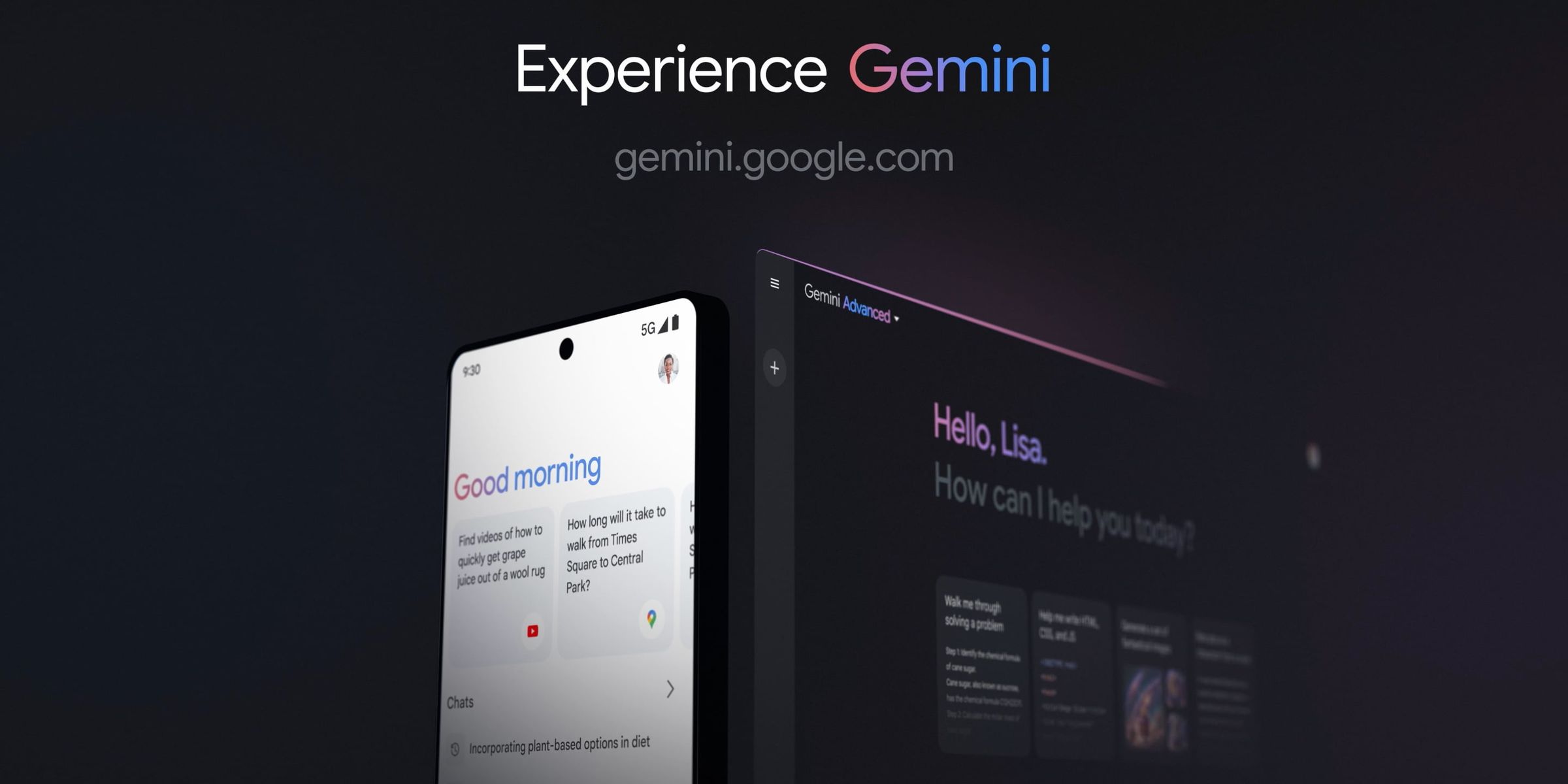
Google Gemini screenshot

Feature comparison at a glance

Feature ChatGPT Google Gemini
Conversational AI
Natural language processing
Text generation
Question answering
AI-powered conversational interface
Dynamic and engaging chat experience
Creativity and inspiration prompts
Efficient planning and organization tools

Product Overview

ChatGPT
ChatGPT

Description: ChatGPT is a language model developed by OpenAI that is powered by the GPT (Generative Pre-trained Transformer) architecture. It is designed for natural language understanding and generation, making it capable of engaging in conversations, answering questions, and providing context-aware responses. ChatGPT is part of the OpenAI GPT model series and has been fine-tuned for interactive and conversational use.

Type: software

Pricing: free
Google Gemini
Google Gemini

Description: Embark on a transformative journey with Google AI as you enter a dynamic chat platform that transcends traditional boundaries. From sparking creativity through engaging conversations to efficient planning and continuous learning, our platform seamlessly integrates artificial intelligence to enhance every interaction. Whether you're a wordsmith seeking inspiration or a meticulous planner aiming for organizational excellence, the intuitive interface adapts to your needs. Immerse yourself in thought-provoking discussions and curated content, allowing Google AI to assist you in acquiring new skills and insights. This is more than just a chat; it's a doorway to a world where writing, planning, learning, and more are effortlessly woven together, creating a holistic and productive experience.

Type: software

Pricing: free

Key Features Comparison

ChatGPT
ChatGPT Features
  • Conversational AI
  • Natural language processing
  • Text generation
  • Question answering
  • Summarization
  • Translation
  • Code generation
Google Gemini
Google Gemini Features
  • AI-powered conversational interface
  • Dynamic and engaging chat experience
  • Creativity and inspiration prompts
  • Efficient planning and organization tools
  • Continuous learning through curated content
  • Intuitive and adaptive interface
  • Thought-provoking discussions
  • Writing assistance
  • Skill and insight acquisition

Pros & Cons Analysis

ChatGPT
ChatGPT

Pros

  • Very human-like responses
  • Wide knowledge base
  • Fast and clever responses
  • Free to use
  • Easy to chat with
  • Helpful for brainstorming and ideation

Cons

  • Potential for generating misinformation
  • Limited knowledge of very recent events
  • May require monitoring for appropriate use
  • Risk of plagiarism
  • Not connected to the real world
Google Gemini
Google Gemini

Pros

  • Engaging and intuitive interface
  • AI-powered features enhance productivity
  • Sparks creativity through conversations
  • Provides efficient planning and organization
  • Curated content for continuous learning
  • Adapts to user needs and goals

Cons

  • May not appeal to users wanting simple chat
  • Heavy reliance on AI could limit control
  • Privacy concerns around data collection
  • Could become overwhelming for some users
  • Limited integration with non-Google services

Pricing Comparison

ChatGPT
ChatGPT
  • free
Google Gemini
Google Gemini
  • free

Frequently Asked Questions

Is ChatGPT or Gemini more accurate?

Gemini is more accurate for factual and current information due to Google Search grounding. ChatGPT is more reliable for following complex instructions precisely and producing consistent outputs. Both hallucinate, but Gemini hallucinates less on facts while ChatGPT hallucinates less on task execution.

Which is better for coding?

ChatGPT has a practical edge with Code Interpreter for iterative debugging and execution in a sandbox environment. Gemini handles larger codebases due to its 1M token context window. For day-to-day coding questions and explanations, both are comparable in quality.

Is the free tier of Gemini or ChatGPT better?

Gemini free gives access to Gemini 1.5 Flash with generous limits and Google Search grounding. ChatGPT free uses GPT-4o mini with tighter message caps. Gemini free is arguably more capable for research tasks, but ChatGPT free has better UX, conversation memory, and creative output quality.

Can Gemini replace ChatGPT entirely?

For Google Workspace power users who primarily need research and document analysis, yes. For creative professionals, developers using Code Interpreter, plugin users, or those who built workflows around custom GPTs, ChatGPT remains necessary. Most power users maintain paid accounts on both.

Which has better privacy and data handling?

Neither is great on consumer tiers—both use your conversations for training by default. Enterprise tiers on both platforms offer data isolation and no-training guarantees. Google retains Gemini conversations for 18 months by default; OpenAI retains for 30 days on API, longer on consumer.

Is the $20/month subscription worth it for either?

If you use AI daily for work, absolutely yes for whichever aligns with your ecosystem. Gemini Advanced bundles 2TB Google storage (worth $10/month alone). ChatGPT Plus gives you GPT-4o, DALL-E, Code Interpreter, and custom GPTs. Both pay for themselves quickly if AI is part of your daily workflow.

⭐ User Ratings

ChatGPT
3.6/5

62 reviews

Google Gemini
3.6/5

53 reviews

Related Comparisons

Undetectable.ai
Microsoft Copilot (Bing Chat)
Open Assistant.io

Ready to Make Your Decision?

Explore more software comparisons and find the perfect solution for your needs