Skip to content

Denyhosts vs RdpGuard

Professional comparison and analysis to help you choose the right software solution for your needs. Compare features, pricing, pros & cons, and make an informed decision.

Denyhosts icon
Denyhosts
RdpGuard icon
RdpGuard

Expert Analysis & Comparison

Denyhosts — DenyHosts is an open-source program designed to help system administrators thwart SSH server attacks by blocking IP addresses using failed authentication attempts to detect attackers. It adds IP addre

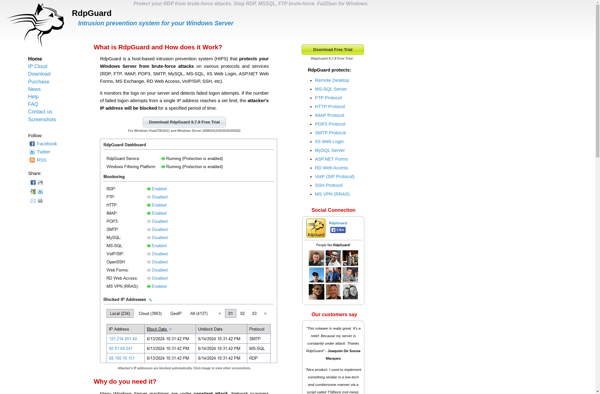
RdpGuard — RdpGuard is a remote desktop protection software designed to secure RDP connections against brute force attacks. It includes features like IP blacklisting, account lockouts, advanced authentication pr

Denyhosts offers Blocks IP addresses that make too many failed SSH login attempts, Adds blocked IP addresses to /etc/hosts.deny file, Open source program written in Python, Works on Linux and Unix-based systems, Configurable thresholds for blocking IPs, while RdpGuard provides IP blacklisting, Account lockouts, Advanced authentication protocols, Real-time attack visualization.

Denyhosts stands out for Easy to install and configure, Effective at preventing brute force SSH attacks, Lightweight and low resource usage; RdpGuard is known for Protects against brute force attacks on RDP connections, Provides comprehensive security features, Offers real-time monitoring and reporting.

Pricing: Denyhosts (Free) vs RdpGuard (not listed).

Why Compare Denyhosts and RdpGuard?

When evaluating Denyhosts versus RdpGuard, both solutions serve different needs within the security & privacy ecosystem. This comparison helps determine which solution aligns with your specific requirements and technical approach.

Market Position & Industry Recognition

Denyhosts and RdpGuard have established themselves in the security & privacy market. Key areas include ssh, security, authentication.

Technical Architecture & Implementation

The architectural differences between Denyhosts and RdpGuard significantly impact implementation and maintenance approaches. Related technologies include ssh, security, authentication, ip-blocking.

Integration & Ecosystem

Both solutions integrate with various tools and platforms. Common integration points include ssh, security and rdp, brute-force-protection.

Decision Framework

Consider your technical requirements, team expertise, and integration needs when choosing between Denyhosts and RdpGuard. You might also explore ssh, security, authentication for alternative approaches.

Feature Denyhosts RdpGuard
Overall Score N/A N/A
Primary Category Security & Privacy Security & Privacy
Pricing Free N/A

Product Overview

Denyhosts
Denyhosts

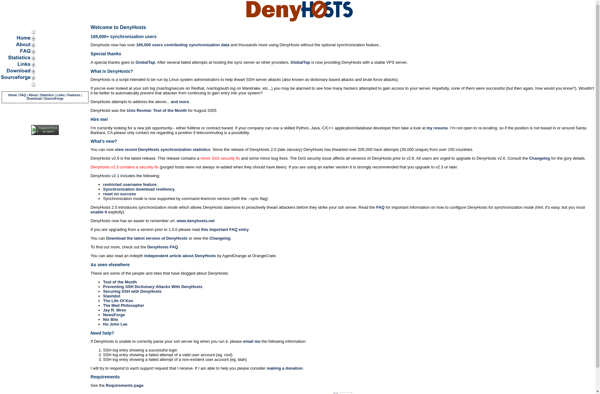
Description: DenyHosts is an open-source program designed to help system administrators thwart SSH server attacks by blocking IP addresses using failed authentication attempts to detect attackers. It adds IP addresses to the system's /etc/hosts.deny file when it identifies too many failed SSH attempts.

Type: software

Pricing: Free
RdpGuard
RdpGuard

Description: RdpGuard is a remote desktop protection software designed to secure RDP connections against brute force attacks. It includes features like IP blacklisting, account lockouts, advanced authentication protocols, and real-time attack visualization.

Type: software
Key Features Comparison

Denyhosts
Denyhosts Features
  • Blocks IP addresses that make too many failed SSH login attempts
  • Adds blocked IP addresses to /etc/hosts.deny file
  • Open source program written in Python
  • Works on Linux and Unix-based systems
  • Configurable thresholds for blocking IPs
  • Whitelist to prevent blocking valid users
  • Daemon mode for continuous monitoring
  • Email alerts when IPs are blocked
RdpGuard
RdpGuard Features
  • IP blacklisting
  • Account lockouts
  • Advanced authentication protocols
  • Real-time attack visualization

Pros & Cons Analysis

Denyhosts
Denyhosts
Pros
  • Easy to install and configure
  • Effective at preventing brute force SSH attacks
  • Lightweight and low resource usage
  • Automatically blocks attackers without admin intervention
  • Open source with active development community
Cons
  • Can block valid users if thresholds are too low
  • Requires some Linux sysadmin knowledge to configure
  • Only protects SSH, not other services
  • Blocked IPs are not permanently banned
RdpGuard
RdpGuard
Pros
  • Protects against brute force attacks on RDP connections
  • Provides comprehensive security features
  • Offers real-time monitoring and reporting
Cons
  • May require additional configuration for optimal performance
  • Limited customization options for advanced users

Pricing Comparison

Denyhosts
Denyhosts
  • Free
RdpGuard
RdpGuard
  • Not listed

Get More Information

Ready to Make Your Decision?

Explore more software comparisons and find the perfect solution for your needs