
AWS CloudFormation
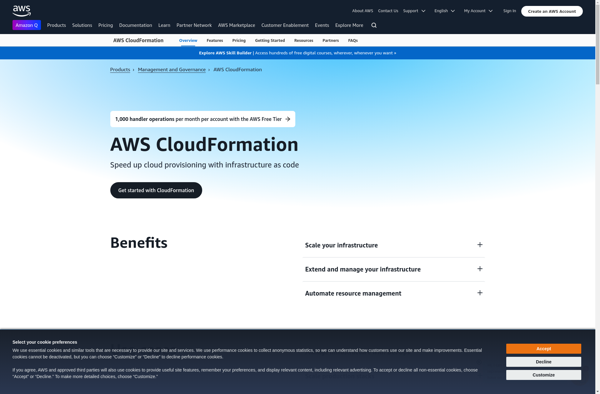
AWS CloudFormation: Infrastructure as Code Service
AWS CloudFormation is an infrastructure as code service that allows you to model, provision, and manage AWS and third-party resources by treating infrastructure as code. You can use CloudFormation templates to deploy and update a collection of resources together as a single unit.
What is AWS CloudFormation?
AWS CloudFormation is an infrastructure as code service that provides a common language for you to model and provision AWS and third party resources in your cloud environment. CloudFormation allows developers and systems administrators to use a JSON- or YAML-based template to model and provision, in an automated and secure manner, all the resources needed for your applications across all regions and accounts. This gives you coordination, governance, and consistency across your AWS resources.
Some key capabilities and features of CloudFormation include:
- Infrastructure as code - Model your infrastructure resources as code using JSON or YAML template files
- Cost control - Prevent unintended service or resource usages with guardrails and policies
- Infrastructure consistency - Maintain consistency and control across different environments
- Infrastructure automation - Speed up new stack creation and updates
- Infrastructure monitoring - Get enhanced visibility into resource relationships and drift detection
- Support for many AWS resource types - Deploy and manage a wide range of AWS services with CloudFormation
- Extendability with Custom Resources -Integrate your own custom logic or 3rd party APIs
With AWS CloudFormation, you can increase developer productivity by reducing time spent on manual processes, while also improving flexibility, cost predictability and security. Companies like Airbnb, Dow Jones and Expedia use CloudFormation.
AWS CloudFormation Features
Features
- Infrastructure as code
- Declarative templating language
- Repeatable deployments
- Version control
- Cost optimization
- Integration with other AWS services
Pricing
- Pay-As-You-Go
Pros
Cons
Official Links
Reviews & Ratings
Login to Review39 reviews
Rating Breakdown
Recent Reviews
Avery Moore
Apr 26, 2026A game-changer for managing AWS infrastructure
As a DevOps engineer, CloudFormation has become an indispensable part of our deployment workflow. It allows us to version-control our entire infrastructure, which makes rolling back changes or replicating environments across accounts incredibly straightforward. While the initial learning curve for …
Liam Lee
Apr 26, 2026Infrastructure as Code Made Manageable
As a DevOps engineer managing multiple environments, CloudFormation has been a game-changer. It allows me to version-control my entire AWS infrastructure and deploy consistent, repeatable stacks with a single command. The built-in drift detection is invaluable for maintaining compliance, and …
Phoenix Anderson
Apr 24, 2026Essential for Consistent and Scalable AWS Deployments
AWS CloudFormation has been a game-changer for managing our infrastructure as code. It allows us to version control our entire stack and deploy consistent environments across dev, staging, and production with a single template. The ability to update and roll …
Phoenix Hill
Apr 24, 2026Powerful but Frustratingly Complex
While CloudFormation's infrastructure-as-code approach is conceptually solid, the actual experience is often frustrating. The YAML templates become unwieldy and error-prone for anything beyond simple stacks, and debugging failed deployments is a nightmare of cryptic error messages. For teams without dedicated …
Olivia Hall
Apr 21, 2026Infrastructure Agility Achieved with CloudFormation
As a DevOps engineer, AWS CloudFormation has been a game-changer for our team. Modeling our entire VPC, EC2 instances, and RDS databases in a single, version-controlled template has eliminated manual provisioning errors and made our environments perfectly reproducible. The ability …
Rating Distribution
The Best AWS CloudFormation Alternatives
View all AWS CloudFormation alternatives with detailed comparison →
Top Ai Tools & Services and Infrastructure Management and other similar apps like AWS CloudFormation
Here are some alternatives to AWS CloudFormation:
Suggest an alternative ❐
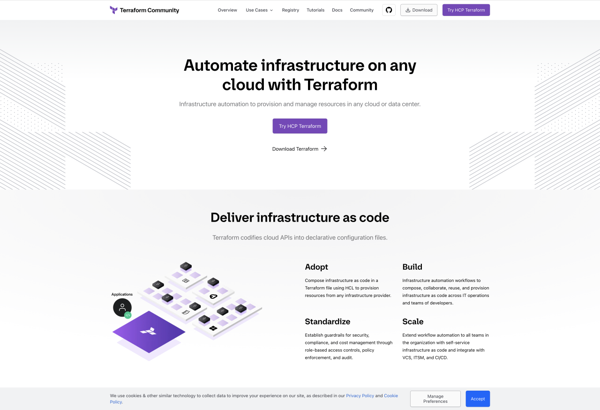
Terraform

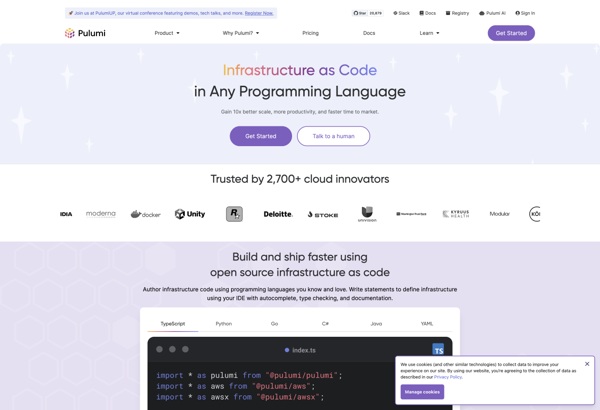
Pulumi

Microsoft Web Platform Installer


Turnkey Linux

BitNami Application Stacks

Altostra

Elastic Server

Gyro Tool