
Cloudflare
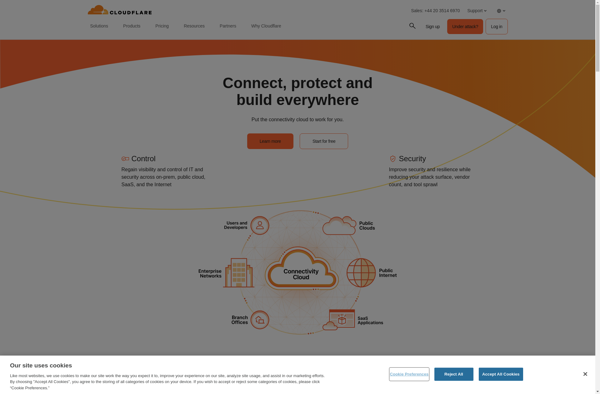
Cloudflare: Content Delivery Network & DDoS Protection
Cloudflare is a content delivery network and DDoS protection service that aims to make websites faster and more secure. It acts as a reverse proxy, sitting between visitors and a website's server to cache static assets, apply security filters, and distribute traffic globally.
What is Cloudflare?
Cloudflare is a content delivery network (CDN) and distributed domain name server (DNS) service that provides performance and security benefits for websites. As a reverse proxy situated between visitors and a website's origin server, Cloudflare can speed up page loads by caching static assets, apply web application firewall (WAF) rules to block malicious traffic, absorb distributed denial-of-service (DDoS) attacks, and facilitate global traffic load balancing across data centers in over 200 cities around the world.
Some key features of Cloudflare include:
- CDN for faster delivery of images, CSS, JavaScript files through an edge network
- DNS management for custom domain names
- DDoS protection by filtering and absorbing excessive traffic
- Web application firewall to block SQL injections, cross-site scripting, etc.
- Free SSL certificates for HTTPS traffic
- Web performance optimization from minification to HTTP/2 support
- Analytics on visitors, traffic sources, threats blocked
With both free and paid plans, Cloudflare aims to improve website security, speed, and reliability through intelligently routing traffic. It sits in front of origin servers as a reverse proxy, meaning websites can enable Cloudflare without changing their hosting provider or infrastructure.
Cloudflare Features
Features
- CDN for faster content delivery
- DDoS protection
- Web application firewall
- Load balancing
- DNS management
- Analytics and performance monitoring
Pricing
- Free
- Subscription-Based
Pros
Cons
Official Links
Reviews & Ratings
Login to Review27 reviews
Rating Breakdown
Recent Reviews
Avery Smith
May 27, 2026Powerful but sometimes puzzling
Cloudflare has made my website noticeably faster for visitors around the world, and I sleep much better knowing its DDoS protection is active. However, the sheer number of settings can be overwhelming, and I've had issues where certain security rules …
Liam Lopez
May 22, 2026A Powerful Shield with Some Rough Edges
Cloudflare's DDoS protection has been a lifesaver for my small e-commerce site, and the performance boost from their CDN is noticeable. However, their dashboard can be overwhelming for non-technical users, and I've had mixed experiences with support when trying to …
Sage Davis
May 19, 2026Frequent Downtime and Complicated Setup
Since implementing Cloudflare, my site has experienced more downtime than ever due to their frequent network issues. The dashboard is cluttered and confusing, making even basic tasks like setting up a new rule a frustrating ordeal. Documentation is extensive, but …
Casey Thomas
May 16, 2026A powerful shield with a steep learning curve
Cloudflare's performance benefits are undeniable – our site loads noticeably faster and feels more resilient to traffic spikes. However, the sheer depth of its settings, from firewall rules to complex DNS configurations, can be overwhelming for non-technical users, and their …
David Thomas
May 14, 2026Overpromised, Underdelivered on Simplicity
Despite hearing great things about Cloudflare's speed and security, the onboarding process for my small website was a nightmare. The dashboard is confusing, and even minor DNS changes felt overly complex and led to unexpected downtime. While the free tier …
Rating Distribution
The Best Cloudflare Alternatives
View all Cloudflare alternatives with detailed comparison →
Top Security & Privacy and Web Security and other similar apps like Cloudflare
Here are some alternatives to Cloudflare:
Suggest an alternative ❐
Fly.io


Haproxy

Cisco Umbrella


Datapath.io

DDoS-Guard

Koyeb


AWS Route 53


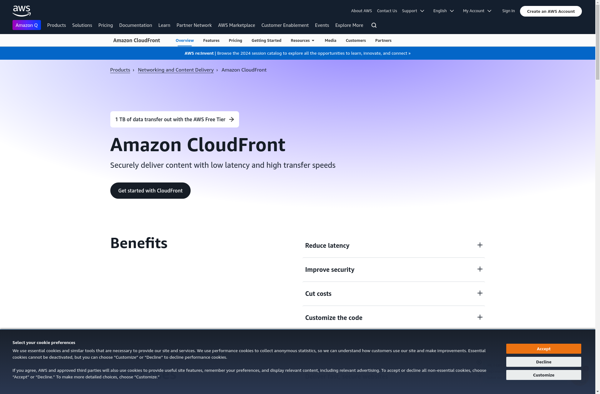
Amazon CloudFront

Imunify360


PageCDN


YAKUCAP


Alviy


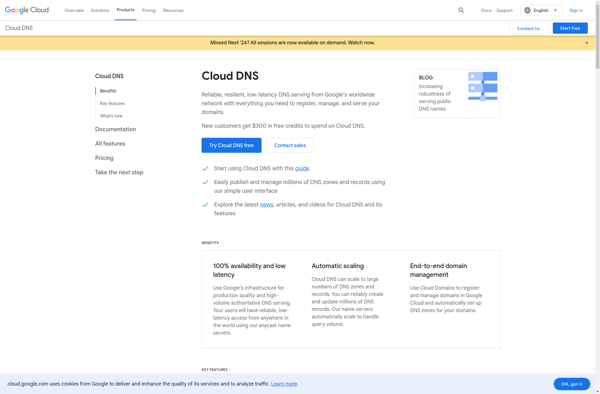
Google Cloud DNS

Sqreen


CloudLayar

Sucuri


Constellix


MyraCloud


Abbey from Mister Scanner


Akamai


CDNify


BitMitigate


Jet-Stream


CDNlion.com


Cachoid


Neustar SiteProtect


HE.NET Network Tools


Nexusguard


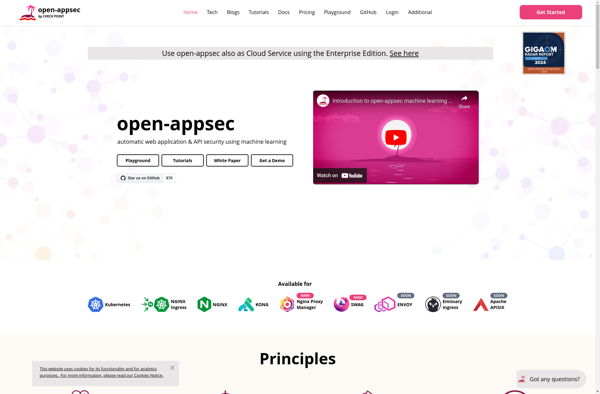
Open-appsec

Haltdos