Cloudprobes is a SaaS-based monitoring tool that allows users to monitor the health, performance, and availability of cloud resources and applications. It provides customizable dashboards, alerting, analytics, and reporting to gain visibility into infrastructure and services runn
Cloudprobes is a SaaS-based monitoring tool that allows users to monitor the health, performance, and availability of cloud resources and applications. It provides customizable dashboards, alerting, analytics, and reporting to gain visibility into infrastructure and services running in the cloud.
What is Cloudprobes?
Cloudprobes is a cloud-based monitoring and observability platform designed specifically for cloud environments like AWS, Azure, and Google Cloud. It allows DevOps and SRE teams to gain end-to-end visibility and insights into their cloud applications, infrastructure, and services.
Key features of Cloudprobes include:
Pre-defined and customizable dashboards to monitor cloud resources like virtual machines, containers, serverless functions, databases, queues, etc.
Metrics, logs, and traces analysis for performance monitoring.
Alerting and notification capabilities for faster incident response.
Cloud service topology mapping and visualization.
Cost optimization and rightsizing recommendations.
Support for major cloud platforms like AWS, Azure, GCP and Kubernetes.
Agentless monitoring with 100+ cloud service integrations.
Collaboration features for teams like annotation, sharing dashboards, etc.
Overall, Cloudprobes aims to provide an easy-to-use and unified platform for cloud monitoring and observability. Its specialized support for cloud-native environments makes it easier for teams to track the health and performance of dynamic cloud resources. The visual dashboards and automation capabilities simplify cloud operations and reduce mean time to resolution.
Cloudprobes Features
Features
Customizable dashboards
Real-time monitoring of cloud resources and applications
Alerting and notification system
Performance analytics and reporting
Multi-cloud support (AWS, Azure, GCP, etc.)
Automated incident response and remediation
Integrations with popular cloud services and tools
Pricing
Subscription-Based
Pros
Comprehensive visibility into cloud infrastructure and applications
Customizable monitoring and alerting
Automated incident response capabilities
Supports multiple cloud platforms
User-friendly interface and intuitive dashboard
Cons
Potential high costs for enterprise-level usage
Complexity in setting up and configuring monitoring for large-scale environments
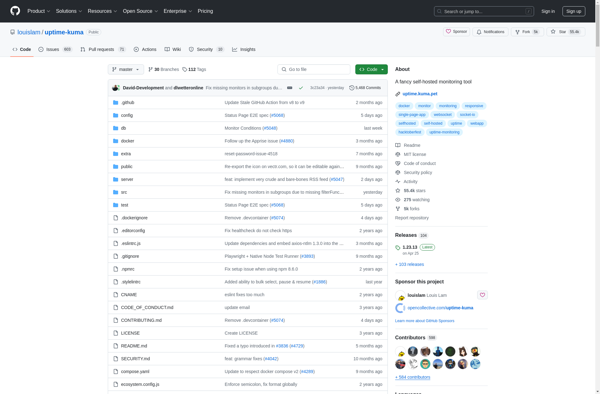
Uptime Kuma is an open-source, self-hosted monitoring application that allows you to monitor your websites, APIs, and servers from your own infrastructure. It provides uptime monitoring, SSL certificate checks, ping checks, and more to ensure your critical services are up and running.Some key features of Uptime Kuma include:Easy to install...
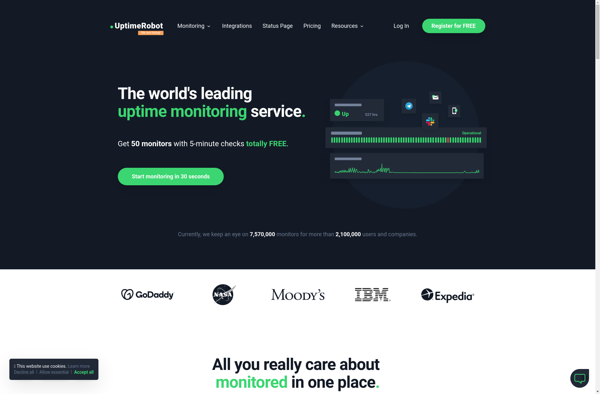
UptimeRobot is a popular website and server monitoring service used by over 1 million users. It provides comprehensive uptime monitoring and alerting for websites, web applications, APIs, and servers.Some key features of UptimeRobot include:Uptime monitoring - Continuous monitoring of website availability from global locations. Alerts you if your site goes...
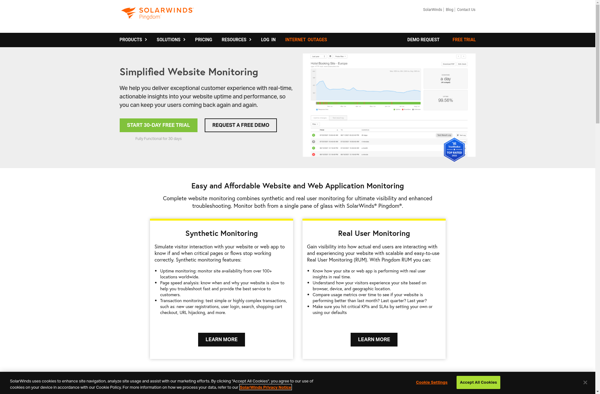
Pingdom is a popular website monitoring service used to track uptime, performance, and speed of websites and web applications. It works by checking websites periodically from locations around the world to test response time and uptime.Key features of Pingdom include:Uptime monitoring - Get alerts if your site goes downPage speed...
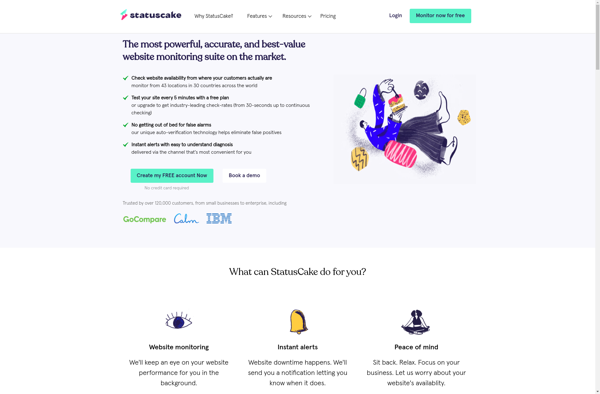
StatusCake is a popular website and application monitoring service used by developers, businesses, and IT teams. It provides a suite of uptime and performance monitoring tools to ensure websites, web apps, APIs, and servers remain functional and fast.Key features of StatusCake include:Uptime monitoring - Customizable HTTP/HTTPS checks from global locations...
Monitis is a cloud-based IT infrastructure monitoring and management platform designed for businesses and IT teams. It provides a single dashboard to monitor the uptime, performance, and health of servers, applications, networks, websites, and other IT infrastructure components.Key features of Monitis include:Uptime and synthetic monitoring to track availability and response...
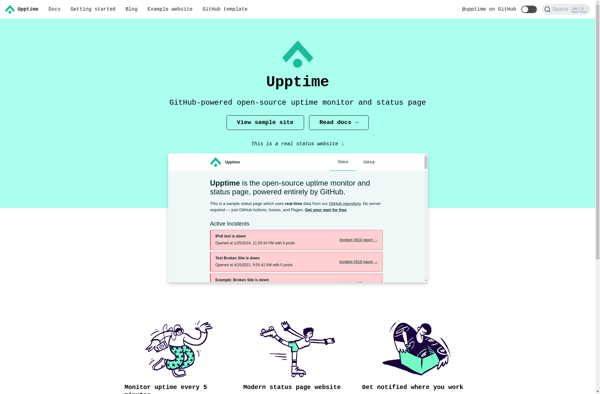
Upptime is an open-source application for monitoring uptime and status of websites, APIs, and applications. It is designed to be easy to use, customizable, and lightweight.Some key features of Upptime include:Uptime monitoring of HTTP, HTTPS, DNS, TCP, and ICMP servicesCustomizable public status pages showing real-time and historical uptime dataStatus page...
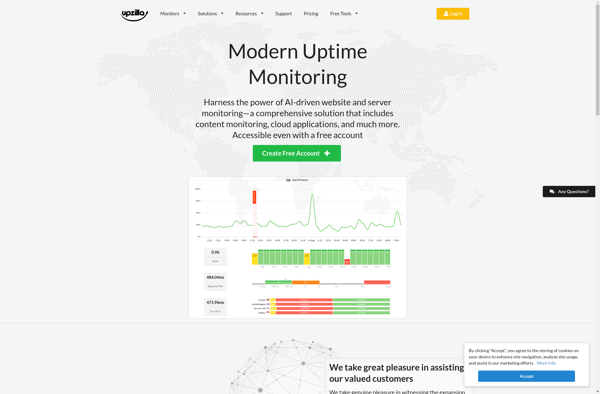
Upzilla is an open-source, web-based defect tracking system that provides an alternative to Bugzilla. It allows development teams to track software bugs, issues, and feature requests throughout the development process.Some key features of Upzilla include:Crowdsourced voting allows users to vote on bug priorityCustomizable fields, views, and workflowsAttach files and screenshots...
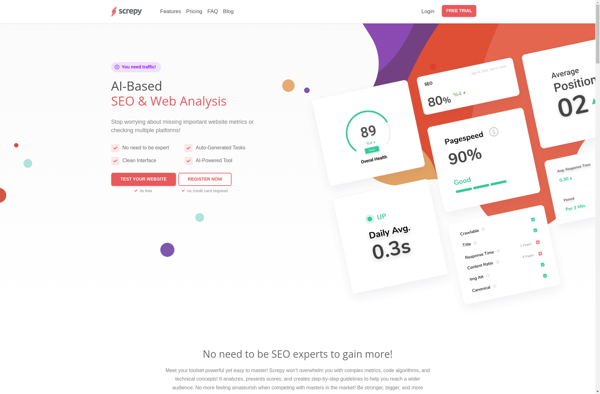
Screpy is an open-source web scraping framework for Python designed for simplicity and extensibility.It allows extracting structured data from websites using a simple API. Screpy handles JavaScript pages, caches responses, and supports exporting data to multiple formats like JSON, CSV, and Excel.Some key features of Screpy:Simple and intuitive API for...
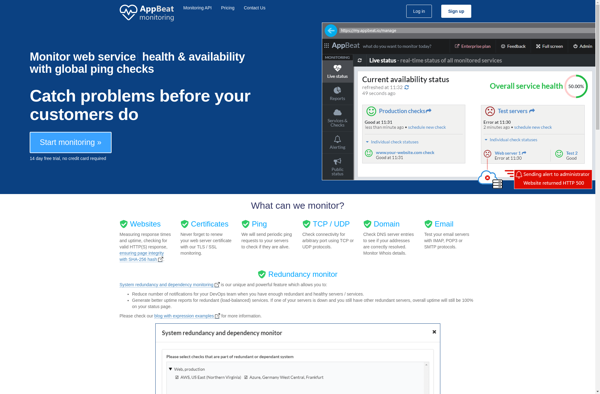
AppBeat is an application performance monitoring and management platform designed to help developers optimize and troubleshoot the performance of their mobile and web applications. It provides real-time visibility into the performance and behavior of apps by collecting granular data on things like load times, network requests, crashes, user experience, and...