Ergonomica is a tiling window manager for Linux that uses dynamic tiling to automatically arrange windows. It aims to optimize screen space and improve workflow.
Ergonomica: Dynamic Tiling Window Manager for Linuxs
Ergonomica is a tiling window manager for Linux that uses dynamic tiling to automatically arrange windows. It aims to optimize screen space and improve workflow.
What is Ergonomica?
Ergonomica is a dynamic tiling window manager designed for Linux operating systems. It automatically tiles open application windows to optimize screen usage without manual configuration.
Unlike traditional window managers that are mouse-oriented, Ergonomica utilizes keyboard shortcuts so that users can efficiently manage windows and workspaces. Its innovative dynamic tiling algorithm analyzes window sizes, proportions, and layouts in real-time to determine optimal arrangements.
Key features of Ergonomica include:
Dynamic and automatic window tiling
Customizable keyboard shortcuts
Flexible virtual workspaces
Support for floating windows
Per-workspace window layout configurations
Minimal resource usage for high performance
Ergonomica aims to boost productivity by reducing time spent manually moving and resizing windows. Its intelligent tiling frees up screen area while its customizable shortcuts let users quickly evoke actions. It keeps frequently used windows easily accessible while streamlining workflow.
With capabilities tailored specifically for power users and minimal latency, Ergonomica offers an efficient and practical dynamic window management solution for Linux desktops.
Zsh (Z shell) is an extended version of the Bash shell for UNIX systems. It is highly customizable and includes many features aimed at interactive use, such as:Powerful themed auto-suggestions, completion, and correction while typing commandsSupport for directories and path expansion (globbing) with complex patternsSharing of command history across shellsLoadable...
KornShell (ksh) is a Unix shell and command language written by David Korn in the early 1980s. It is backward-compatible with the Bourne shell and includes many additional features from the Bash and C shells.Some key features of KornShell include:Interactive scripting and debuggingJob controlCommand history and editingAlias and function definitionsString...
Win-bash is an open-source command line interface and Linux environment for Windows. It provides a Bash shell and Linux-like tools and utilities to allow users to run Linux/UNIX commands natively on Windows.Key features of win-bash include:Bash shell and common Bash commandsCore Linux utilities like sed, awk, grep, etc.Standard UNIX/Linux file...
GNU Bash (Bourne Again SHell) is a widely used command line shell and command language interpreter for Unix-like operating systems such as Linux and macOS. It is the default login shell for most Linux distributions and macOS. Bash provides powerful text processing capabilities using an extensible syntax for command composition...
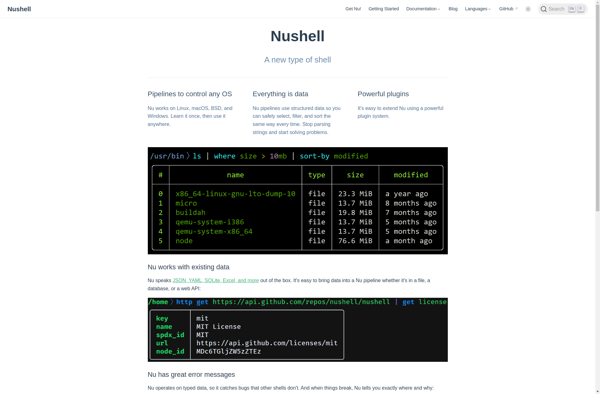
Nu Shell (also called Nushell or Nu) is an open source command shell and scripting language created by GitHub co-founder Jonathon Turner and released under the MIT license. It focuses on improving the command-line interface and workflow compared to traditional Unix shells like Bash or Zsh.Key features and goals of...
DASH Shell is an open-source Linux shell and command language that emphasizes automation, customization, and productivity. It was created by Software Engineer João Dias and includes many quality-of-life features and improvements over other popular shells like Bash or Zsh.Some key features of DASH include:Intelligent autocompletion that learns from your usage...
rc is a command line shell and scripting language developed in the late 1980s and early 1990s by Tom Duff as an alternative to the Bourne shell. Some key features and characteristics of rc:Simple and easy to use syntax, influenced by Plan 9's shellModular design allowing extensions through pluginsLightweight and...
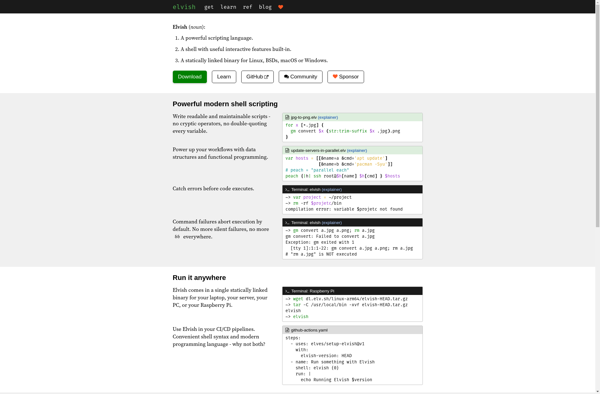
Elvish is an open source shell and scripting language for Linux/UNIX systems. It aims to combine the interactivity and convenience of shells like bash or zsh with the rich features and programmability of scripting languages like Python or Ruby.Some key features of Elvish include:Expressive pipeline syntax for composability and readabilityRich...
Xiki is a revolutionary command line interface and shell alternative for Linux, macOS, and Windows. It provides a new paradigm for interacting with structured data that is simpler and more flexible than traditional shells or GUIs.The core concept behind Xiki is the idea of 'place-oriented computing'. Instead of operating on...