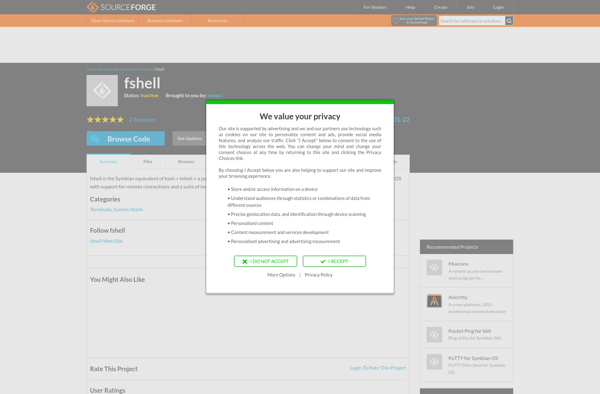
fshell is a file manager and CLI tool for managing files and directories in Linux. It has features like copy, move, delete, search, archive creation and extraction, and more. fshell aims to provide an easy-to-use interface for common file operations.
File manager and CLI tool for Linux with features like copy, move, delete, search, archive creation and extraction.
What is Fshell?
fshell is an open-source file manager and command line interface tool for Linux systems. It provides an interactive shell for carrying out various file management tasks like copying, moving, deleting, archiving, searching for files and directories, and more.
Some of the key features of fshell include:
Intuitive syntax for common file operations like copy, move, delete, make directory, etc.
Archive creation and extraction for formats like tar, zip, rar, etc.
Search tools for quickly finding files by name, extension, content, etc.
Batch renaming and synchronization of files
Command history and tab completion for convenience
Color coding of file types and directory trees
Support for wildcard characters for bulk operations
Customizable aliases for frequently used commands
As an interactive shell, fshell allows automation of repetitive file management jobs by using scripts. It can integrate with other CLI tools to further extend its capabilities. The goal of fshell is to provide Linux users with an easy-to-use file manager that requires no GUI, making it well-suited for servers, minimal installations, and advanced users.
Fshell Features
Features
File manager and CLI tool for Linux
Copy, move, delete, rename, and search files and directories
Create and extract archives (zip, tar, etc.)
Bulk rename files
Mount drives and network shares
Text editor
Customizable themes and keyboard shortcuts
Pricing
Open Source
Pros
Lightweight and fast
Easy to use CLI interface
Good for both beginners and advanced users
Extensive feature set for file management
Actively developed and maintained
Cons
CLI only, no GUI
Limited documentation/help content
Less features than full desktop file managers
Requires some Linux/CLI knowledge to use effectively
Zsh (Z shell) is an extended version of the Bash shell for UNIX systems. It is highly customizable and includes many features aimed at interactive use, such as:Powerful themed auto-suggestions, completion, and correction while typing commandsSupport for directories and path expansion (globbing) with complex patternsSharing of command history across shellsLoadable...
KornShell (ksh) is a Unix shell and command language written by David Korn in the early 1980s. It is backward-compatible with the Bourne shell and includes many additional features from the Bash and C shells.Some key features of KornShell include:Interactive scripting and debuggingJob controlCommand history and editingAlias and function definitionsString...
Win-bash is an open-source command line interface and Linux environment for Windows. It provides a Bash shell and Linux-like tools and utilities to allow users to run Linux/UNIX commands natively on Windows.Key features of win-bash include:Bash shell and common Bash commandsCore Linux utilities like sed, awk, grep, etc.Standard UNIX/Linux file...
GNU Bash (Bourne Again SHell) is a widely used command line shell and command language interpreter for Unix-like operating systems such as Linux and macOS. It is the default login shell for most Linux distributions and macOS. Bash provides powerful text processing capabilities using an extensible syntax for command composition...
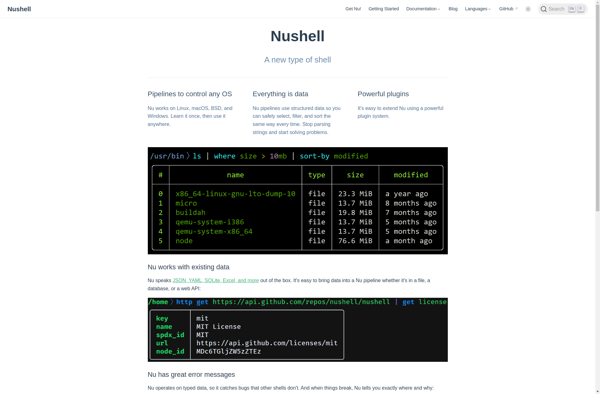
Nu Shell (also called Nushell or Nu) is an open source command shell and scripting language created by GitHub co-founder Jonathon Turner and released under the MIT license. It focuses on improving the command-line interface and workflow compared to traditional Unix shells like Bash or Zsh.Key features and goals of...
DASH Shell is an open-source Linux shell and command language that emphasizes automation, customization, and productivity. It was created by Software Engineer João Dias and includes many quality-of-life features and improvements over other popular shells like Bash or Zsh.Some key features of DASH include:Intelligent autocompletion that learns from your usage...
The xonsh shell is a unique hybrid shell that combines features from Python as well as bash, zsh, and other traditional Unix shells. It works on Linux, Mac, and Windows systems.Some key features of xonsh include:Python powered - xonsh allows you to combine Python code inline with shell commands for...
rc is a command line shell and scripting language developed in the late 1980s and early 1990s by Tom Duff as an alternative to the Bourne shell. Some key features and characteristics of rc:Simple and easy to use syntax, influenced by Plan 9's shellModular design allowing extensions through pluginsLightweight and...
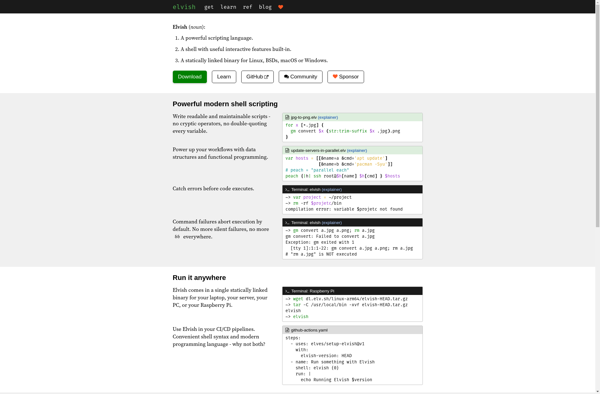
Elvish is an open source shell and scripting language for Linux/UNIX systems. It aims to combine the interactivity and convenience of shells like bash or zsh with the rich features and programmability of scripting languages like Python or Ruby.Some key features of Elvish include:Expressive pipeline syntax for composability and readabilityRich...
Xiki is a revolutionary command line interface and shell alternative for Linux, macOS, and Windows. It provides a new paradigm for interacting with structured data that is simpler and more flexible than traditional shells or GUIs.The core concept behind Xiki is the idea of 'place-oriented computing'. Instead of operating on...