HashiCorp Nomad is an open-source workload orchestrator and scheduler designed for distributed, highly available applications. It uses a flexible scheduler to enable efficient utilization of resources across regions and clouds with support for bin packing, spreading, and reservat
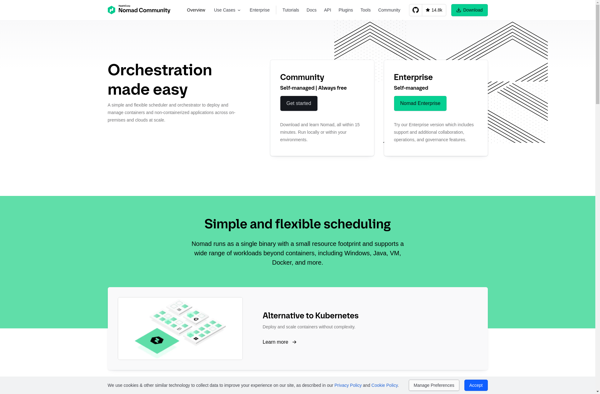
HashiCorp Nomad is an open-source workload orchestrator and scheduler designed for distributed, highly available applications. It uses a flexible scheduler to enable efficient utilization of resources across regions and clouds with support for bin packing, spreading, and reservations.
What is HashiCorp Nomad?
HashiCorp Nomad is an open-source workload orchestrator and scheduler designed for deploying and managing containers and non-containerized applications across on-prem and public cloud infrastructure. Key features include:
Flexible scheduling algorithms for bin packing, spreading, reservations, and affinity-based scheduling to optimize for resource utilization, high availability, and low latency.
Supports Docker, RKT, Java, Python, and executable applications.
Dynamic job groups for grouping tasks together for deployment.
Built-in service discovery and Consul and Vault integrations.
Cross datacenter and region federation to bridge infrastructure across ACLs and networks.
Scalable horizontal autoscaling based on CPU, memory, and custom metrics.
Easy to operate, secure, and integrate simplified workflows.
Nomad is well-suited for modern infrastructure needs requiring efficient scheduling of microservices, batch jobs, and globally distributed applications. It complements container orchestrators like Kubernetes by handling non-containerized workloads and bridging on-prem and cloud infrastructure.
HashiCorp Nomad Features
Features
Job Scheduling - Schedule batch, service and system jobs on a cluster
Service Discovery - Automatic service registration and DNS for services
Flexible Workloads - Support for Docker, executables, and custom workloads
Multi-Region Awareness - Spread jobs across regions and datacenters
Auto Scaling - Scale jobs up and down based on utilization
Failure Tolerance - Reschedule failed jobs and replace failed nodes
Resource Bin Packing - Optimize cluster resource utilization
Pricing
Open Source
Enterprise Subscription
Pros
Easy cluster management and operation
Flexible workloads beyond just containers
Built-in service discovery and load balancing
Spread jobs across regions and clouds
Handle failures and optimize resource usage
Cons
Less mature and adopted than Kubernetes
Steep learning curve compared to traditional schedulers
Not as feature rich as Kubernetes for container workloads
No native support for orchestrating stateful workloads
Kubernetes is an open-source system for automating deployment, scaling, and management of containerized applications. It groups containers that make up an application into logical units for easy management and discovery. Kubernetes provides a framework to run distributed systems resiliently across clusters of machines, hide the complexity of managing many different...
Rancher is an open-source container management platform designed to help developers and DevOps teams deploy, manage, and secure containerized applications across multiple infrastructure providers. Key features of Rancher include:Intuitive GUI for managing Kubernetes clusters across public and private clouds, as well as bare metal serversSupport for leading Kubernetes distributions including...
Rancher Desktop is an open source Kubernetes distribution designed to run on desktop operating systems like macOS, Windows and Linux. It enables developers to easily deploy fully-featured Kubernetes clusters on their local workstations for testing, development and learning purposes.Some key features of Rancher Desktop include:Single downloadable binary that sets up...
Overnode is an open-source interface design and prototyping tool built as an alternative to Figma. It allows designers and developers to collaborate and iterate on ideas quickly and easily.Some key features of Overnode include:Flexible design system - Easily create reusable components like buttons, headers, icons etc. Supports variants to handle...
Docker Swarm is a container orchestration tool that allows users to manage a cluster of Docker hosts as a single virtual host. It handles the scheduling and distribution of containers automatically across the cluster.Some key features of Docker Swarm include:Automatic container distribution and scheduling - Swarm intelligently schedules containers based...
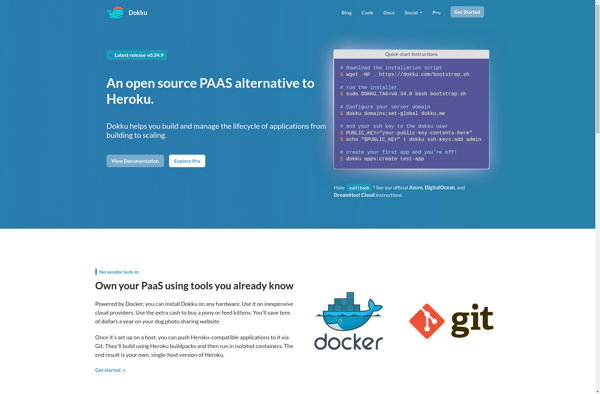
Dokku is an open source Platform-as-a-Service (PaaS) that allows developers to easily deploy, manage, and scale applications on a single server. It is designed to be lightweight, simple to install, and uses Docker and Git workflows under the hood.Some key features of Dokku include:Git push deployments - Developers can deploy...
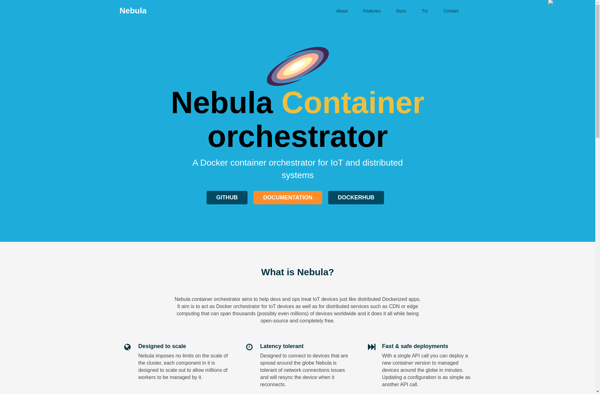
Nebula Container Orchestrator (Nebula) is an open-source container orchestration and management platform. It allows users to easily deploy, manage and scale containerized applications across clusters of hosts.Some key features of Nebula include:Deployment automation - Nebula can deploy application stacks with a single command across a clusterAuto-scaling - It can automatically...
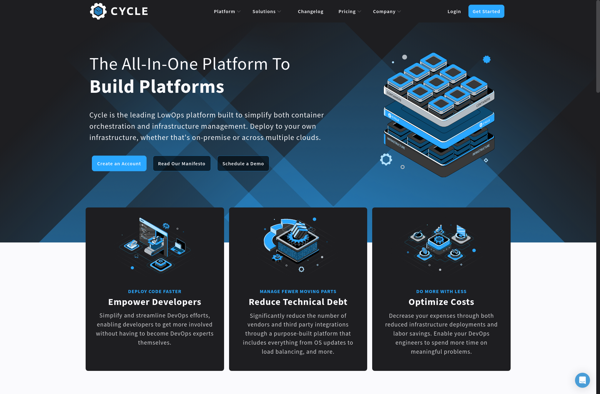
Cycle.io is a flexible, web-based project management software designed for agile development teams. It provides a variety of tools to help plan, organize, track and manage software projects of all sizes.Key features of Cycle.io include:Customizable boards to visualize workflows and track progressStory maps, epics, user stories, tasks, bugs, and custom...