Java Logger
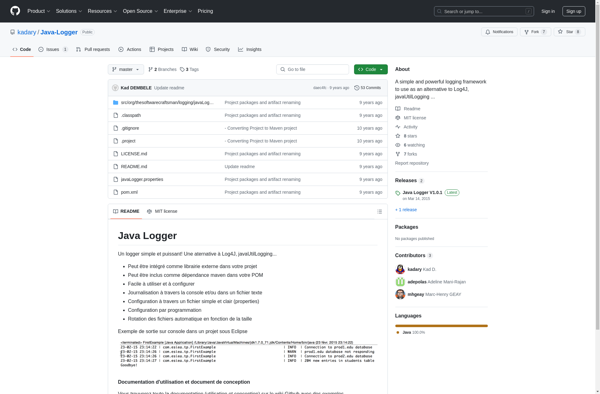
Java Logger: Logging Library for Java Applications
Logging library used in Java applications to log events, errors, warnings, debug information etc., allowing developers to track execution flow and detect issues.
What is Java Logger?
Java Logger is a logging library that is an essential component of most Java applications. It allows developers to log messages that record events occurring in the application flow, such as errors, warnings, debug information, transaction trails etc.
Using a logging library brings many benefits - it helps debug issues faster by precisely tracking execution flow. Log files provide insights into app behavior over time. Log data can also be used to monitor performance, analyze usage patterns and more.
There are several popular logging frameworks for Java - java.util.logging (JUL) is the inbuilt logger. Log4j and Logback are two widely used open source options. They offer greater flexibility and configurability than JUL. Key features include support for multiple output destinations like console, file, database etc; different log levels like DEBUG, INFO, ERROR etc; logging format customization and more.
In summary, Java Logger is vital for building robust, production-grade applications. It equips developers with invaluable visibility into application execution to facilitate debugging, auditing and analytics.
Java Logger Features
Features
- Custom log levels
- Log to console, file, database, etc
- Formatting & layout options
- Asynchronous logging
- Log rotation & archiving
- Structured & contextual logging
- Multiple appenders
- Filtering
- Supports SLF4J
- Mapped diagnostic context
- Pluggable architecture
Pricing
- Open Source
- Free
Pros
Cons
Official Links
Reviews & Ratings
Login to ReviewThe Best Java Logger Alternatives
View all Java Logger alternatives with detailed comparison →
Top Development and Logging and other similar apps like Java Logger
LOGBack

Apache Log4j

Tinylog