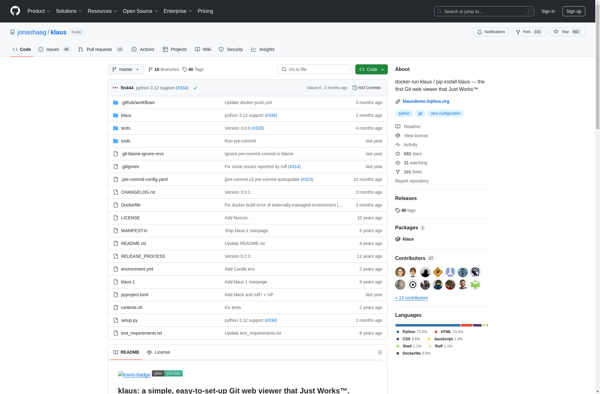
Klaus is an open-source git repository viewer designed to help visualize and browse git repositories. It allows users to quickly view commits, branches, files, diffs, and more through a clean, intuitive interface.
Open-source git repository viewer for visualizing and browsing git repositories with commit, branch, file, diff, and more views
What is Klaus?
Klaus is an open-source git repository viewer designed to help developers visualize and browse git repositories. It provides a user-friendly graphical interface for common git commands and repository analysis.
Some key features of Klaus include:
Intuitive visualization of commits, branches, tags, and file structures
Powerful searching and filtering of commit messages, authors, files, etc.
Side-by-side diff viewing with intra-line highlighting
Branch graphs and commit DAGs for enhanced visualization
Authentication support for private repositories
Syntax highlighting for viewed files
Easy cloning and checkout of repositories
Klaus aims to augment command line git functionality with improved visualization and discovery features. Its focus is on enhancing understanding of complex git histories and code bases. The clean interface and graphing capabilities make it easy for developers to analyze changes over time.
Overall, Klaus is ideal for developers who want a graphical client for visualizing and navigating git repositories, especially on large, complex projects spannning lengthy histories. Its features complement standard git CLI usage forrepository analysis and inspection.
Klaus Features
Features
Visualize and browse git repositories
View commits, branches, files, diffs
Clean, intuitive interface
Open source
Pricing
Open Source
Pros
Free and open source
Easy to use interface
Good for visualizing and exploring git repos
Cross-platform
Cons
Limited functionality compared to full git clients
GitLab is an open source end-to-end software development platform with built-in git repository management, issue tracking, code reviews, activity feeds, wikis and continuous integration/continuous deployment (CI/CD). It allows developers to host and collaborate on Git repositories and connect all stages of the DevOps lifecycle in the same user interface.Some key...
SourceForge is one of the largest open-source software repositories and distribution platforms on the web. Launched in 1999, it serves as a centralized location for developers worldwide to upload and distribute their open-source software applications and source code.Some key features of SourceForge include:Free hosting for open-source projects - Source code...
Gogs is an open source self-hosted Git service written in Go language. It allows you to set up your own GitHub-like environment on a server to host Git repositories and collaborate with others.Some key features of Gogs:Easy installation - It has small footprint and can run on a Raspberry PiUser...
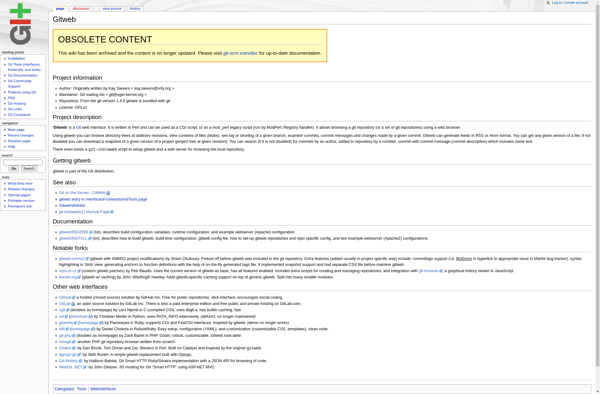
Gitweb is a lightweight web interface included with Git that enables users to browse Git repositories published on web servers. It provides a convenient way to share and explore Git repositories without needing Git installed locally.Some key features Gitweb offers include:Repository browser - Navigate the directory structure and view files...
NotABug.org is a free and open source code collaboration platform launched in 2021 as an ethical, libre alternative to services like GitHub. Like GitHub, NotABug allows developers to host git repositories, manage access controls, perform code reviews, track issues, and collaborate on software development projects.What sets NotABug apart is its...
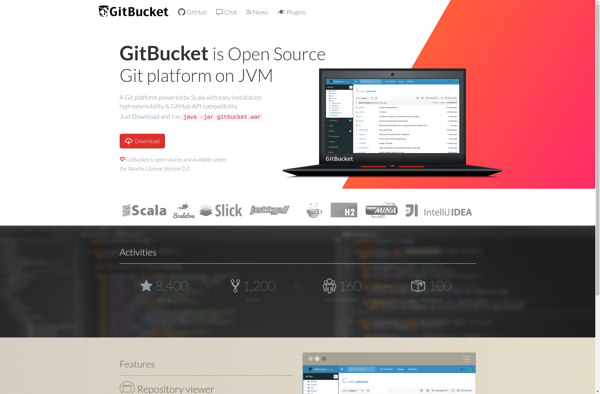
GitBucket is an open-source Git platform and GitHub clone written in Scala. It is designed to be easily installed on a private server to host Git repositories and provide additional features around Git.Some key features of GitBucket include:Repository hosting and managementUser and organization accountsRepository permissions and access controlActivity feeds and...