Microsoft Team Foundation Server is a DevOps platform that provides version control, reporting, requirements management, project management, automated builds, lab management, testing and release management capabilities.
Microsoft Team Foundation Server: Comprehensive DevOps Platform
Microsoft Team Foundation Server is a DevOps platform that provides version control, reporting, requirements management, project management, automated builds, lab management, testing and release management capabilities.
What is Microsoft Team Foundation Server?
Microsoft Team Foundation Server (TFS) is a DevOps platform from Microsoft that provides a range of version control, reporting, requirements management, project management, automated build, lab management, testing and release management capabilities for software development teams to track code, bugs and issues. TFS helps manage Agile or Waterfall development processes for multiple teams working across multiple projects and technologies.
Some key capabilities and benefits of TFS include:
Version control with Git and TFVC to enable tracking of code changes
Agile project planning and Kanban boards to visualize and manage workflows
Integrated package management for NuGet, npm and Maven
Automated build and release pipelines for CI/CD
Manual and exploratory testing tools and integration with popular test frameworks
Power BI integration for advanced reporting and analytics
Integrates with Visual Studio IDE and Office for improved productivity
TFS helps streamline development processes, improve team collaboration and provide visibility across the application lifecycle. It is well-suited for both large enterprises as well small/medium dev teams looking to implement DevOps best practices.
Bitbucket is a web-based version control repository hosting service owned by Atlassian that allows development teams to collaborate on code. Some key features of Bitbucket include:Git and Mercurial version control repository hostingUnlimited private and public repositoriesGranular user permissions and access controlsWiki, issue tracking, and pull requestsIntegrations with JIRA, Trello, and...
GitLab is an open source end-to-end software development platform with built-in git repository management, issue tracking, code reviews, activity feeds, wikis and continuous integration/continuous deployment (CI/CD). It allows developers to host and collaborate on Git repositories and connect all stages of the DevOps lifecycle in the same user interface.Some key...
JIRA, developed by Atlassian, is a comprehensive project management and issue tracking tool designed to empower teams in planning, tracking, and managing projects effectively. Renowned for its flexibility and scalability, JIRA caters to diverse teams and industries, providing a centralized hub for collaboration. At the core of JIRA's functionality is...
TortoiseSVN is a free, open source client for the Subversion version control system on Windows. It integrates directly into Windows Explorer, enabling users to perform version control actions via simple right-click context menus rather than having to use the command line client or an external GUI.Key features of TortoiseSVN include:Intuitive...
SourceForge is one of the largest open-source software repositories and distribution platforms on the web. Launched in 1999, it serves as a centralized location for developers worldwide to upload and distribute their open-source software applications and source code.Some key features of SourceForge include:Free hosting for open-source projects - Source code...
Microsoft Visual SourceSafe is a version control application originally created by Microsoft. It allows software development teams to manage changes to source code over time. Key features of Visual SourceSafe include:Version control - Stores multiple versions of code so developers can roll back changes if neededCheck-in/Check-out - Developers can lock...
Mercurial is a free, distributed source control management system designed for efficient and reliable control of source code and other revision-controlled assets. Key features of Mercurial include:Distributed peer-to-peer architecture, allowing decentralized and collaborative developmentRobust branching and merging capabilities to support complex workflowsSecure, encrypted repositories with integrated access controlPowerful integrations with...
Apache Subversion (often abbreviated SVN) is a software versioning and revision control system distributed as free and open source software. Software developers use Subversion to maintain current and historical versions of files such as source code, web pages, and documentation. Its goal is to be a mostly compatible successor to...
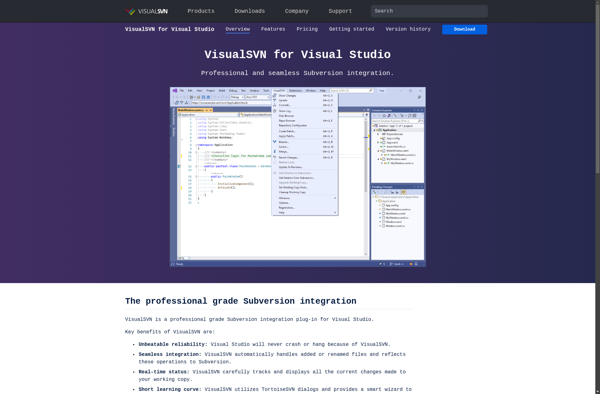
VisualSVN is a Windows program that helps administrate and manage Subversion (SVN) servers. Some key features of VisualSVN include:Easy-to-use graphical interface for managing Subversion repositories, users, and settings without needing to edit configuration files manuallyTight integration with the Windows user database - user accounts and access permissions can leverage Active...
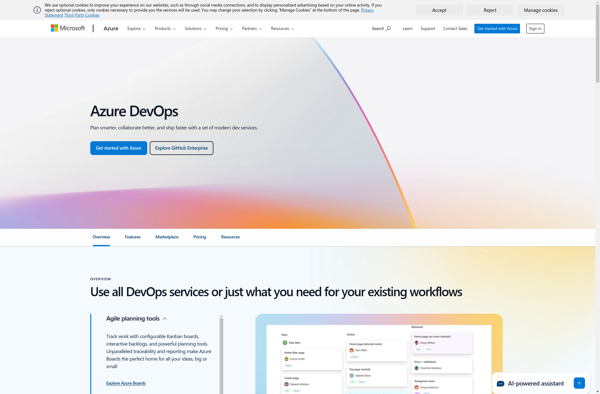
Azure DevOps is a Microsoft cloud-based collaborative development environment that supports Git repositories, Kanban boards, extensive automated builds, load testing, release management and application analytics. Key capabilities include:Version control with Git repositories for source code and integration with Visual Studio and EclipseAgile planning and tracking using Kanban boards with configurable...
AnkhSVN is an open-source Subversion extension and plugin for Microsoft Visual Studio. It integrates version control capabilities into the IDE, allowing developers to access and manage their Subversion repositories and perform version control tasks without leaving Visual Studio.Some of the key features of AnkhSVN include:Commit, update, revert, diff, log and...
Rational ClearCase is a revision control and software configuration management tool originally developed by Atria Software and acquired by Rational Software, which was later acquired by IBM. ClearCase provides version control for source code and other software development assets.Some key features of ClearCase include:Allows parallel development - multiple developers can...
MKS Source is a comprehensive software configuration management and version control system designed for managing and controlling changes to source code and other artifacts during the software development lifecycle. It provides core SCM capabilities like version control, workspace management, branching and merging, change tracking, release management, and more to enable...
SpectrumSCM is a comprehensive software configuration management platform built to help development teams manage and track changes to source code, documents, multimedia assets, and any other content that is part of the software delivery lifecycle. It brings together version control, issue tracking, code review, release management, and other key capabilities...
uberSVN is an open-source web interface for the Subversion (SVN) version control system. It allows users to access, manage, and collaborate on SVN repositories through a web browser instead of the command line client.Some key features of uberSVN include:Web-based access to repositories for browsing source code, logs, diffs, etc.Revision graphing...