Reconmap

Reconmap: Open Source Reconnaissance Mapping Tool
Reconmap is an open source web application for organizing and mapping reconnaissance data during penetration tests. It allows infosec professionals to keep track of subnets, open ports, running services, and other findings.
What is Reconmap?
Reconmap is an open source web reconnaissance and vulnerability scanning application built for penetration testers and bug bounty hunters. It provides an intuitive user interface to organize and map information gathered during the initial reconnaissance phase.
Some of the key features of Reconmap include:
- Subdomain discovery and mapping
- Port scanning and service enumeration
- Directory and file brute forcing
- Vulnerability scanning integration
- Notes, labels and tagging to keep findings organized
- Customizable reporting
By leveraging Reconmap, security analysts can increase efficiency in documenting and leveraging reconnaissance data to expand their testing surface and identify promising areas to investigate for vulnerabilities. All findings are stored in a PostgreSQL database and displayed visually for rapid analysis.
As an open source tool, Reconmap benefits from contributions from the infosec community to continue adding new capabilities. It provides both time savings and visibility compared to manual tracking of reconnaissance activities.
Reconmap Features
Features
- Web-based interface for managing and visualizing recon data
- Interactive network topology mapping
- Host and service discovery
- Customizable workspaces to organize data
- Data import and export
- Report generation
Pricing
- Open Source
Pros
Cons
Official Links
Reviews & Ratings
Login to ReviewThe Best Reconmap Alternatives
View all Reconmap alternatives with detailed comparison →
Top Security & Privacy and Penetration Testing and other similar apps like Reconmap
Here are some alternatives to Reconmap:
Suggest an alternative ❐
Hexway Hive
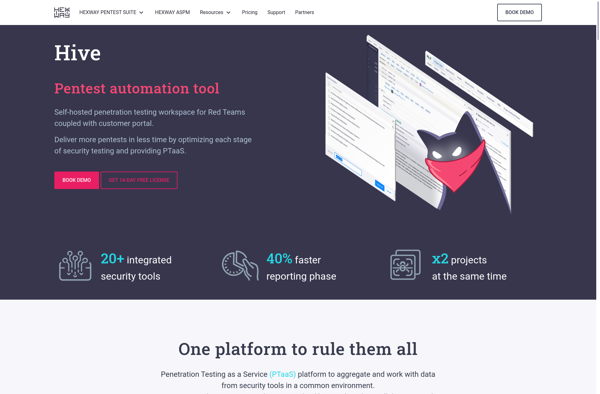

Dradis

Faraday IDE

Karmahostage

AttackForge.com


Poortego