SCM-Manager is an open source tool for managing Git, Mercurial, and Subversion repositories. It provides a web interface for repository browsing, commit management, access control, and integration with issue trackers.
SCM-Manager: Open Source Repository Management Tool
Manage Git, Mercurial, and Subversion repositories with SCM-Manager, an open source tool providing web interface for repository browsing, commit management, access control, and issue tracker integration.
What is SCM-Manager?
SCM-Manager is an open source tool for managing Git, Mercurial, and Subversion software configuration repositories. It provides a centralized web interface and REST API for browsing repositories, managing commits, branching and merging, comparing revisions, reviewing code changes, and more.
Key features of SCM-Manager include:
Web UI for browsing repositories, source code, commits
Management of access permissions and accounts
Code review tools with commenting and annotation
Powerful search across repositories
Integration with CI servers like Jenkins and issue trackers like Jira
Plugins for extending functionality
Role-based access control
LDAP/Active Directory integration
SCM-Manager aims to make working with source code repositories easy for development teams. It can be self-hosted on internal servers to keep proprietary code private behind a company firewall. The open source tool is written in Java and released under the BSD license.
SCM-Manager Features
Features
Web-based interface for browsing repositories
Support for Git, Mercurial, and Subversion
Access control and user management
Integration with issue trackers like Jira
Code review and pull request workflow
Repository hooks and plugins
REST API
Pricing
Open Source
Pros
Free and open source
Easy to install and configure
Intuitive web interface
Powerful access control features
Extensible through plugins
Cons
Limited scaling capabilities for large teams
Missing some advanced enterprise features
Limited integration options compared to paid tools
GitLab is an open source end-to-end software development platform with built-in git repository management, issue tracking, code reviews, activity feeds, wikis and continuous integration/continuous deployment (CI/CD). It allows developers to host and collaborate on Git repositories and connect all stages of the DevOps lifecycle in the same user interface.Some key...
Gitea is an open source, self-hosted Git service written in Go. It offers many of the core features of GitHub, GitLab, and Bitbucket including:Managing Git repositories with access controls, activity feeds, issue tracking, pull requests, and wikisUser account registration and authentication, as well as organization/team managementRepository browser with branch browser,...
GitPrep is a software application designed to enhance team collaboration when using Git for version control. It works by adding additional functionality and structure on top of an existing Git repository.Some of the key features GitPrep provides include:Access controls for managing user permissionsCode review workflows such as pull requests and...
NotABug.org is a free and open source code collaboration platform launched in 2021 as an ethical, libre alternative to services like GitHub. Like GitHub, NotABug allows developers to host git repositories, manage access controls, perform code reviews, track issues, and collaborate on software development projects.What sets NotABug apart is its...
Apache Allura is an open source software forge or development collaboration platform. It allows development teams and open source projects to collaborate effectively on software development by providing a central platform that integrates essential tools including:Source code management with Git and SVNIssue tracking and agile project managementMailing lists and discussion...
GNU Savannah is a free web-based project hosting platform created and maintained by the Free Software Foundation. It was launched in 1999 to provide a central place for developers and users of free software to collaborate on open source projects.Some key features of GNU Savannah include:Version control using Git, CVS,...
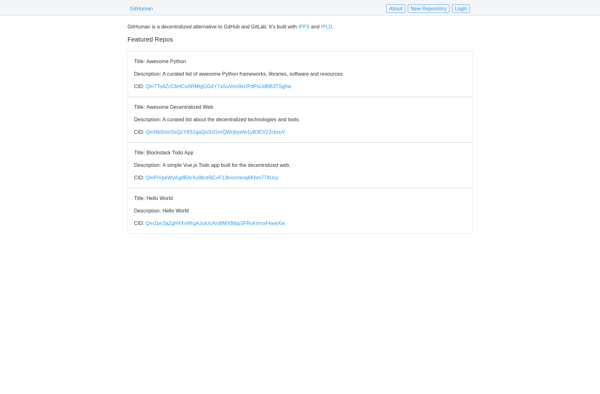
GitHuman is an AI-powered Git and GitHub assistant designed to help developers be more productive. It integrates with your development environment to provide useful suggestions, automation, and insights by understanding context about your code.Some key features of GitHuman include:Automated branch naming and pull request titles based on code changesAutomatic issue...
Gitblit is an open source, pure Java stack for managing, viewing, and serving Git repositories. It is designed primarily as an organizational Git solution for enabling distributed teams to collaboratively develop software in a consistent and maintainable way.Some key features of Gitblit include:Web viewer for browsing Git repositoriesAccess controls with...
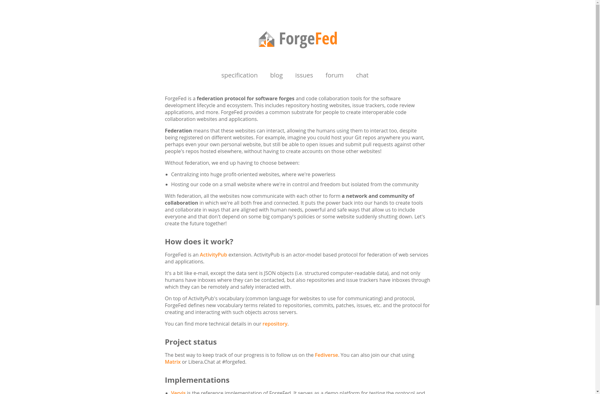
ForgeFed is an open source identity and access management (IAM) solution for centralized authentication, authorization, and user management. It provides core identity capabilities like single sign-on (SSO), social login, multi-factor authentication (MFA), user management, access control, and more to modern applications.Some key capabilities and benefits of ForgeFed include:Single sign-on (SSO)...
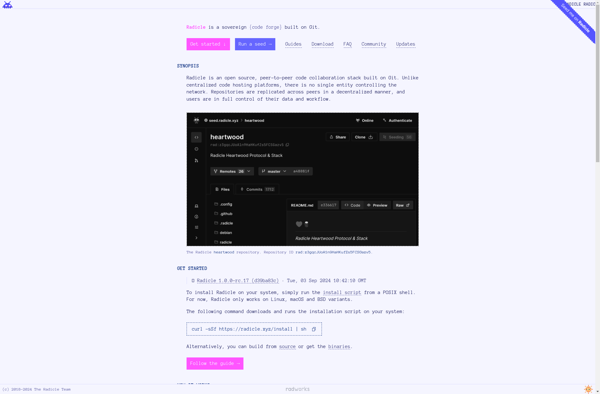
Radicle is a decentralized code collaboration network and protocol built for the needs of software developers. It enables developers to collaborate on code without relying on trusted intermediaries like GitHub or GitLab.Radicle was created to provide an alternative network for source code collaboration that preserves user freedom and privacy. On...