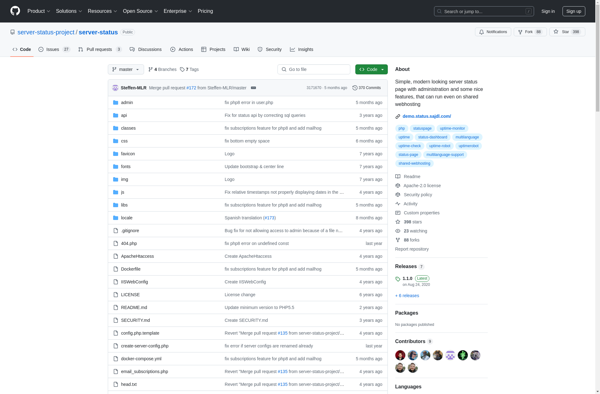
Server Status is an open-source monitoring application that allows administrators to keep track of the status and performance of servers. It provides insight into CPU, memory, disk space, and other metrics.
What is Server Status?
Server Status is an open-source server monitoring application developed by Server Density. It is designed to help system administrators and IT professionals visualize the status, performance, and availability of their servers.
Some key features of Server Status include:
Monitoring of server metrics like CPU usage, memory usage, disk space, network traffic, and more
Visual dashboards for at-a-glance views of all servers
Alerting based on predefined thresholds for critical metrics
Historic data retention and reporting to spot performance trends
Support for monitoring both Linux and Windows servers
A simple and intuitive web-based interface accessible from any device
Server Status works by installing lightweight data collectors on the servers you want to monitor. The collectors send performance data back to a central Server Status server, which aggregates the data and provides the visual dashboards and alerting. Data can be visualized for individual servers or consolidated across groups of servers.
With robust server monitoring capabilities and an easy learning curve, Server Status is a valuable free tool for any small to medium-sized business wanting deeper visibility into the health and performance of their IT infrastructure.
Server Status Features
Features
Real-time monitoring of server performance
Customizable dashboards and alerts
Support for multiple operating systems
Integrations with various services and tools
Historical data and reporting
Scalable and distributed architecture
Pricing
Open Source
Pros
Open-source and free to use
Highly customizable and extensible
Provides detailed insights into server health
Supports a wide range of server types and metrics
Easy to set up and use
Cons
May require some technical expertise to configure and maintain
Limited support for enterprise-level features compared to commercial tools
Reliance on community-driven development and support
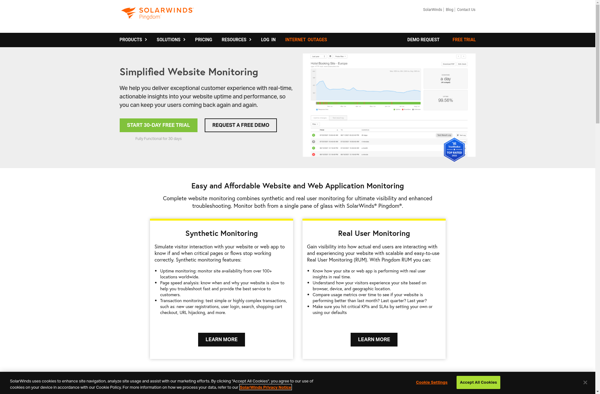
Pingdom is a popular website monitoring service used to track uptime, performance, and speed of websites and web applications. It works by checking websites periodically from locations around the world to test response time and uptime.Key features of Pingdom include:Uptime monitoring - Get alerts if your site goes downPage speed...
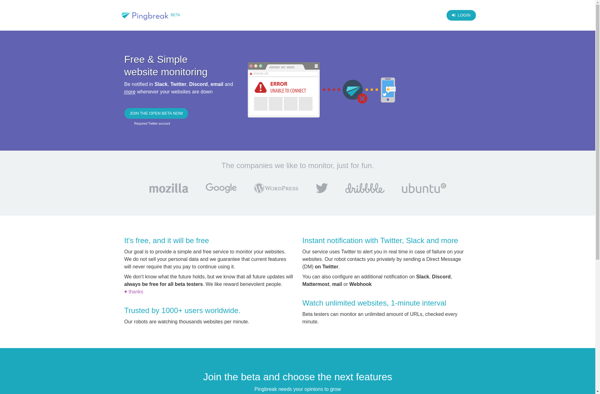
Pingbreak is a productivity software designed for remote teams and distributed workers. It is used to help improve focus and increase productivity by limiting access to distracting websites during selected time periods.Here are some key features of Pingbreak:Allows users to block distracting websites like social media, news, and entertainment sites...
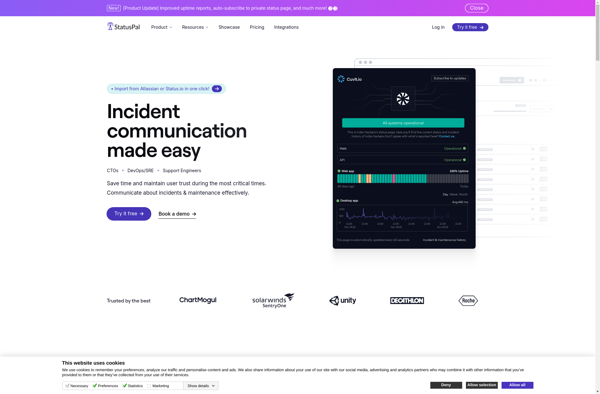
Statuspal.io is a modern status page and uptime monitoring platform designed to keep users informed about the status of websites, applications, and infrastructure. The software allows businesses and organizations to easily create and customize a public-facing status page to improve communication and transparency with customers or end-users.Key features of Statuspal.io...
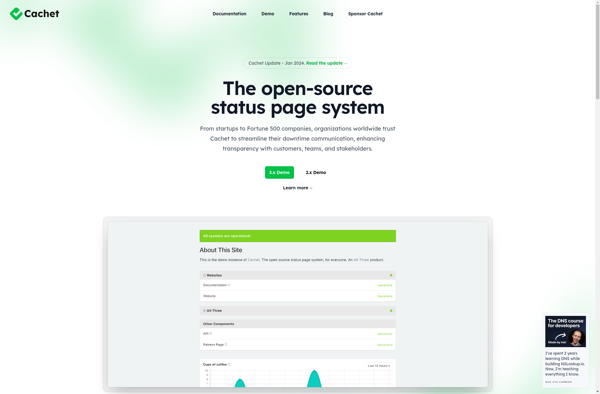
Cachet is an open source status page system that allows users to create elegant status and incident report pages to communicate issues with websites, applications, networks, or services. It provides a dashboard for administrators to quickly update the status page and push notifications to subscribed users.Some key features of Cachet...
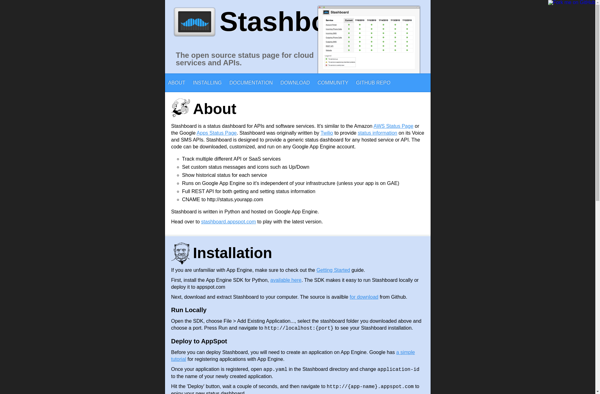
Stashboard is an open-source status dashboard application written in Python using the Django web framework. It is designed to be lightweight, customizable and easy to set up to display the status of various services on a simple web interface.Some key features of Stashboard include:Simple and clean visual status display showing...
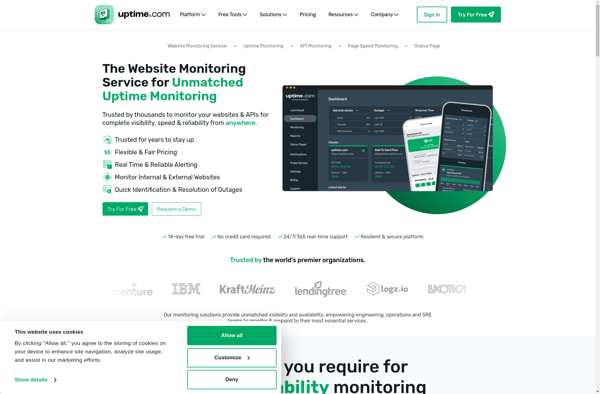
Uptime.com is a comprehensive website and application monitoring service used by businesses to track uptime and performance. It provides a variety of monitoring methods including HTTP, HTTPS, ping, automated transactions, and advanced monitoring to simulate user journeys.Key features of Uptime.com include:Uptime monitoring with 5 minute check intervalsInstant alerts via email,...
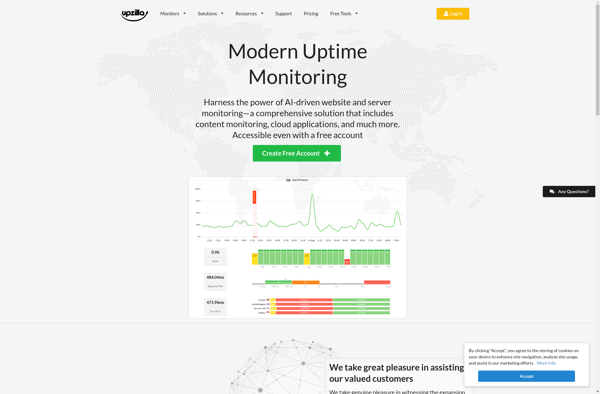
Upzilla is an open-source, web-based defect tracking system that provides an alternative to Bugzilla. It allows development teams to track software bugs, issues, and feature requests throughout the development process.Some key features of Upzilla include:Crowdsourced voting allows users to vote on bug priorityCustomizable fields, views, and workflowsAttach files and screenshots...
WhatIsStatus is an open-source status page system designed to help companies, organizations and web services clearly communicate system status, incidents, maintenance and outages to their users. It provides an easy way to create an elegant, customizable status page without needing developers or coding expertise.Some key features of WhatIsStatus include:Intuitive admin...
KnownOutage is a software platform designed specifically for IT teams to log, track, and communicate technology outages and incidents. It serves as a centralized hub to document IT issues as they occur, notify affected stakeholders, and provide ongoing progress updates.With KnownOutage, IT teams can create customizable alert templates that go...
Instatus is an open-source, decentralized microblogging platform that emphasizes privacy and security. Developed as an alternative to commercial social networks like Twitter or Facebook, Instatus allows users to post short messages, connect with friends, and share photos, videos, and links.Some key features of Instatus include:Decentralized architecture - Data is stored...