Slang is an audio programming language used for creating interactive audio applications. It allows manipulating audio signals and interfacing with peripherals using an easy to learn syntax similar to C or Java.
Slang Audio Programming Language: Easy-to-Learn Syntax for Interactive Audio
Learn how Slang creates interactive audio applications by manipulating audio signals and interfacing with peripherals, similar to C or Java
What is Slang audio programming language?
Slang is an audio programming language designed specifically for creating interactive audio applications such as virtual synthesizers, audio effects, sound installations, smartphone apps, and video game sound engines. It provides a high-level, object-oriented syntax that is easy to learn even for non-programmers.
Some key capabilities of Slang include:
Real-time audio signal processing using mathematical and logical operators
Precise timing control for sample-accurate operations
Flexible routing system for connecting sound sources, effects, and outputs
Support for common audio plugins and formats like VST/AU effects
Low-latency audio input/output and MIDI interfacing
Integration with other media like graphics, text, sensors, etc.
Cross-platform support for desktop, web, mobile, and embedded systems
By abstracting away the complex low-level audio programming, Slang allows developers to focus on creative design rather than technical implementation. It includes an extensive class library tailored for audio applications as well as hundreds of code examples to learn from.
Slang audio programming language Features
Features
Real-time audio synthesis and processing
Event scheduling for musical sequences
Support for common audio plugins and effects
Integration with various hardware controllers
Graphical patching interface for connecting modules
Extensible through C++ plugins
Cross-platform (Windows, Mac, Linux)
Pricing
Open Source
Pros
Intuitive syntax for creative coding
Low latency for real-time interactivity
Active community support
Open source and free to use
Cons
Steep learning curve compared to visual programming languages
Limited documentation and tutorials
Not as full-featured as commercial options like Max/MSP
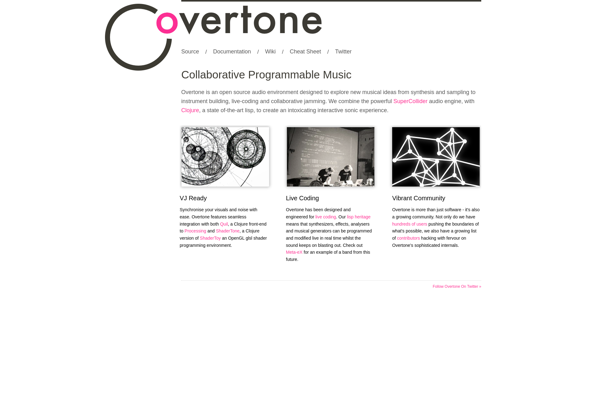
Overtone is an open source audio synthesis and signal processing library for the Clojure programming language. It allows developers to leverage the power of functional programming to create and manipulate audio in real time.Some key features of Overtone include:An intuitive API for generating and processing sound using basic waveforms like...
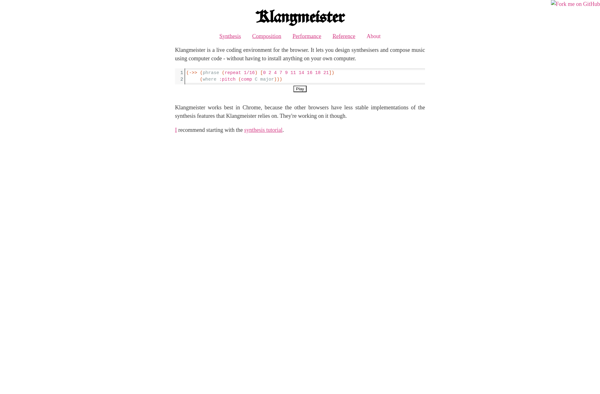
Klangmeister is a free, open-source digital audio workstation and MIDI sequencer software for Windows, Mac, and Linux operating systems. It provides a comprehensive set of tools for recording, editing, mixing, and producing music and audio.Some key features of Klangmeister include:Multi-track audio and MIDI recording and editingSupport for VST plugins, virtual...
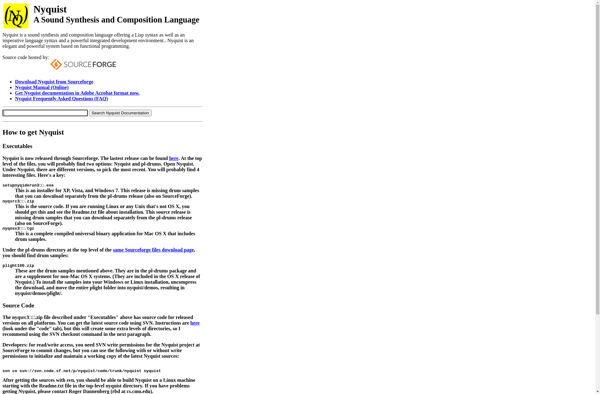
Nyquist is an open-source computer music programming language developed at the Center for Computer Research in Music and Acoustics (CCRMA) at Stanford University. It is designed for sound synthesis, audio processing, and music composition.Some key features of Nyquist include:Syntax based on the Lisp programming language, making it highly expressive and...
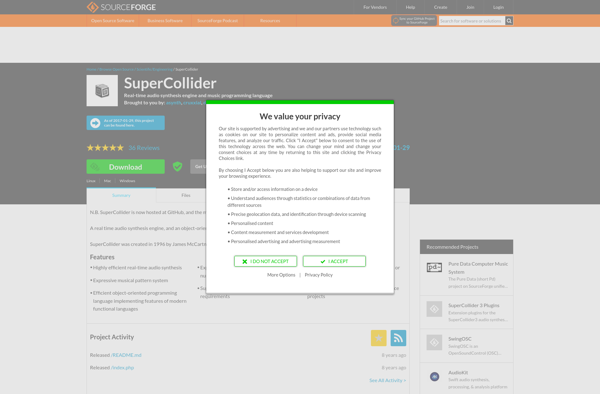
SuperCollider is an open source audio synthesis and algorithmic composition application originally released in 1996 by James McCartney. It features two main components - a unique programming language designed for real time audio synthesis and processing, and an interpreter for writing applications to control audio processes.The SuperCollider language (often abbreviated...
Negasonic is an open-source, cross-platform video editing application that serves as an alternative to premium software like Sony Vegas. It provides a decent feature set for basic video editing needs.Some of the key features of Negasonic include:Multi-track timeline for arranging clipsImporting and exporting a wide range of media formatsTrimming, slicing...
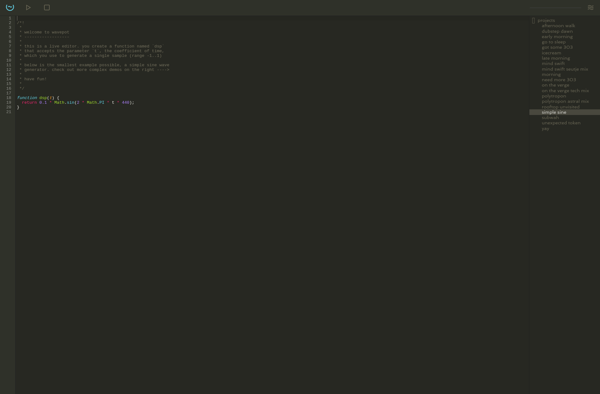
Wavepot is an open-source, cross-platform digital audio workstation and MIDI sequencer software application for recording, editing and mixing audio files. Developed as free software, Wavepot is designed to have a simple, easy-to-use graphical user interface.Some key features of Wavepot include:Multitrack audio editing timeline with non-destructive editing toolsSupport for VST audio...
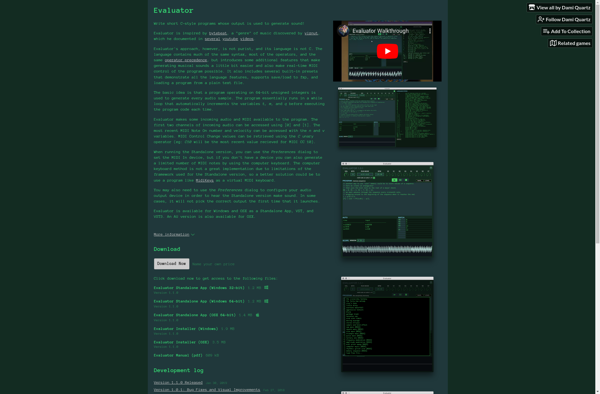
Evaluator is a powerful yet easy to use software for creating online questionnaires, surveys, evaluations and assessments. With an intuitive drag-and-drop interface, Evaluator makes it simple for anyone to quickly build assessments containing different types of questions including multiple choice, short answer, rating scale, rank order and more.Key features include:Drag-and-drop...
ChucK is an audio programming language that was created in 2003 by Ge Wang and Perry Cook at Princeton University. It is designed specifically for real-time sound synthesis and music creation, allowing users to manipulate audio parameters in real-time through an easy-to-learn syntax.One of the key features of ChucK is...
Csound is a sound design, music synthesis and signal processing system. It was originally written at MIT by Barry Vercoe in 1985 as a successor to the MUSIC-11 synthesis language. Csound is one of the most widely used software sound synthesis languages today with a worldwide community of users. It...