Solidity
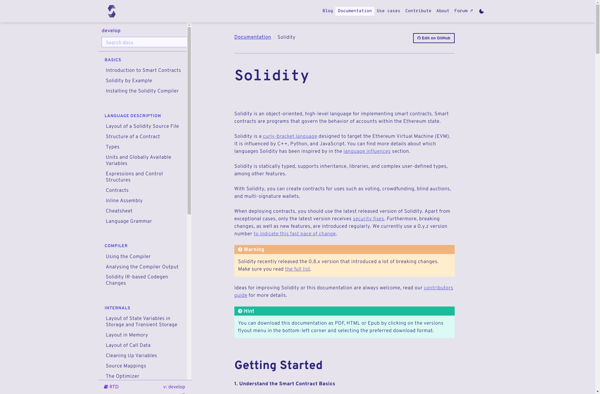
Solidity: Smart Contract Programming Language
Open-source programming language for Ethereum blockchain, contract-oriented with JavaScript-like syntax, ideal for implementing blockchain apps and self-executing contracts.
What is Solidity?
Solidity is an object-oriented, high-level programming language for implementing smart contracts. Smart contracts are programs stored on a blockchain that run when predetermined conditions are met. Solidity was developed by Gavin Wood, Christian Reitwiessner, Alex Beregszaszi, and several Ethereum core contributors in 2014. It is one of the most popular languages for writing smart contracts on Ethereum and building decentralized applications (DApps).
Some key details about Solidity:
- Statically typed, supports inheritance, libraries and complex user-defined types among other features
- Designed for the Ethereum Virtual Machine (EVM), compiles to EVM bytecode
- Influenced by C++, Python and JavaScript with similar syntax
- Contains security tools like over/underflow checks, access modifiers, out-of-gas exceptions etc.
- Open-source under the GPL license, governed by offline community of developers and the online community
Solidity continues to evolve with new versions released frequently. It allows developers great flexibility in implementing new kinds of smart contracts and blockchain-based systems.
Solidity Features
Features
- Statically typed programming language
- Develop smart contracts for Ethereum blockchain
- Similar syntax to JavaScript
- Supports inheritance, libraries and complex user-defined types
- Built-in cryptographic functions
- Allows implementation of complex financial contracts
Pricing
- Open Source
Pros
Cons
Official Links
Reviews & Ratings
Login to ReviewThe Best Solidity Alternatives
View all Solidity alternatives with detailed comparison →
Top Development and Blockchain and other similar apps like Solidity
Here are some alternatives to Solidity:
Suggest an alternative ❐
JavaScript

Ethereum


Real-Time JavaScript Tool

KIN Cryptocurrency

Bytom