Webapp Manager is an open-source web application manager that allows you to easily install, update, backup, and manage web applications like WordPress, Joomla, Drupal, and more on your server. It provides a simple interface to handle routine web application management tasks.
Webapp Manager: Open-Source Web App Management Tool
Manage WordPress, Joomla, Drupal and more on your server with a simple interface for easy installation, updates, backups and routine web app management tasks
What is Webapp Manager?
Webapp Manager is an open source web application management tool that simplifies installing, managing, and updating popular web applications on Linux servers. It provides a user-friendly interface and automation tools to handle routine tasks like:
One-click installation of over 30+ web apps including WordPress, Joomla, Drupal, and more
Updating web apps and their components with a single click
Backing up MySQL databases and web app files
Managing database users, checking disk space usage, and more
Monitoring web app status and troubleshooting issues
Securing web apps with free SSL, configuring firewalls, managing cron jobs
Key features include roll-back capabilities to easily revert an app to previous versions after a faulty update, cloning existing app installs to replicate configuration, scheduled backups to external storages like Dropbox or S3, one-click auto updates across all apps, multi-server management capabilities, and more. The intuitive UI makes web app management simple for novices and web developers alike.
As an open source project, Webapp Manager is licensed under the GNU GPLv3 and available on SourceForge. It supports CentOS, Ubuntu, Debian and RHEL Linux distributions. With its simplicity and extensive feature set for web app management, Webapp Manager provides an excellent alternative to hosting control panels.
Webapp Manager Features
Features
One-click installation of popular web apps like WordPress, Joomla, Drupal, etc
Automatic updates and backups
Web-based interface for easy remote management
User and access control
Multi-server management
Web app cloning
Custom app deployment
Monitoring and notifications
Pricing
Open Source
Free
Pros
Simplifies web app management
Saves time with automation
Improves security with backups and access controls
Easy to use interface
Open source and free
Cons
Limited app support compared to control panels like cPanel
Less flexibility than manual installation and management
Requires some technical knowledge to setup and configure
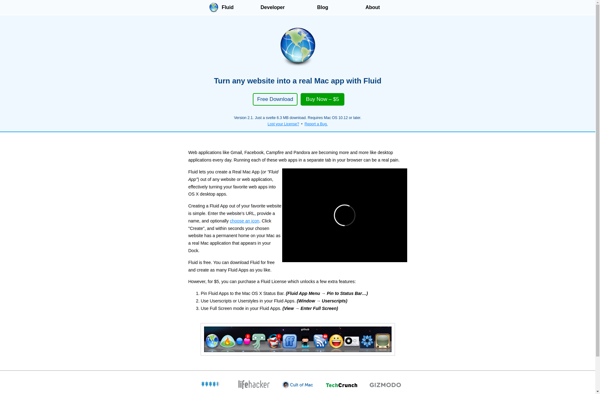
Fluid is an open-source web application that allows users to wrap websites in an application-style window so they can be used like desktop apps. It works by transforming websites into standalone macOS applications.Some key features of Fluid include:Wraps websites in a native-looking and feeling macOS window with controls like close,...
Native Alpha is a free, open-source vector graphics editor for Windows, macOS and Linux operating systems. It provides professional-level tools for illustration, graphic design and digital art with an intuitive user interface.As an alternative to paid software like Adobe Illustrator, CorelDRAW or Affinity Designer; Native Alpha offers an affordable option...
Nativefier is an open-source command line tool that allows you to easily create a desktop application for any web page with just a single command. It leverages Electron, Mozilla's open-source framework which also powers popular apps like Slack, Visual Studio Code and Discord.Here's how it works: You provide a URL...
NeutralinoJS is an open source lightweight cross-platform desktop application framework that allows developers to build desktop apps using web technologies like HTML, CSS and JavaScript. It uses Chromium and Node.js under the hood to allow web developers to leverage their existing skills to create lightweight and performant desktop apps.Some key...
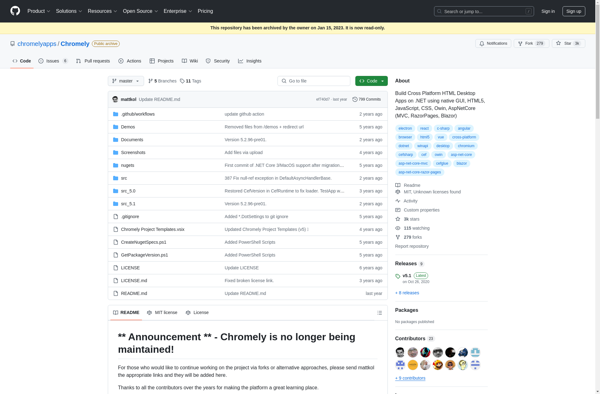
Chromely is an open-source .NET framework that allows developers to create desktop applications using web technologies. It is built on top of the Chromium Embedded Framework (CEF) and allows .NET developers to leverage Chromium, HTML5, CSS3, and JavaScript to build cross-platform desktop apps that can run on Windows, Mac, and...
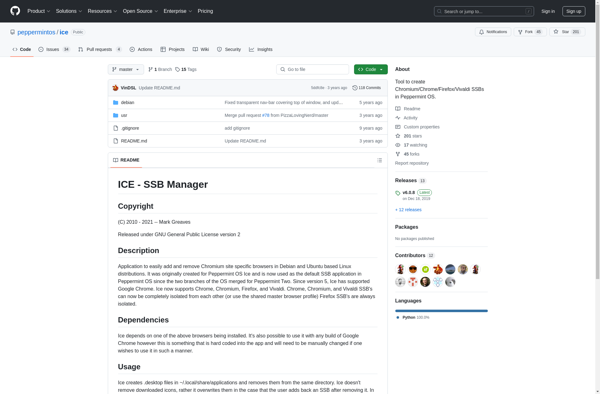
Peppermint Ice is a lightweight Linux distribution based on Lubuntu, which itself is a variant of Ubuntu that uses the LXDE desktop environment instead of Unity or GNOME. Peppermint Ice builds on top of Lubuntu to create an operating system focused specifically on delivering web applications with speed and efficiency.Some...
WebDGap is an open-source web application firewall (WAF) designed to protect web applications by filtering, monitoring, and blocking malicious HTTP traffic. It sits between a web application and the Internet, analyzing all incoming and outgoing HTTP/HTTPS requests to identify and block threats like cross-site scripting (XSS), SQL injection, remote file...
Proton Native is an open-source framework built on top of React, Electron, and Node.js for creating cross-platform desktop applications using JavaScript, HTML and CSS.Some key capabilities and benefits of Proton Native include:Write code once and deploy to Windows, macOS and LinuxUse existing knowledge of web development (React, CSS, etc.)Access native...
WebApps is a leading no-code web application platform that empowers users to create custom business web apps without any coding. Some key features of WebApps include: Intuitive drag-and-drop interface to build web forms, tables, dashboards, workflows and more Connect to various data sources like databases, APIs, Excel, CSV and more...