Dokku is an open source Platform-as-a-Service that runs on a single server similar to Heroku. It allows developers to deploy applications using Git push commands and provides buildpacks for languages like Python, Node.js, Ruby, etc. Dokku is lightweight, easy to install, and good
Open source Platform-as-a-Service with Git push deployment and support for multiple languages like Python, Node.js, Ruby, and more, ideal for smaller applications.
What is Dokku-alt?
Dokku is an open source platform-as-a-service that allows developers to deploy and manage applications on a single server, similar to Heroku. It is implemented in Bash and uses Docker containers behind the scenes to quickly build and run applications.
Some key features of Dokku include:
Simple Git-based deployment - Developers can deploy apps using familiar Git push commands
Heroku buildpacks support - Supports buildpacks for Python, Node, Ruby, Java, PHP and more
Zero downtime deploys - New versions of apps can be deployed without downtime using Docker containers
Add-on plugins - Additional functionality can be added through community plugins
Active development - Dokku has an active open source community behind it
Dokku runs on a single server and is good choice for smaller applications that don't require scaling across multiple machines. It is easy to install, has low resource requirements, and gives developers a Heroku-like, Git-focused deploy experience. The plugin system also allows extending functionality when needed.
Dokku-alt Features
Features
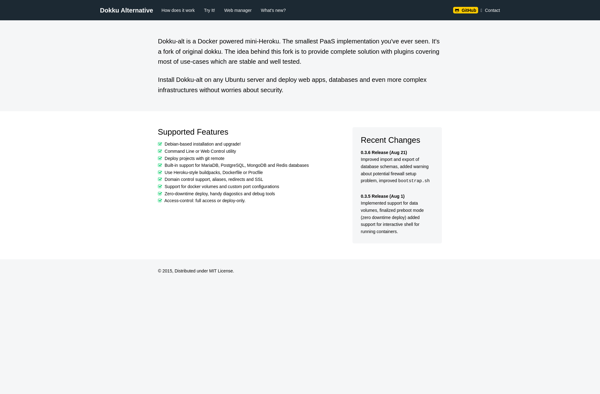
Deploy applications using Git push commands
Supports various programming languages and buildpacks
Lightweight and easy to install
Runs on a single server, similar to Heroku
Provides a simple and intuitive interface for app management
Supports environment variables, persistent storage, and more
Pricing
Open Source
Pros
Open-source and free to use
Highly customizable and extensible
Suitable for smaller applications and development environments
Easy to set up and maintain
Provides a Heroku-like experience on a single server
Cons
Limited to a single server, may not scale well for larger applications
Requires some technical expertise to set up and configure
May lack some advanced features compared to commercial PaaS offerings
Community support and documentation may be less extensive than larger projects
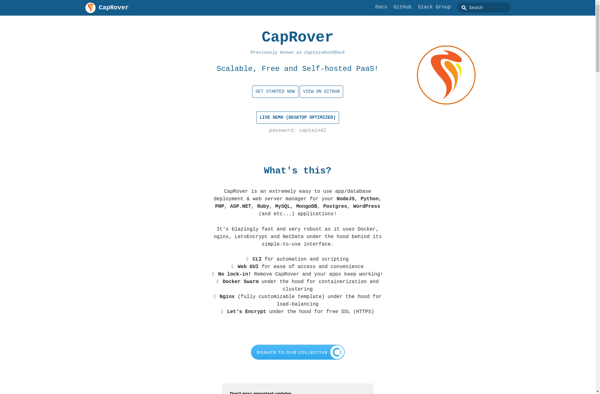
CapRover is an open-source Platform-as-a-Service (PaaS) solution that makes deploying web applications easy and efficient for developers. It handles all the infrastructure and configuration needed to run containerized apps, allowing developers to focus on writing code rather than managing servers.Some key features of CapRover include:One-click deployments of Node.js, static sites,...
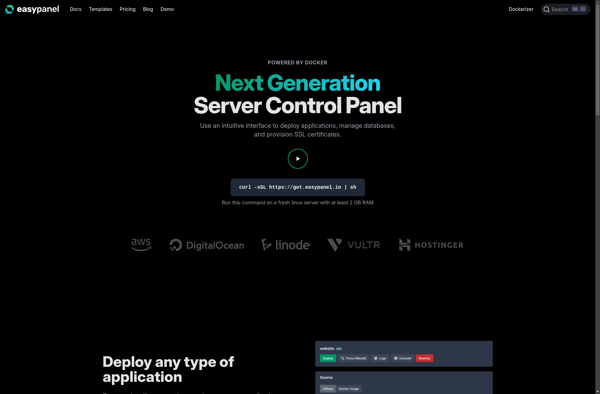
Easypanel is an open-source web hosting control panel that provides a graphical interface and automation tools to help manage web hosting servers and services. Some key features of Easypanel include:Domain management - Add, configure and manage domains pointing to your serverWebsite hosting - Create websites, manage files and set up...
Coolify is a music streaming platform launched in 2019 that focuses on providing users with a personalized listening experience powered by advanced artificial intelligence. It sets itself apart from competitors by really getting to know each user's musical tastes and preferences in order to suggest new artists, albums, and playlists...
Flynn is an open source platform as a service (PaaS) focused on simplifying operations for developers and companies that need to run distributed systems at scale. It is designed and developed by Prime Directive, Inc.Some key features and benefits of Flynn include:Automated operational tasks - Flynn handles deployment, scaling, load...
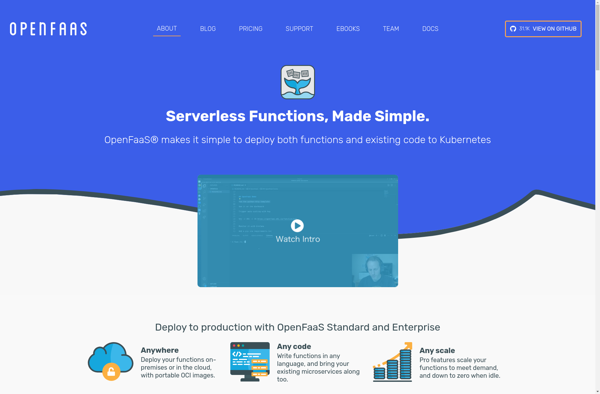
OpenFaas is an open source framework designed to make it easier to deploy serverless functions and microservices. It provides a platform for rapidly building functions that auto-scale and include metrics and monitoring out of the box.Some key features of OpenFaas:Language agnostic - supports functions written in any languageAuto-scaling - functions...
Knative is an open source Kubernetes-based platform for deploying and running serverless workloads. It enables developers to focus on writing stateless, event-driven functions that can scale up and down automatically based on demand.Some key features and benefits of Knative include:Simplified scale-to-zero and event driven architectures on KubernetesAutomatically scales workload instances...
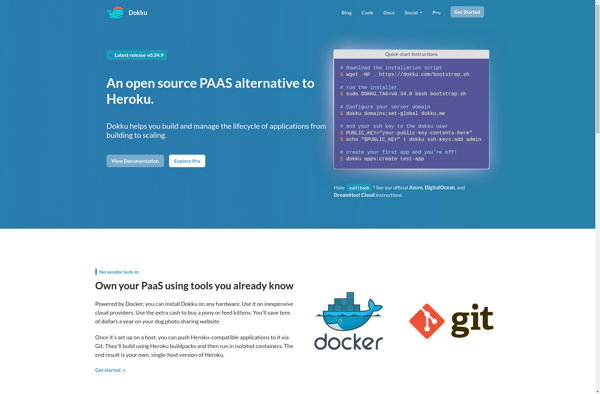
Dokku is an open source Platform-as-a-Service (PaaS) that allows developers to easily deploy, manage, and scale applications on a single server. It is designed to be lightweight, simple to install, and uses Docker and Git workflows under the hood.Some key features of Dokku include:Git push deployments - Developers can deploy...
Kubero is an open-source Kubernetes management platform that provides a graphical user interface to manage Kubernetes environments. It allows users to easily visualize, monitor, and manage Kubernetes infrastructure and workloads through an intuitive dashboard.Some key features of Kubero include:Cluster management - Add, edit, upgrade and delete Kubernetes clustersResource visualization -...
Tsuru is an open source Platform as a Service (PaaS) software designed to help developers deploy and manage their applications without worrying about configuring and maintaining infrastructure. It provides an abstraction layer that automates infrastructure management tasks like provisioning servers, installing dependencies, configuring networking, managing application versions, scaling, monitoring, etc.Some...