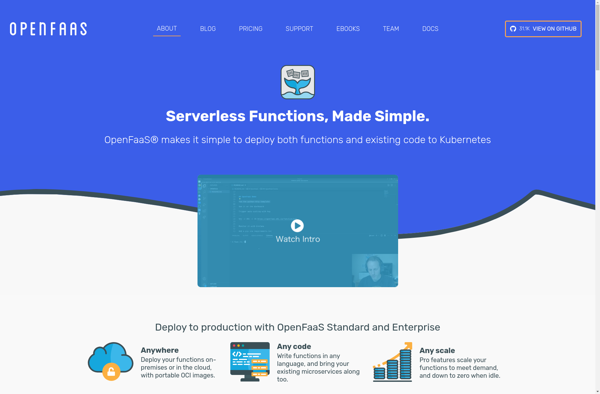
OpenFaas is an open source framework for building serverless functions. It has advanced functionality for auto-scaling and automated deployment of functions.
What is OpenFaas?
OpenFaas is an open source framework designed to make it easier to deploy serverless functions and microservices. It provides a platform for rapidly building functions that auto-scale and include metrics and monitoring out of the box.
Some key features of OpenFaas:
Language agnostic - supports functions written in any language
Auto-scaling - functions scale up and down automatically based on load
Easy deployment - abstracts away infrastructure complexity. Deploy with Docker or Kubernetes.
Monitoring - built-in Prometheus metrics for every function
Open source - GitHub project under active development with a growing community
OpenFass takes care of the underlying infrastructure and resource management so you can focus on writing code. It makes it simple to build event-driven applications composed of microservices. The framework handles scaling up replicas under load and scaling down when demand decreases to optimize cost and performance.
OpenFaas Features
Features
Serverless functions
Auto-scaling
Multiple language support (Node.js, Python, Ruby, C#, etc)
Kubernetes is an open-source system for automating deployment, scaling, and management of containerized applications. It groups containers that make up an application into logical units for easy management and discovery. Kubernetes provides a framework to run distributed systems resiliently across clusters of machines, hide the complexity of managing many different...
Rancher is an open-source container management platform designed to help developers and DevOps teams deploy, manage, and secure containerized applications across multiple infrastructure providers. Key features of Rancher include:Intuitive GUI for managing Kubernetes clusters across public and private clouds, as well as bare metal serversSupport for leading Kubernetes distributions including...
Heroku is a cloud platform as a service (PaaS) that streamlines the process of building, deploying, and scaling applications. Founded in 2007 and later acquired by Salesforce, Heroku has become a popular choice for developers seeking a straightforward and scalable platform for hosting web applications. Heroku abstracts much of the...
CapRover is an open-source Platform-as-a-Service (PaaS) solution that makes deploying web applications easy and efficient for developers. It handles all the infrastructure and configuration needed to run containerized apps, allowing developers to focus on writing code rather than managing servers.Some key features of CapRover include:One-click deployments of Node.js, static sites,...
Rancher Desktop is an open source Kubernetes distribution designed to run on desktop operating systems like macOS, Windows and Linux. It enables developers to easily deploy fully-featured Kubernetes clusters on their local workstations for testing, development and learning purposes.Some key features of Rancher Desktop include:Single downloadable binary that sets up...
Docker Swarm is a container orchestration tool that allows users to manage a cluster of Docker hosts as a single virtual host. It handles the scheduling and distribution of containers automatically across the cluster.Some key features of Docker Swarm include:Automatic container distribution and scheduling - Swarm intelligently schedules containers based...
Apache Mesos is an open source cluster manager that provides efficient resource isolation and sharing across distributed applications or frameworks. It sits between the application layer and the operating system on a distributed system, and makes it easier to deploy and manage applications in large-scale clustered environments.Some key features of...
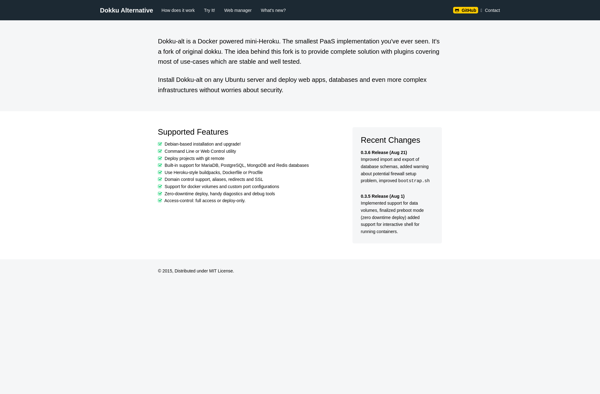
Dokku is an open source Platform-as-a-Service (PaaS) that allows developers to easily deploy, manage, and scale applications on a single server. It is designed to be lightweight, simple to install, and uses Docker and Git workflows under the hood.Some key features of Dokku include:Git push deployments - Developers can deploy...
AWS Lambda is a serverless computing service provided by Amazon Web Services (AWS). It allows users to run code without having to provision or manage servers. With Lambda, users can upload code and Lambda takes care of everything required to run and scale the code in response to events.When an...
Mesosphere DCOS (Datacenter Operating System) is an open source distributed operating system based on Apache Mesos technology for efficiently managing clusters of computers. It provides resource sharing and scalability for distributed applications or services.Key features of DCOS include:Builds on top of Apache Mesos to take advantage of resource sharing and...
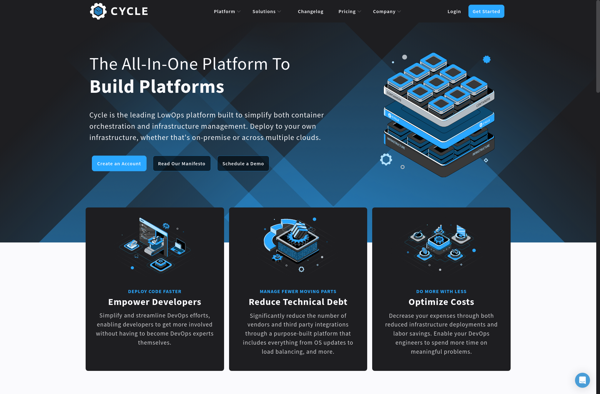
Cycle.io is a flexible, web-based project management software designed for agile development teams. It provides a variety of tools to help plan, organize, track and manage software projects of all sizes.Key features of Cycle.io include:Customizable boards to visualize workflows and track progressStory maps, epics, user stories, tasks, bugs, and custom...
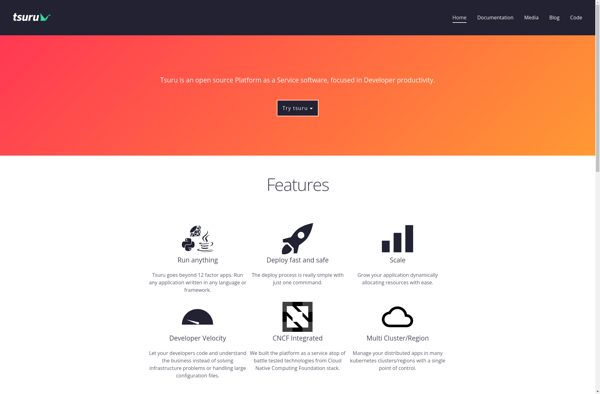
Tsuru is an open source Platform as a Service (PaaS) software designed to help developers deploy and manage their applications without worrying about configuring and maintaining infrastructure. It provides an abstraction layer that automates infrastructure management tasks like provisioning servers, installing dependencies, configuring networking, managing application versions, scaling, monitoring, etc.Some...
Dokku is an open source platform-as-a-service that allows developers to deploy and manage applications on a single server, similar to Heroku. It is implemented in Bash and uses Docker containers behind the scenes to quickly build and run applications.Some key features of Dokku include:Simple Git-based deployment - Developers can deploy...