FactCheck
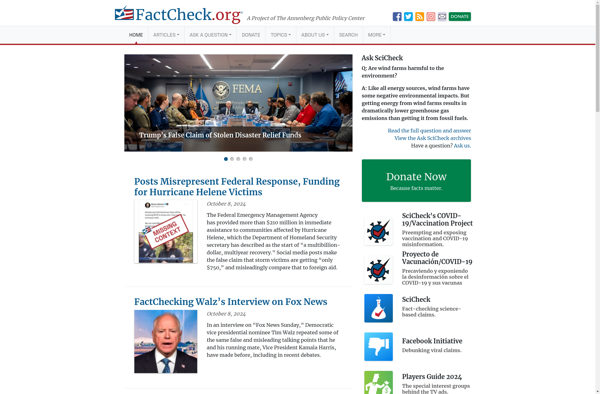
FactCheck: Nonpartisan Fact-Checking of Politics
Nonpartisan fact-checking of politics, correcting false claims with historical data, government reports & more
What is FactCheck?
FactCheck.org is a nonpartisan, nonprofit website based at the University of Pennsylvania in Philadelphia that aims to reduce the level of deception and confusion in U.S. politics. It is a project of the Annenberg Public Policy Center.
FactCheck monitors the factual accuracy of what is said by major U.S. political players in the form of TV ads, debates, speeches, interviews, and news releases. Its goal is to apply the best practices of both journalism and scholarship, and to increase public knowledge and understanding.
When factual errors and misleading statements are found, FactCheck presents the facts and restores the truth to the political dialogue. Sources used to back up their analysis include historical data, government reports, think tank studies, interview transcripts, independent analyses, and online databases.
The project is made up of professional journalists with decades of experience at major newspapers, wire services, television networks, and magazines. Their work is subject to the same rigorous internal fact-checking process as news stories produced for the Philadelphia Inquirer.
FactCheck states that they are not interested in opinions, publicity stunts, or the non-factual bickering common in partisan politics, but focus strictly on factual accuracy. The goal is to enlighten voters, reduce confusion and deception, and solve problems with misinformation or missing information.
FactCheck Features
Features
- Checks factual accuracy of statements by politicians and policymakers
- Monitors and corrects false/misleading claims
- Uses historical data, government reports, think tank studies, interview transcripts, independent analyses to fact check claims
Pricing
- Nonprofit
Pros
Cons
Official Links
Reviews & Ratings
Login to ReviewThe Best FactCheck Alternatives
View all FactCheck alternatives with detailed comparison →
Top News & Books and Fact Checking and other similar apps like FactCheck
Here are some alternatives to FactCheck:
Suggest an alternative ❐
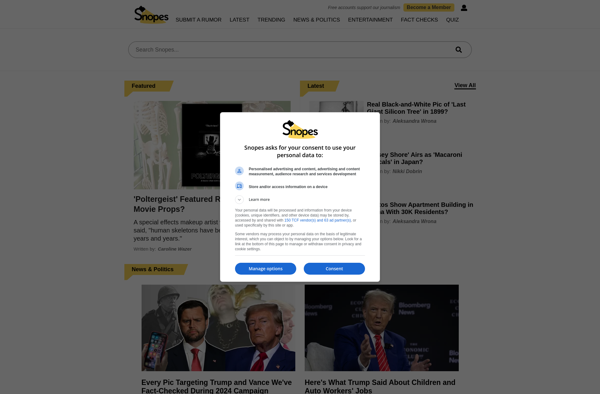
Snopes
Hoax Slayer

TruthOrFiction

VeriFact