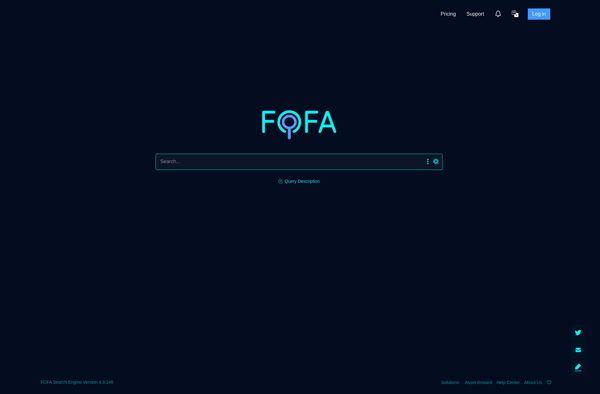
FOFA is a powerful cybersecurity search engine that allows users to search for internet assets and retrieve detailed information about them. It has advanced search syntax and extensive coverage of devices, services, and data leaks.
Search for internet assets and retrieve detailed information about them with a powerful cybersecurity search engine that features advanced search syntax and extensive coverage of devices, services, and data leaks.
What is FOFA?
FOFA is a powerful cyber threat intelligence search engine developed by Bit4WOOD in China. It allows users to search for a wide range of internet assets including websites, IP addresses, domains, network infrastructure, open ports, certificates, and data leaks.
Some key features of FOFA include:
Comprehensive coverage of internet assets across the global IP space
Advanced search syntax for precise queries and asset discovery
Real-time indexing of newly discovered assets and data leaks
Extensive databases providing detailed information on assets
Custom reporting, data analytics, and visualization tools
API access for integrating FOFA data into other platforms
FOFA offers greater depth and coverage compared to other search engines like Shodan or Censys for cybersecurity research and network reconnaissance. It can help red teams map out attack surfaces, and blue teams gain visibility on external threats and exposed assets. Overall, FOFA is an essential tool for cyber threat analysis, vulnerability management, and organizational security.
FOFA Features
Features
Comprehensive coverage of devices, services, and data leaks
Powerful search syntax and operators
Real-time search results
Threat intelligence integration
Customizable dashboards and reporting
Collaboration tools
API access
Pricing
Subscription-Based
Pros
Massive database of internet assets
Advanced search capabilities
Fast results
Useful for security research, recon, threat hunting
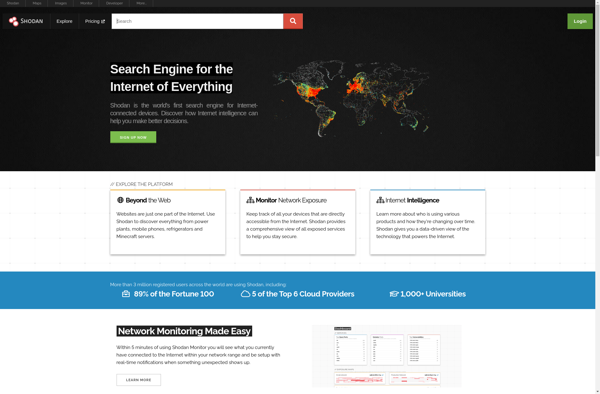
Shodan is a search engine for finding Internet-connected devices and services. Unlike traditional search engines that index the content of web pages, Shodan specifically targets hardware and software that is connected to the Internet, ranging from home routers and webcams to industrial control systems and SCADA devices.Some key features and...
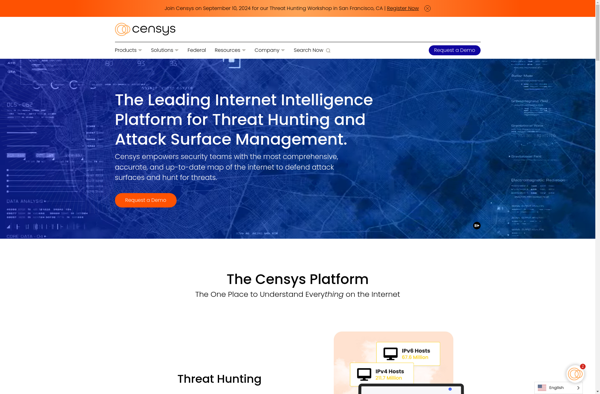
Censys is an internet search engine designed specifically for information on Internet-connected servers, websites, and devices. It allows cybersecurity researchers, businesses, and other users to view real-time data on the networks and systems that are exposed to the public internet.Some of the information Censys provides includes:Open ports and services running...
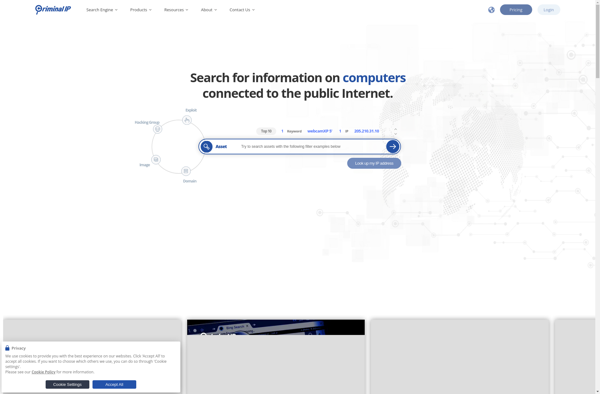
Criminal IP is an investigative software designed specifically for cybersecurity professionals and law enforcement agencies to trace IP addresses and gather actionable intelligence on cybercriminals. It integrates seamlessly with other security solutions to accelerate investigations.Key features of Criminal IP include:IP address tracking - Identify location, ISP, hosting provider, and other...
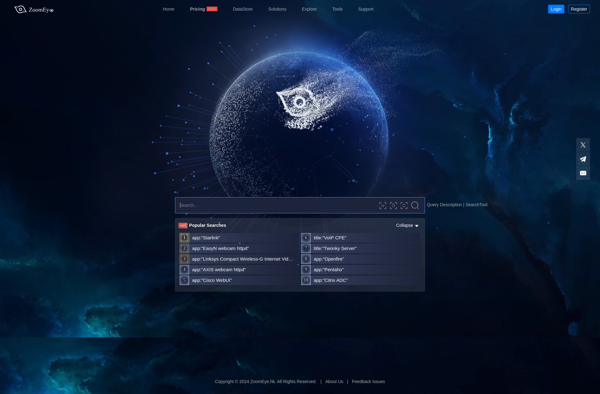
ZoomEye is a search engine and data mining tool for cyberspace that facilitates the discovery and analysis of devices exposed to the public internet. It functions like a search engine for cyberspace, allowing users to easily search for information on IPs, websites, and other devices.Some key features of ZoomEye include:Search...
Reposify is an open source management platform designed to help organizations gain visibility and control over the open source components used in their software applications. It acts as a central inventory that automatically tracks open source usage across an organization's entire codebase, including public and private repositories.Key features of Reposify...
Websecurify is a powerful website security and malware detection tool. It provides automated vulnerability scanning and malware detection for websites. Key features include:Automatic discovery and scanning of entire website assets including pages, scripts, images, etc.Detection of common vulnerabilities like SQL injection, XSS, weak passwords, etc.Detection of malware, viruses, trojans, backdoors,...
Netlas.io is a visual analytics platform designed to help businesses monitor, analyze, and optimize their website performance and user experience. It provides an easy-to-use interface to track and visualize website traffic, user behavior flows, conversion funnels, and other key web metrics.Some of the key features of Netlas.io include:Interactive flow maps...
Thingful is an open data search engine launched in 2014 that aims to make open data more discoverable and usable. It allows users to easily search over 1,500 open datasets from around the world in one place instead of needing to visit different open data portals.Thingful provides a clean, intuitive...
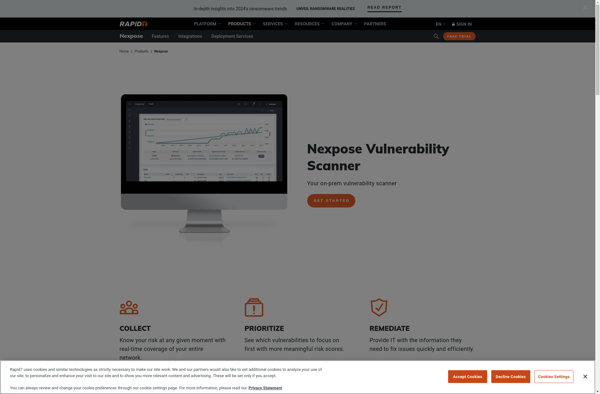
Nexpose is a comprehensive vulnerability management and penetration testing software developed and maintained by Rapid7. It enables organizations to identify security weaknesses across their networks, systems, web applications, databases, and endpoints.Key features of Nexpose include:Asset discovery - Automatically discovers devices, ports, services, vulnerabilities, and misconfigurations on the network.Risk-based vulnerability management...
BinaryEdge is an automated asset discovery and attack surface management platform. It performs internet-wide scans to identify exposed systems, applications, network devices, misconfigurations, and vulnerabilities across an organization's digital footprint.Key features include:Internet-wide asset discovery - Continuous scanning of IPv4 space, domains, ports, services, technologies, and more.Attack surface monitoring - Ongoing...
Skipfish is an open source, active web application security reconnaissance tool. It was created by Michal Zalewski for Google as an automated security testing tool.Here are some key features of Skipfish:It carries out recursive crawl and dictionary-based probes on web applications to prepare an interactive sitemap.It has over 3,400 built-in...
Arachni is an feature-full, modular, high-performance Ruby framework aimed towards helping penetration testers and administrators evaluate the security of web applications. It is smart, optimized, stable, and portable making it a reliable tool for web application security assessments.Some key features of Arachni include:High performance web crawling capable of analyzing hundreds...
Wapiti is an open-source web application vulnerability scanner that is designed to audit the security of web applications and web services. It works by crawling a target website and scanning for vulnerabilities such as XSS, SQL injection, file inclusion, command execution, CRLF injection, and more.Some key features of Wapiti include:Detects...
Grabber is a comprehensive web application security scanner designed to automatically crawl, audit, and exploit vulnerabilities in web applications and APIs. It provides a user-friendly interface and powerful scanning engine to identify security flaws such as SQL injection, cross-site scripting, remote file inclusion, command execution, CRLF injection, XXE injection, and...
Vulners API is a comprehensive vulnerability database and cyber threat intelligence feed. It contains information on over 160,000 known software vulnerabilities collected from a variety of sources including the National Vulnerability Database (NVD), security advisories, bug trackers, exploit databases, malware signatures, and open source intelligence.The key capabilities provided by Vulners...
SearchDiggity is a privacy-focused search engine that does not track or profile its users. It was created as an alternative to Google and other large search engines that collect user data for advertising purposes.Unlike Google, SearchDiggity does not store IP addresses, build user profiles, or retain search history. It also...
ONYPHE is an online threat intelligence platform used by cybersecurity professionals to gather information on cyber threats. It aggregates large amounts of threat data from open sources across the internet and structures it to enable effective searching and analysis.Some key capabilities and features of ONYPHE include:Search by IP address, domain...
HTTPCS Security is an open-source web application firewall (WAF) designed to protect websites and web applications from common exploits and vulnerabilities. It works by filtering, monitoring, and blocking potentially malicious HTTP traffic before it reaches the web application.Some key features of HTTPCS Security include:Protection against SQL injection, cross-site scripting (XSS),...