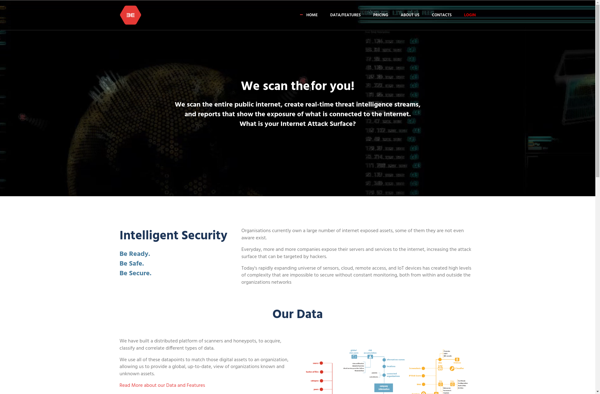
Reposify is a SaaS platform that helps companies manage their software compositions by providing visibility into open source usage. It allows you to track open source components in use across code repositories and pipeline them into your SDLC process.
Get visibility into open source usage, track components in use across code repositories, and integrate into SDLC with Reposify's SaaS platform
What is Reposify?
Reposify is an open source management platform designed to help organizations gain visibility and control over the open source components used in their software applications. It acts as a central inventory that automatically tracks open source usage across an organization's entire codebase, including public and private repositories.
Key features of Reposify include:
Automatic scanning of code repositories to detect open source components, dependencies, and licensing information
A central catalog that documents all open source packages in use, with data like versions, licenses, security vulnerabilities, and more
Visual dependency maps showing the relationships and architecture of open source components
Policy enforcement capabilities to specify allowable or restricted open source packages
Integration capabilities with SDLC processes, CI/CD pipelines, IDEs, and more
Reporting and analytics providing insights into open source usage trends over time
By gaining comprehensive visibility into open source usage, Reposify allows organizations to effectively manage compliance and security risks, optimize open source reuse, enforce architectural policies, streamline procurement processes, and reduce duplicated effort around resolving open source issues.
Reposify Features
Features
Open source license compliance
Open source vulnerability monitoring
Open source dependency mapping
Open source usage analytics
Pricing
Freemium
Subscription-Based
Pros
Automates open source management
Improves security by detecting vulnerabilities
Provides visibility into open source usage
Integrates with existing workflows
Cons
May require some configuration
Limited customization compared to open source tools
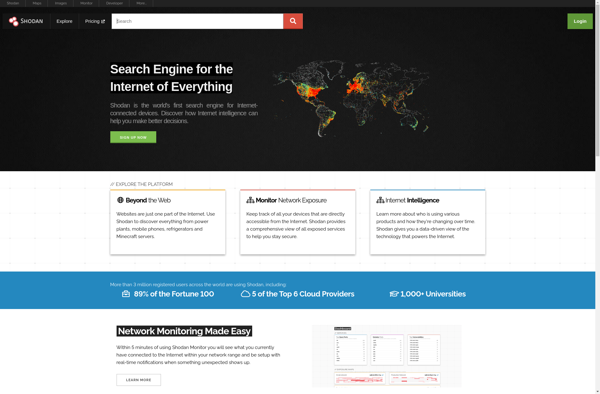
Shodan is a search engine for finding Internet-connected devices and services. Unlike traditional search engines that index the content of web pages, Shodan specifically targets hardware and software that is connected to the Internet, ranging from home routers and webcams to industrial control systems and SCADA devices.Some key features and...
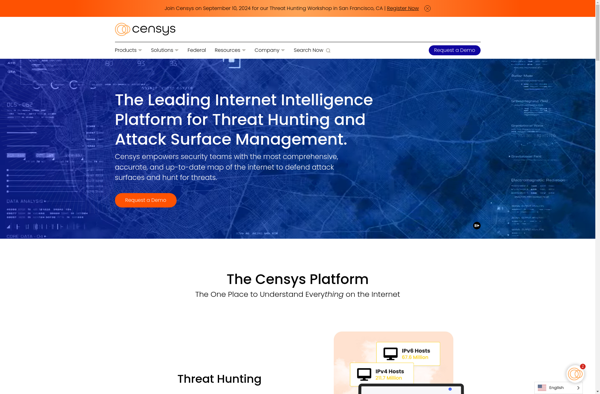
Censys is an internet search engine designed specifically for information on Internet-connected servers, websites, and devices. It allows cybersecurity researchers, businesses, and other users to view real-time data on the networks and systems that are exposed to the public internet.Some of the information Censys provides includes:Open ports and services running...
FOFA is a powerful cyber threat intelligence search engine developed by Bit4WOOD in China. It allows users to search for a wide range of internet assets including websites, IP addresses, domains, network infrastructure, open ports, certificates, and data leaks.Some key features of FOFA include:Comprehensive coverage of internet assets across the...
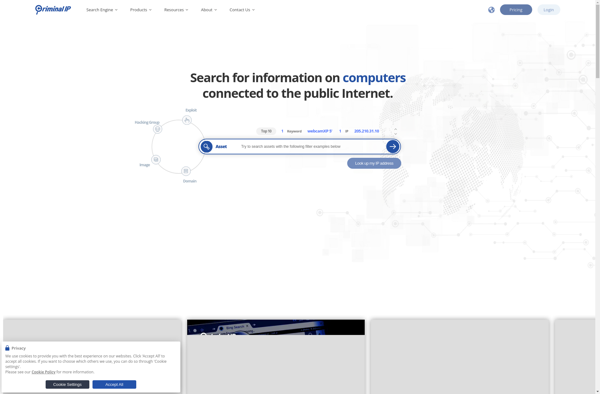
Criminal IP is an investigative software designed specifically for cybersecurity professionals and law enforcement agencies to trace IP addresses and gather actionable intelligence on cybercriminals. It integrates seamlessly with other security solutions to accelerate investigations.Key features of Criminal IP include:IP address tracking - Identify location, ISP, hosting provider, and other...
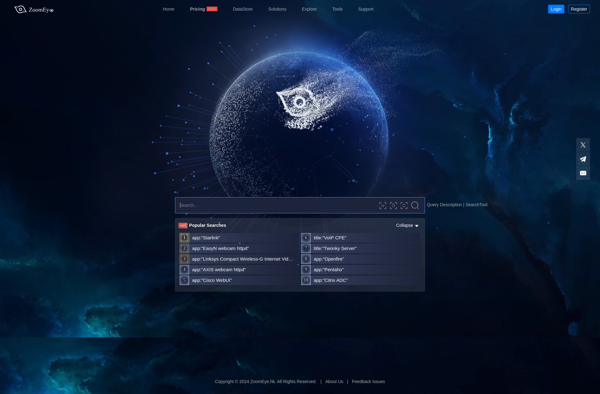
ZoomEye is a search engine and data mining tool for cyberspace that facilitates the discovery and analysis of devices exposed to the public internet. It functions like a search engine for cyberspace, allowing users to easily search for information on IPs, websites, and other devices.Some key features of ZoomEye include:Search...
BinaryEdge is an automated asset discovery and attack surface management platform. It performs internet-wide scans to identify exposed systems, applications, network devices, misconfigurations, and vulnerabilities across an organization's digital footprint.Key features include:Internet-wide asset discovery - Continuous scanning of IPv4 space, domains, ports, services, technologies, and more.Attack surface monitoring - Ongoing...
Grabber is a comprehensive web application security scanner designed to automatically crawl, audit, and exploit vulnerabilities in web applications and APIs. It provides a user-friendly interface and powerful scanning engine to identify security flaws such as SQL injection, cross-site scripting, remote file inclusion, command execution, CRLF injection, XXE injection, and...