GDscript is a high level, dynamically typed programming language used to create content inside the Godot game engine. It is designed to be easy to learn and intuitive while enabling high flexibility and functionality for game development.
A dynamically typed programming language used in the Godot game engine, GDscript offers easy-to-learn syntax and high flexibility for game development.
What is GDscript?
GDscript is a high-level, dynamically typed programming language used to create video games, applications, and tools inside the Godot game engine and development environment. It was specifically designed by the Godot team to be integrated with the engine and enable high flexibility and functionality for 2D and 3D game development.
GDscript combines concepts and syntax from languages like Python, JavaScript, Visual Scripting, and C#. It uses an indentation-based syntax with no braces, making it readable and avoiding syntax errors related to bracket matching. Despite being dynamically typed, the language allows type hints for code auto-completion, debugging and optimization.
Some key capabilities and features of GDscript include:
Lightweight, high-performance scripting suitable for games
Runs natively in Godot with full access to the engine's APIs and tools
Fast compile times and rapid prototyping iterations
Supports OOP concepts like inheritance, but optional for beginners
Garbage collection and bound error checking for easier debugging
Cross-platform exporting and publishing once code is written
Overall, GDscript aims to balance power, flexibility, and accessibility to make Godot more welcoming for developers of all skill levels. Its tight integration and focused design for the engine allows it to maximally enhance workflows for designing and delivering games and applications.
Go, also known as Golang, is an open source programming language first developed in 2007 by Robert Griesemer, Rob Pike, and Ken Thompson at Google. It combines the speed and efficiency of a compiled language like C or C++ with the ease of use and productivity of dynamic languages like...
C# is an object-oriented, general-purpose programming language developed by Microsoft. It was first released in 2002 as part of the .NET framework, and since then has become one of the most popular programming languages used for building a wide range of applications.Some key features of C# include:Object-oriented - Supports concepts...
Julia is an open-source, high-level, dynamic programming language designed for scientific computing and data science. Some key aspects of Julia:High-performance JIT compiler that allows Julia to approach and often match the speeds of C and FortranDynamically typed, feels like a scripting language but with the speed of a compiled languageDesigned...
Zig is an open-source programming language designed for robustness, optimality, and clarity. It is a system programming language intended to be an alternative to C that addresses some of C's perceived flaws like undefined behavior. Some key features of Zig include:Memory safety without garbage collection or overheadCompile time evaluation and...
C is a general-purpose, procedural programming language originally developed by Dennis Ritchie between 1969 and 1973 at Bell Labs. It was originally implemented on the Unix operating system and its availability on a wide variety of platforms has made C one of the most widely used programming languages.Some key features...
Nim is an open-source, general-purpose, statically typed, compiled programming language developed by Andreas Rumpf. It combines successful concepts from mature languages like Python, Ada and Modula, offering flexibility and efficiency. Here are some of its key features: Statically typed – Types are checked during compilation which helps catch errors early.Compiles...
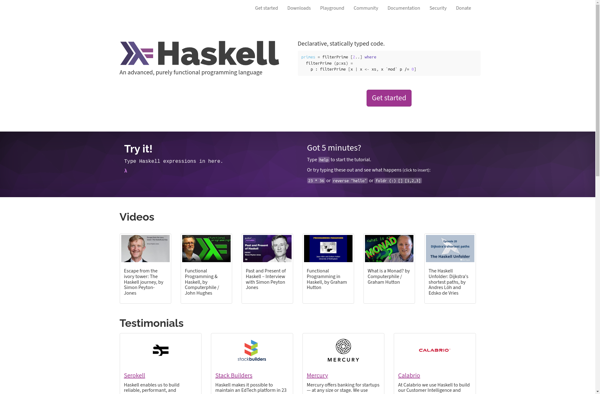
Haskell is a statically typed, purely functional programming language that was designed to have very few implementation dependencies. It has a strong static type system with type inference and non-strict (lazy) evaluation by default. Some key features of Haskell include:Purity - Functions have no side effects, offering referential transparency and...
Fortran is a general-purpose, procedural, imperative programming language that is especially suited for numeric computation and scientific computing applications. Originally developed by IBM in the 1950s, Fortran was one of the first high-level programming languages and quickly came to dominate programming in the areas of numeric analysis and computational science.The...
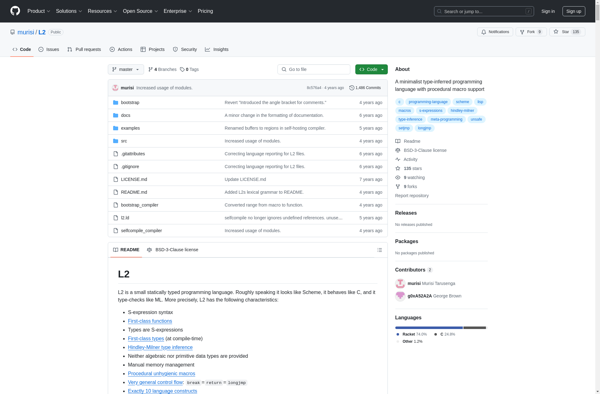
L2 is a new systems programming language developed by Microsoft as an alternative to C and C++. The key goals of L2 are to improve security, safety, and concurrency support compared to those languages while maintaining high performance.Some of the key features of L2 include:Memory safety - L2 eliminates entire...
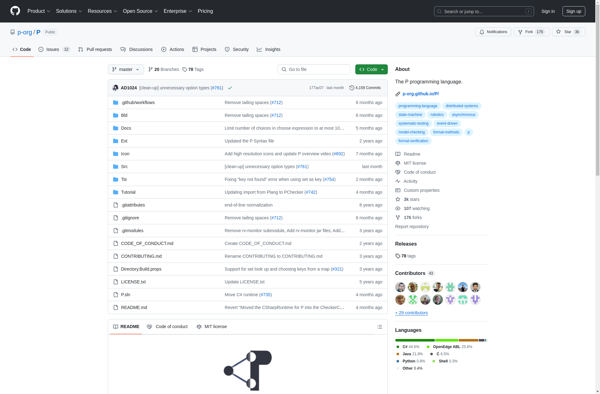
The P programming language is a general-purpose, procedural systems programming language originally designed by Dennis Ritchie in the early 2010s. It was envisioned as a potential successor to the C programming language that would address some of C's perceived flaws while maintaining its efficiency and control over hardware.Some key features...
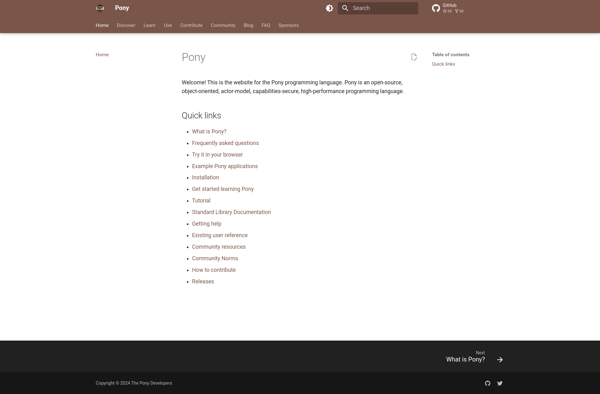
Pony is an open-source, actor-model, capabilities-secure, high performance programming language. It features several key characteristics:Ultra lightweight concurrency based on the actor model for high performance and scalabilityObject capabilities for security - Pony has no undefined behavior or unsafe operationsAlgebraic data types and pattern matchingGarbage collection out of the boxEasy to...