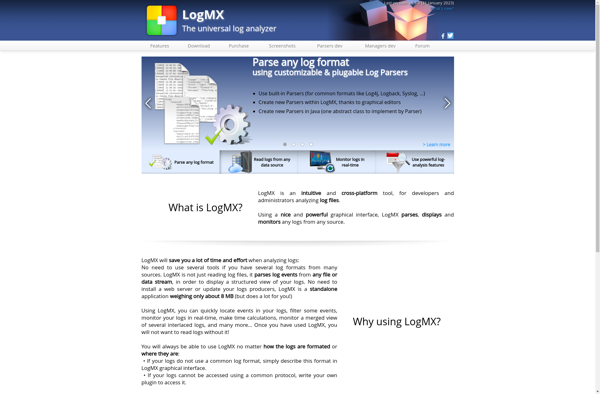
LogMX is an open-source log management and monitoring tool designed for IT teams to aggregate logs from servers, networks, applications, and cloud services. It provides real-time log analysis, alerts, visualizations, and archiving capabilities out-of-the-box.
LogMX: Open-Source Log Management and Monitoring Tool
LogMX is an open-source log management and monitoring tool designed for IT teams to aggregate logs from servers, networks, applications, and cloud services. It provides real-time log analysis, alerts, visualizations, and archiving capabilities out-of-the-box.
What is LogMX?
LogMX is an open-source log management and monitoring solution designed to help IT teams aggregate, analyze, and get value from log data generated across their infrastructure and applications. It ingests logs from various sources like servers, databases, apps, cloud services etc. and enables real-time log analysis, monitoring, alerts, and data visualization.
Key capabilities and benefits of LogMX include:
Centralized log data aggregation from across infrastructure
Intuitive dashboards and visualizations for log analytics
Real-time monitoring and alerts for log events and anomalies
Out-of-the-box support for common log formats and sources
Scalable architecture suitable for small and large environments
Open source software with no vendor lock-in
Rich query language and APIs for automation and customization
Role-based access control and security features
With its focus on usability and flexible deployment options, LogMX is suited for DevOps teams, site reliability engineers, and IT ops professionals looking for an affordable on-prem or cloud-based log management system with powerful analytics capabilities.
LogMX Features
Features
Real-time log aggregation
Log parsing and analysis
Alerting and anomaly detection
Visualizations and dashboards
Log archiving and retention
Open source and self-hosted
Pricing
Open Source
Pros
Free and open source
Easy to set up and use
Scalable to handle large volumes of log data
Powerful search and analytics capabilities
Customizable dashboards and alerts
Active open source community support
Cons
Lacks some advanced features of commercial tools
Requires technical expertise to fully utilize
Limited official support options
Not ideal for compliance needs without additional configuration
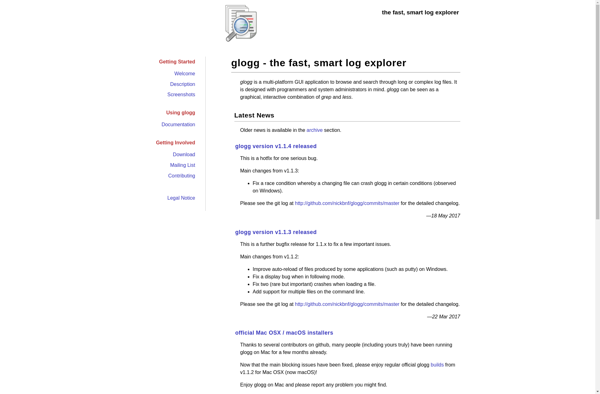
glogg is an open-source log file viewer application designed specifically for viewing and analyzing log files on Linux systems. It enables users to quickly open large log files, search through them, filter the content, and inspect details of log entries.Some key features of glogg include:Fast processing and rendering of large...
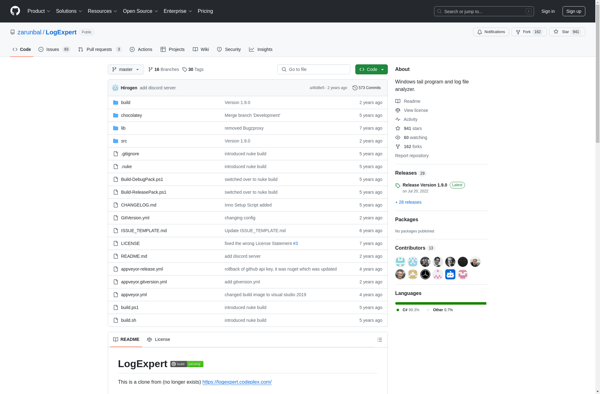
LogExpert is a comprehensive log management and analysis platform designed to help developers, IT operations, and security teams get the most value out of their log data. It ingests log data from any source, whether that's applications, servers, cloud services, or network devices.Once the data is ingested, LogExpert automatically parses...
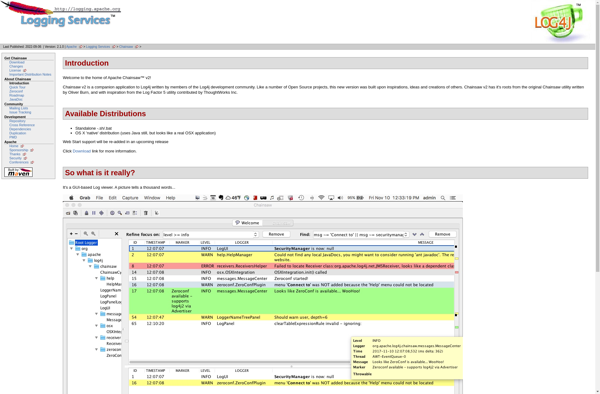
Chainsaw is a fast, powerful log file viewer that helps developers debug applications and analyze log files. Originally created by Jason Vas Dias and now maintained by an open-source community, Chainsaw aims to provide an intuitive user interface and robust feature set for working with log data.Some key features of...
Trace32, also known as SMS Trace, is a cell phone monitoring and tracking application for Android devices. It allows parents, employers, and others to secretly monitor SMS messages, phone call logs, browser history, GPS locations, social media activity, and more on a target device.Some key features of Trace32 include:Stealth monitoring...
OtrosLogViewer is a free, open-source log viewer and log analysis software designed to make viewing, analyzing, and searching through log files easy. It supports a wide variety of log formats including plain text, XML, JSON, and more.Some key features of OtrosLogViewer include:Intuitive user interface for filtering, searching, highlighting and charting...
Logsaw is an open-source log analysis and reporting platform designed to help organizations make sense of their log data. It provides the ability to collect, parse, analyze, visualize, alert, and report on log data from virtually any source.Key features include:Collect and centralize logs from files, databases, APIs, Kubernetes, cloud platforms,...