
OpenDJ is an open source LDAP directory server developed by ForgeRock that provides a high performance, scalable, and embeddable directory store for centralized identity data and policy.
What is OpenDJ?
OpenDJ is an open source LDAP directory server developed by ForgeRock that provides a high performance, scalable, and embeddable directory store for centralized identity data and policy. Some key features of OpenDJ include:
High availability with no single point of failure
Horizontal scaling through server clustering and data partitioning
Embeddable as a library into Java applications
Advanced security including encryption, access controls, and auditing
Support for standards including LDAP, LDAPS, and SASL
Extensive customization through plugins and hooks
Management console and REST API for administration
OpenDJ can be deployed on-premises or in the cloud. It is used to store identity profiles, access policies, and credentials in a centralized directory which can then be leveraged by applications and services needing identity and access management capabilities. Popular use cases include user authentication and authorization infrastructures and single sign-on environments.
Overall OpenDJ provides a flexible, scalable, and hardened open source LDAP directory well-suited for enterprise identity management deployments looking for an alternative to proprietary directory services.
OpenDJ Features
Features
LDAP directory server
High performance and scalability
Embeddable
Centralized identity data storage
Access control policies
Pricing
Open Source
Pros
Open source
High performance
Scalable
Embeddable into applications
Centralized identity management
Cons
Complex configuration
Steep learning curve
Limited support options compared to commercial options
Microsoft Active Directory is a directory service developed by Microsoft for Windows domain networks. It is used to enable the following capabilities in an organization:Centralized management of user accounts and devicesAssignment of access rights and permissions to users and devicesEnforcement of security policiesDomain-based naming and discovery of resourcesSingle sign-on using...
FreeIPA is an integrated security information management solution based on MIT Kerberos, 389 Directory Server, Dogtag certificate system, NTP and DNS. It provides centralized authentication, authorization and account information by storing data about user, groups, hosts etc. in a centralized LDAP directory.Key features of FreeIPA include:Centralized user authentication via KerberosRole...
OpenLDAP is an open source implementation of the Lightweight Directory Access Protocol (LDAP), which provides access to distributed directory services over TCP/IP networks. Some key details about OpenLDAP:Allows users to access common user information like email, phone numbers, addresses, etc. in a centralized directoryOften used for centralized authentication and identity...
Univention Corporate Server (UCS) is an enterprise-grade Linux distribution and management system tailored for companies and organizations. It brings together common infrastructure services like identity management, file sharing, print and DNS management into one cohesive platform.Some key features of UCS include:Centralized identity management through an LDAP directoryWeb-based administration portal for...
RazDC is an open-source, self-hosted remote desktop and remote access software. It allows users to connect to computers remotely through a web browser or using the dedicated RazDC client software available for Windows, macOS, Linux, iOS and Android.Some of the key features of RazDC include:Remote Desktop - Remotely control computers...
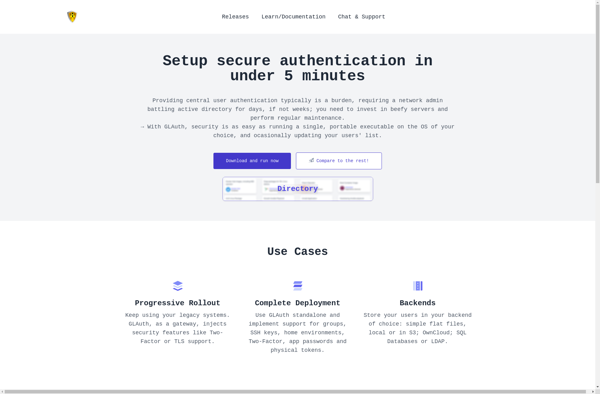
GLAuth is an open source authentication server that provides centralized authentication, authorization and accounting (AAA) for Linux, UNIX, and Windows servers. It supports a variety of authentication mechanisms including:LDAPRADIUSKerberosMicrosoft Active DirectoryOAUTH2SAMLUNIX accountsKey features of GLAuth include:Centralized AAA services for heterogeneous environmentsHigh performance and scalabilitySupport for two-factor authenticationIntegration with popular single...
SambaBox is an open source software suite that enables Linux/Unix systems such as Ubuntu, Debian, CentOS, Fedora and more to provide seamless file and print services to SMB/CIFS clients such as various versions of Microsoft Windows, macOS, and other SMB-enabled devices. It allows non-Windows devices to communicate with Windows networking...
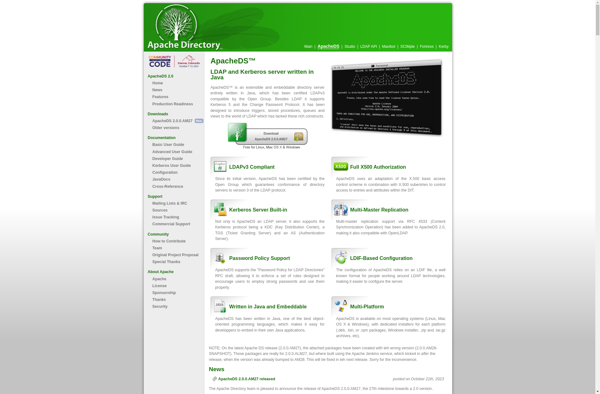
ApacheDS is an open source LDAP directory server implemented entirely in Java. It supports standard LDAP and directory services APIs and protocols. Key features include:Full LDAP v3 compliance and LDAP metadirectory supportEmbedded or standalone server optionsExtensible through pluginsSupport for custom schema and syntaxSecured communications with SSL/TLSOut of the box support...
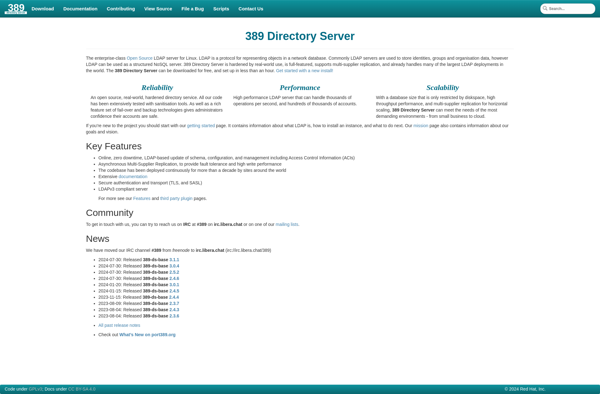
389 Directory Server is an enterprise-class open source Lightweight Directory Access Protocol (LDAP) server developed and maintained by Red Hat. It provides a foundation for centralized authentication and authorization for enterprise systems and applications.Key features of 389 Directory Server include:Standards compliance with LDAP, LDAPS, StartTLS, etc.High performance and scalability to...