OpenWISP is an open source project to create firmware for Wireless Internet Service Providers (WISPs). It allows WISPs to manage a large number of access points remotely through a web interface.
Create firmware for Wireless Internet Service Providers (WISPs) with OpenWISP, an open source project managing access points remotely through a web interface.
What is OpenWISP?
OpenWISP is an open source firmware and management system for Wireless Internet Service Providers (WISPs). It provides a web interface and APIs to allow WISPs to easily manage a large number of access points and customer networks remotely.
Key features of OpenWISP include:
Open source firmware for wireless access points and routers based on OpenWRT
Centralized management of all hardware through a web interface
Tools for accounting, firewall, bandwidth control, and VPN at customer sites
Automated configuration of devices
Monitoring of devices and alerts for offline equipment
Role-based access control for administrators
By using OpenWISP, WISPs can reduce operational costs through central management while delivering reliable connectivity and customized plans for customers. The open source model allows customization of the platform for specific business needs.
pfSense is a free and open source firewall and router platform based on FreeBSD. It has an extensive range of features and capabilities for managing network traffic and security.Some key features and capabilities of pfSense include:Stateful packet filtering firewallNetwork Address Translation (NAT)Virtual Private Network (VPN) support including OpenVPN, IPSec, and...
OpenWrt is an open source project and Linux-based operating system targeting embedded devices such as wireless routers. It provides a fully writable filesystem with package management that allows users to customize the device through the use of packages to suit their needs.Some key features of OpenWrt include:Supports a wide range...
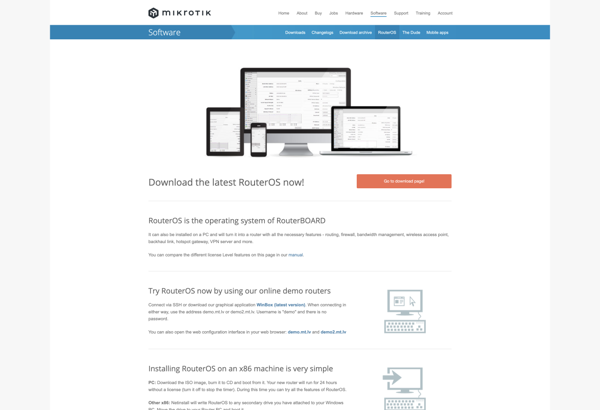
MikroTik RouterOS is a Linux-based network operating system developed by the Latvian company MikroTik for use on their proprietary hardware devices. It was first released in 1996 and has seen continual development and improvement over the past 25+ years.RouterOS is designed specifically for high performance routing and networking applications. It...
DD-WRT is an open source firmware for wireless routers and access points. It provides enhanced features and better performance compared to the stock firmware that comes with most routers.Some key features of DD-WRT include:Advanced networking capabilities like VLANs, VPN server, dynamic DNS, and bandwidth monitoring.Overclocking CPU speed for better performance.Customizable...
LibreMesh is open source firmware that is designed to run on wireless routers and create mesh networks. It provides an alternative to traditional WiFi setups by allowing multiple LibreMesh-enabled routers to connect with each other in a decentralized manner.Some key features and capabilities of LibreMesh include:Designed for wireless community networks...
Ninux is a free, open-source, decentralized mesh network software and community project that allows computers, mobile devices, and other hardware to connect directly to each other and share internet access without an internet service provider. It creates a local area peer-to-peer network using wireless network connections like WiFi or Bluetooth.The...
Babel is an open-source intermediary messaging protocol that aims to allow different messaging platforms and networks to interconnect by translating messages between them. The goal of Babel is to remove the barriers that exist between the major messaging apps and enable seamless communication between users on different networks.Here is how...
OLSR (Optimized Link State Routing) is a proactive link-state routing protocol optimized for mobile ad hoc networks (MANETs). It is designed to work in a completely distributed manner and does not depend on any central entity. The key optimizations OLSR makes compared to classical link state routing are:- It minimizes...