Podman
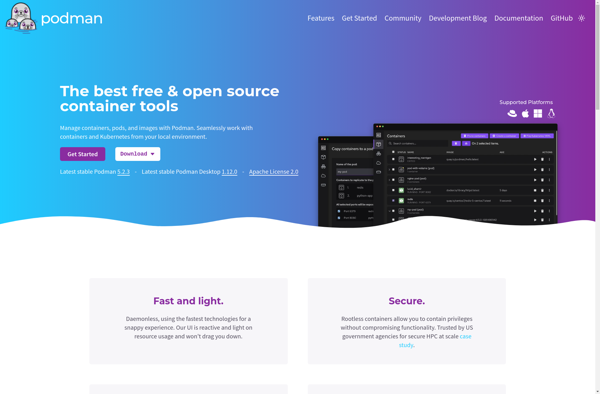
Podman is an open source container engine that is designed to be an alternative to Docker. It allows users to run OCI-compliant Linux containers and build container images without relying on a daemon process like Docker does.
Podman: Open Source Container Engine
Podman is an open source container engine that is designed to be an alternative to Docker. It allows users to run OCI-compliant Linux containers and build container images without relying on a daemon process like Docker does.
What is Podman?
Podman is an open source container management tool meant to be an alternative to Docker. It allows users to run, manage, build, and share Linux containers without relying on a daemon process. Some key features and benefits of Podman include:
- Podman can run containers without a daemon, unlike Docker which requires a daemon process.
- It's more secure since containers run without root privileges and cannot break out of their defined namespaces.
- Podman generates OCI compliant containers, which Docker does not, so Podman containers are compatible with any OCI-complaint runtime, like CRI-O.
- Podman has commands that are nearly identical to Docker's, making migration relatively easy for those comfortable with Docker.
- It provides an easy integration with Kubernetes using tools like CRI-O which allows Podman containers to run in a Kubernetes cluster.
- Podman ships in many mainstream Linux distros like Fedora, AlmaLinux, Rocky Linux, making containerization more accessible.
Overall, Podman provides a daemonless, secure, and standards-based way to build, run, share and manage Linux containers.
Podman Features
Features
- Rootless containers - containers can run without root privileges for improved security
- Pod support - containers can be grouped into pods
- Seccomp support - restricts container system calls for hardening
- Bind mounts - bind mounts directories/files from host into container
- Network namespace support - each pod gets its own network namespace
- Image management - build, pull, push images to registries
- Remote clients - control Podman engines remotely
- Rootless SSH - access containers without being root
Pricing
- Open Source
Pros
Improved security with rootless containers
Simpler architecture without daemon
Good Docker compatibility with podman-docker CLI
Integrates well with Kubernetes CRI-O
Cons
Less mature than Docker and smaller ecosystem
Rootless limitations with host filesystem access
No native Kubernetes support like Docker
Limited Windows and Mac support currently
Official Links
Reviews & Ratings
Login to ReviewThe Best Podman Alternatives
View all Podman alternatives with detailed comparison →
Top Os & Utilities and Containerization and other similar apps like Podman
Here are some alternatives to Podman:
Suggest an alternative ❐
Docker
Docker is an open platform for developing, shipping, and running applications inside software containers. It provides an additional layer of abstraction and automation of operating-system-level virtualization on Linux, Mac OS and Windows.Docker packages software into standardized units called containers that have everything the software needs to run including libraries, system...

OrbStack
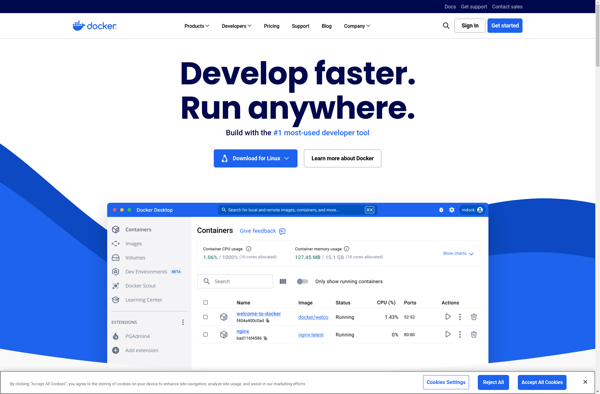
OrbStack is an open-source application stack focused on enabling developers to build Orb apps and services. It aims to provide a set of reusable components, frameworks, and tools to streamline cross-platform Orb development.Some of the key capabilities and features of OrbStack include:UI frameworks - OrbStack includes JavaScript-based UI frameworks like...

Crane
Crane is an open-source, self-hosted project management application designed for small development teams. It provides a variety of features to help teams plan, organize, track, and manage work more effectively.Some key features of Crane include:Kanban boards to visualize work and track progressTasks with statuses, assignments, comments, attachments, and time trackingMilestones...

Containerd
containerd is an open source container runtime that is designed to manage the complete container lifecycle for its host system or server. This includes pulling container images, managing storage and network resources, executing containers, monitoring them, and more.Some key things to know about containerd:It is lightweight, portable and runs on...

Colima
Colima is an open-source container runtime for Docker desktop environments. It allows you to run Docker containers and images without the overhead of a traditional virtual machine.Some key features of Colima include:Lightweight and fast - Runs as a single container instead of a VM so it starts instantly.CLI and GUI...
Dockercraft
Dockercraft is an open-source container management platform built on top of Docker and Docker Compose. It provides a graphical user interface and additional tools to make working with containers easier for developers.Some key features of Dockercraft include:User-friendly container configuration - Build Dockerfiles, define services, configs and secrets via an intuitive...

CRI-O
CRI-O (Container Runtime Interface for OCI) is an open-source container runtime specifically designed for Kubernetes. It implements the Kubernetes Container Runtime Interface (CRI) to enable native Kubernetes support for Open Container Initiative (OCI)-based runtimes and containers.Some key features of CRI-O include:Minimal footprint and dependencies - CRI-O has a very small...