ScicosLab is an open-source numerical computation software for modeling and simulation of dynamical systems. It provides a user-friendly drag-and-drop interface for building block diagrams and features symbolic computation, linear systems analysis, simulation, and Scilab/Xcos int
ScicosLab is an open-source numerical computation software for modeling and simulation of dynamical systems, offering a user-friendly drag-and-drop interface for building block diagrams and featuring symbolic computation, linear systems analysis, simulation, and Scilab/Xcos integration.
What is ScicosLab?
ScicosLab is an open-source software suite for numerical computation that specializes in the modeling and simulation of dynamical systems. It features a user-friendly graphical interface based on block diagrams, allowing users to easily construct models by dragging and dropping blocks representing system components.
Some of the key capabilities and features of ScicosLab include:
Modeling and simulation of continuous-time and discrete-time systems
Symbolic computation for manipulating mathematical expressions
Tools for analysis of linear time-invariant systems
Integrated Scilab workspace for textual programming, calculations, and visualization
Seamless integration with Xcos for enhanced modeling and simulation
Extensive model libraries and palette of ready-to-use blocks
Support for hierarchical models, custom block creation, and code generation
ScicosLab runs on all major platforms like Windows, Mac OS, and Linux. It caters to scientists and engineers across disciplines like control theory, signal processing, mechatronics etc. Its open-source nature, visual programming approach, and integration with Scilab make it an attractive alternative to proprietary tools like Simulink, LabVIEW, and MapleSim.
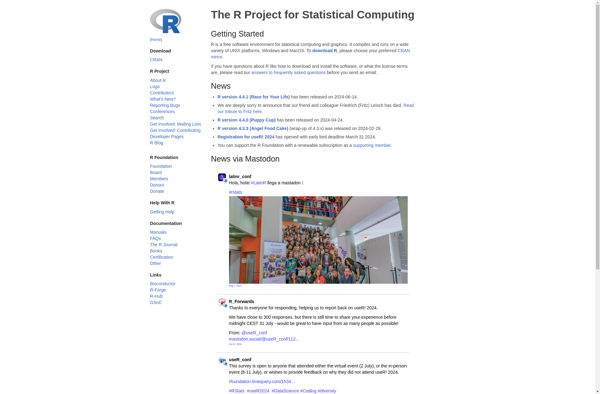
R is an open-source programming language and free software environment for statistical computing, bioinformatics, graphics, data science, and general-purpose programming. The R language provides a wide variety of statistical analysis techniques and graphical capabilities which make it a popular choice for data analysis and visualization.Some key features of R include:Open-source...
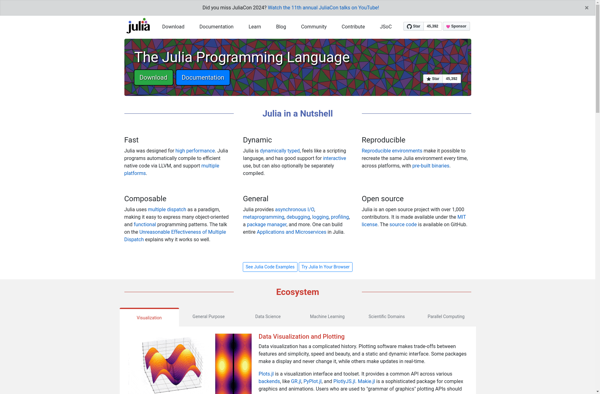
Julia is an open-source, high-level, dynamic programming language designed for scientific computing and data science. Some key aspects of Julia:High-performance JIT compiler that allows Julia to approach and often match the speeds of C and FortranDynamically typed, feels like a scripting language but with the speed of a compiled languageDesigned...
MATLAB (matrix laboratory) is a multi-paradigm numerical computing environment and proprietary programming language developed by MathWorks. MATLAB allows matrix manipulations, plotting of functions and data, implementation of algorithms, creation of user interfaces, and interfacing with programs written in other languages.Some key features of MATLAB include:Matrix and array-oriented language for faster...
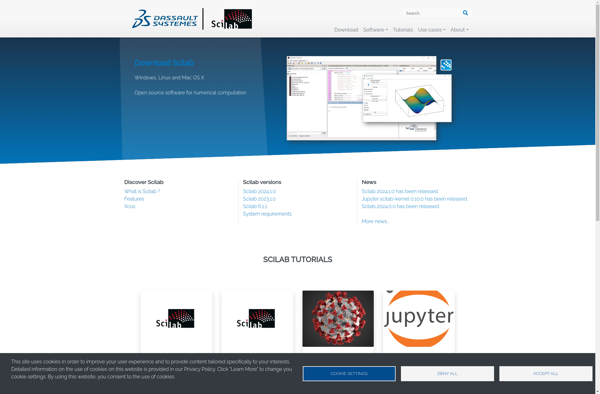
Scilab is an open source, cross-platform numerical computational package and a high level, numerically oriented programming language. It provides an interpreted programming language, linear algebra operations, numerical optimization, signal processing features, and the ability to plot functions and data.Originally created in 1990 by researchers from INRIA and ENPC in France,...
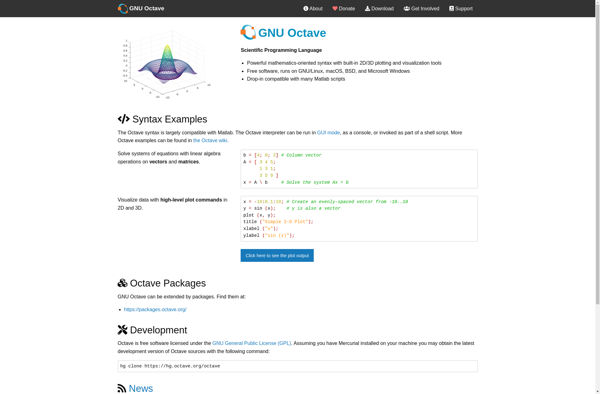
GNU Octave is an open-source mathematical programming language and environment that is compatible with MATLAB. It allows users to perform numerical computations, data manipulation and visualization, and other mathematical tasks. Some key features of GNU Octave include:An extensive library of mathematical functions for linear algebra, differential equations, optimization, statistics, and...
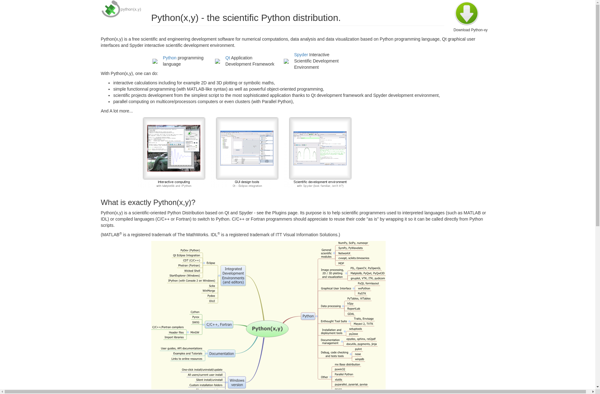
python(x,y) is an open-source mathematical plotting and data visualization library for the Python programming language. It is designed to be simple, efficient, and highly customizable. python(x,y) provides a MATLAB-like interface for creating a wide range of 2D plots, including line plots, scatter plots, histograms, bar charts, pie charts, error bars,...
SageMath is an open-source mathematics software system that provides a viable free open source alternative to Magma, Maple, Mathematica and MATLAB. It is based on Python and implements a huge range of mathematics functionality including:Algebra - including commutative algebra, group theory, combinatorics, graph theory, exact linear algebra, and moreCalculus -...
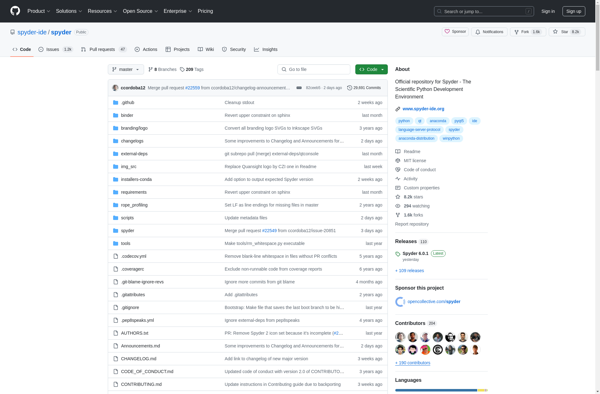
Spyder is a powerful Python integrated development environment (IDE) with features tailored towards scientific computing and data analysis. It provides the following key capabilities:Advanced editor with syntax highlighting, code completion, variable explorer, and other features to facilitate Python coding.Interactive Python console for testing code snippets and exploring data.Data explorer for...
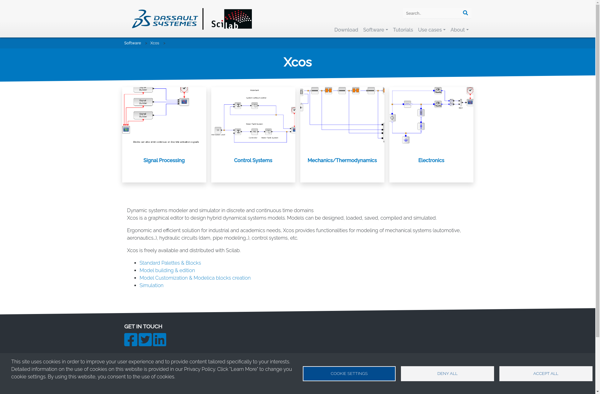
Xcos is an open-source software specialized in the simulation of dynamical systems, offering modeling and simulation features specifically oriented towards control systems. It is developed as a graphical user interface module for Scilab, the open source platform for numerical computation.Some key features of Xcos include:Block diagram model editor for building...
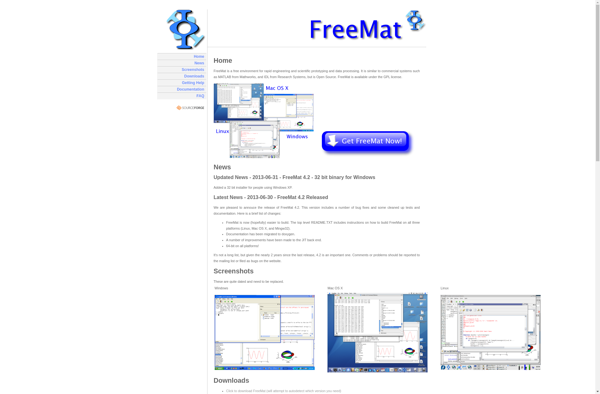
Freemat is an open-source numerical computing environment that is very similar to MATLAB. It provides many of the same capabilities as MATLAB including:A high-level interactive language for numerical computations2D and 3D plotting and visualization toolsBuilt-in mathematical and statistical functionsSupport for linear algebra, signal processing, optimization, and moreSome key advantages of...