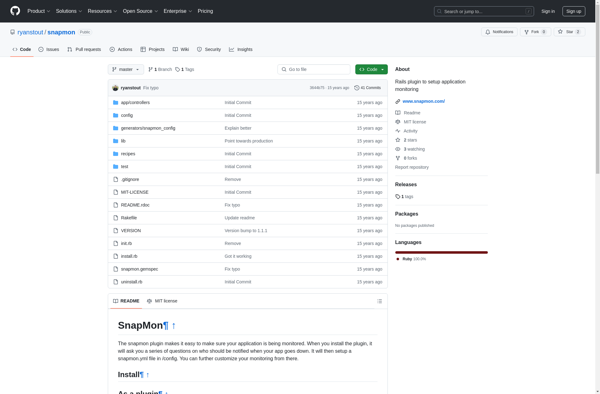
Snapmon is an open-source network monitoring tool. It visualizes the health and status of your network devices in an intuitive dashboard, providing insight into the status of your network in real-time. Snapmon uses SNMP polling to gather metrics and monitor network devices.
An open-source network monitoring tool visualizing network device health in real-time, providing intuitive dashboard insights and SNMP polling for metrics gathering and network device monitoring.
What is Snapmon?
Snapmon is an open source network monitoring and management tool that provides real-time insight into the health and performance of your network infrastructure. It features an intuitive dashboard that visualizes the status of your network devices through customizable widgets and graphs.
Some key features of Snapmon include:
Automatic discovery of devices on your network using SNMP.
Monitoring of device availability, interface traffic, CPU, memory utilization etc.
Alerting based on thresholds and metrics.
Historic reporting for capacity planning.
Customizable dashboard providing a single pane of glass view.
Role based access control.
REST API for integration.
Snapmon uses SNMP polling to collect data from routers, switches, servers and other SNMP devices on your network. It stores the performance data and provides visual reporting through its dashboard. It is designed to be lightweight and easy to deploy on Linux based monitoring servers.
With its focus on simplifying network monitoring and management through automation and visualization, Snapmon is a great open source alternative to solutions such as PRTG, SolarWinds and WhatsUp Gold.
Snapmon Features
Features
Real-time network monitoring
Intuitive dashboard interface
SNMP polling for gathering metrics
Visualization of device health and status
Open-source and self-hosted
Pricing
Open Source
Pros
Free and open-source
Easy to set up and use
Good for monitoring small to mid-size networks
Customizable dashboard and alerts
Cons
Limited scalability for large networks
Less features than paid solutions
Requires technical expertise to install and configure
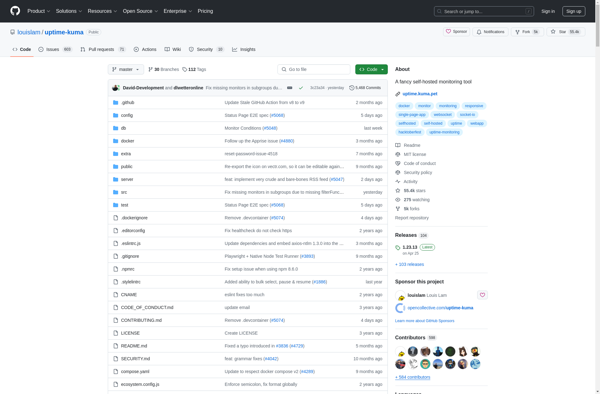
Uptime Kuma is an open-source, self-hosted monitoring application that allows you to monitor your websites, APIs, and servers from your own infrastructure. It provides uptime monitoring, SSL certificate checks, ping checks, and more to ensure your critical services are up and running.Some key features of Uptime Kuma include:Easy to install...
UptimeRobot is a popular website and server monitoring service used by over 1 million users. It provides comprehensive uptime monitoring and alerting for websites, web applications, APIs, and servers.Some key features of UptimeRobot include:Uptime monitoring - Continuous monitoring of website availability from global locations. Alerts you if your site goes...
Pingdom is a popular website monitoring service used to track uptime, performance, and speed of websites and web applications. It works by checking websites periodically from locations around the world to test response time and uptime.Key features of Pingdom include:Uptime monitoring - Get alerts if your site goes downPage speed...
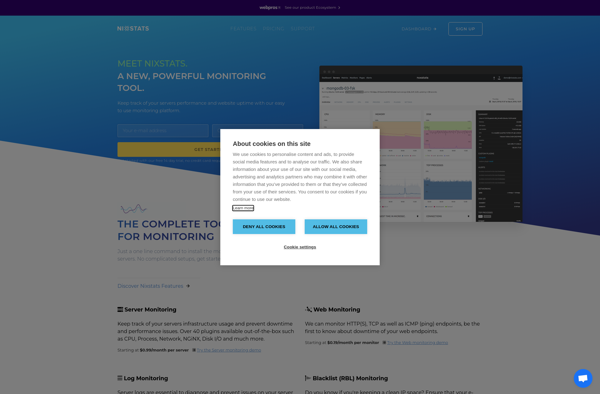
NIXStats is an open-source web analytics application that allows website owners to track and analyze traffic to their sites. It provides detailed statistics on visits, unique visitors, page views, bounce rates, traffic sources, and more. As an open-source platform, NIXStats places no restrictions on data collection or analysis and avoids...
StatusCake is a popular website and application monitoring service used by developers, businesses, and IT teams. It provides a suite of uptime and performance monitoring tools to ensure websites, web apps, APIs, and servers remain functional and fast.Key features of StatusCake include:Uptime monitoring - Customizable HTTP/HTTPS checks from global locations...
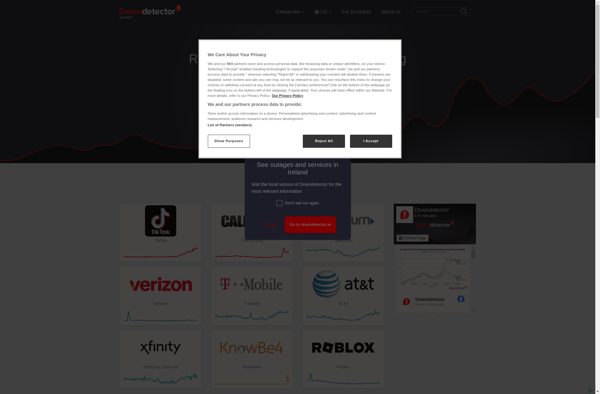
Downdetector is a popular website that allows users to check the status of various online services and websites. It tracks outages and other issues by aggregating user-submitted problem reports in real-time. When a site is having problems, Downdetector's outage map lights up with user reports to visually identify where issues...
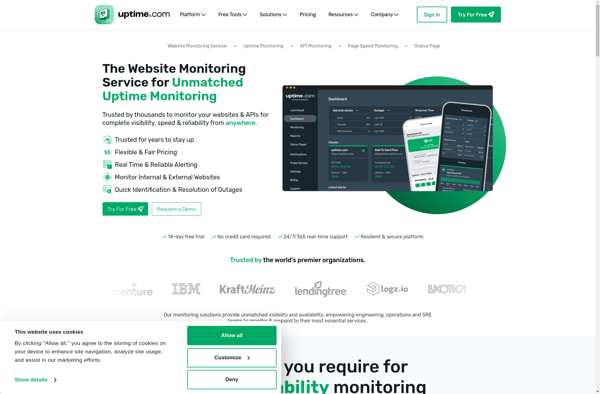
Uptime.com is a comprehensive website and application monitoring service used by businesses to track uptime and performance. It provides a variety of monitoring methods including HTTP, HTTPS, ping, automated transactions, and advanced monitoring to simulate user journeys.Key features of Uptime.com include:Uptime monitoring with 5 minute check intervalsInstant alerts via email,...
Upptime is an open-source application for monitoring uptime and status of websites, APIs, and applications. It is designed to be easy to use, customizable, and lightweight.Some key features of Upptime include:Uptime monitoring of HTTP, HTTPS, DNS, TCP, and ICMP servicesCustomizable public status pages showing real-time and historical uptime dataStatus page...
Upzilla is an open-source, web-based defect tracking system that provides an alternative to Bugzilla. It allows development teams to track software bugs, issues, and feature requests throughout the development process.Some key features of Upzilla include:Crowdsourced voting allows users to vote on bug priorityCustomizable fields, views, and workflowsAttach files and screenshots...
Host-Tracker is an open-source application for monitoring web hosts and servers. It provides a centralized dashboard to track uptime, performance, and resource utilization across any number of hosts.Some key features of Host-Tracker include:Automatic testing and monitoring of hosts using uptime checks, ping tests, and performance testsCustomizable alarms and notifications when...