VirtEngine is an open-source platform for managing virtual machines and containers. It provides a web-based interface for provisioning, monitoring, and orchestrating VMs, containers, and Kubernetes clusters across private and public clouds.
A free and open-source platform for managing virtual machines and containers, offering a web-based interface for provisioning, monitoring, and orchestrating VMs, containers, and Kubernetes clusters across private and public clouds.
What is VirtEngine?
VirtEngine is an open-source virtualization management platform that provides a unified interface for managing virtual machines, containers, and Kubernetes clusters. It supports a wide range of hypervisors and container runtimes including KVM, Xen, VMware vSphere, Docker, containerd, and more.
Some key capabilities and benefits of VirtEngine include:
Web-based UI for provisioning and managing VMs and containers across multiple hosts
Multi-hypervisor and multi-container support including KVM, Xen, VMware, Docker, Kubernetes etc.
Template and image management for rapid provisioning of VMs and containers
Granular access controls and quotas to manage utilizations of resources
Live migration of VMs between hosts for load balancing
High availability with automatic VM failover
Storage management with local, shared and software-defined storage
Virtual networking configuration including private networks, vlans and security groups
Monitoring, alerts and reporting for infrastructure optimization
RESTful API for integration and automation
Horizontal scalability to manage very large deployments
Support for hybrid and multi-cloud with public cloud integrations
Overall, VirtEngine aims to be the open-source alternative to commercial solutions like vCenter, vRealize, and OpenShift for organizations looking to reduce virtualization costs while maintaining enterprise-grade capabilities. Its broad hypervisor and container support makes it well-suited for heterogenous infrastructure environments.
VirtEngine Features
Features
Web-based interface for managing VMs, containers and Kubernetes clusters
Support for major hypervisors like KVM, Xen, VMware ESXi
Built-in container orchestration with Docker and Kubernetes
Multi-cloud support for provisioning across different cloud providers
REST API for automation and integration
Role-based access control and quotas for teams
High availability with redundant components
Live migration of VMs between hosts
Monitoring and alerting for VMs and containers
Pricing
Open Source
Free
Pros
Open source and free to use
Intuitive web UI for fast setup and management
Multi-hypervisor and multi-cloud support
Kubernetes integration for container orchestration
Active community support and development
Cons
Steeper learning curve than standalone solutions
Requires more resources to run compared to basic hypervisors
Not as feature rich as paid solutions like vSphere
Limited support options compared to commercial products
What Is OpenStack?OpenStack is an open-source cloud computing platform for building and managing public and private clouds. It provides infrastructure-as-a-service (IaaS) capabilities similar to AWS, allowing organizations to run their own cloud infrastructure on commodity hardware.Key FeaturesOpenStack consists of modular components: Nova (compute), Swift (object storage), Cinder (block storage), Neutron...
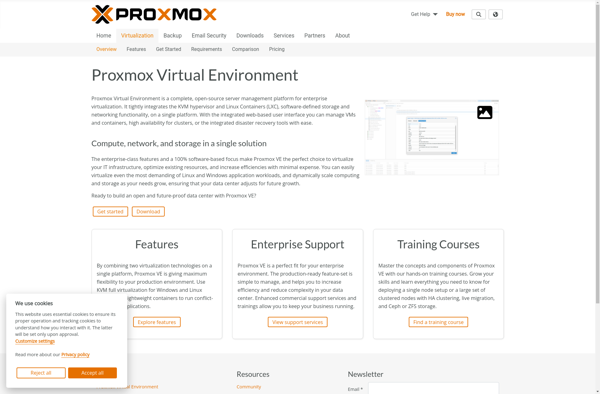
Proxmox Virtual Environment (Proxmox VE) is an open-source server virtualization management solution based on QEMU/KVM virtualization and LXC containers. It allows you to manage virtual machines and containers using a web-based GUI. Key features include:Hypervisor built on Linux Kernel-based Virtual Machine (KVM) technology for virtualizationLinux Containers (LXC) for container-based virtualizationWeb-based...
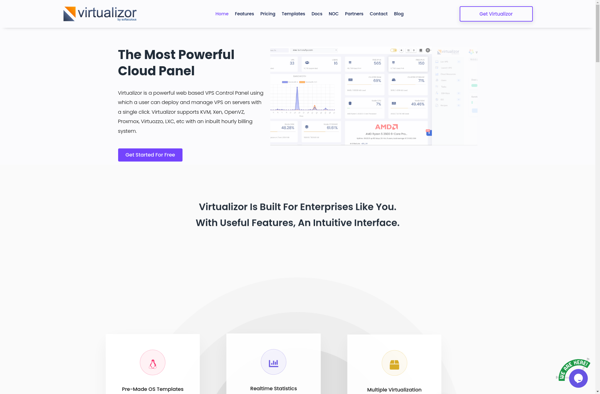
Virtualizor is an open-source web-based virtualization management system designed specifically for web hosting providers and data centers to manage virtual private servers (VPS) and cloud servers. It works by creating an abstraction layer on top of virtualization platforms such as KVM, Xen, Virtuozzo and OpenVZ to provide a feature-rich web...
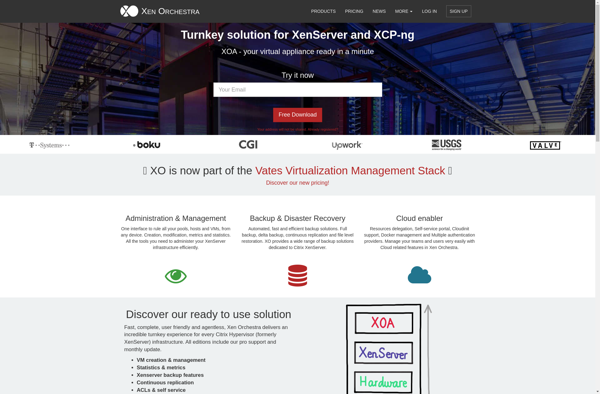
Xen Orchestra is an open-source, web-based management tool for XenServer and XCP-ng built on JavaScript. It provides administrators a modern and intuitive web-based UI to manage their virtualized infrastructure.With Xen Orchestra, you can easily:Manage XenServer pools, hosts, VMs, storage repositories, networks, PVs, SRs, and morePerform VM operations - start, stop,...
Archipel is an open-source platform for building, deploying and managing cloud-native serverless applications and functions. Developed by SAP, Archipel aims to simplify the development, deployment and operations of serverless applications across multiple clouds.Key features of Archipel include:Open source serverless orchestration - Allows developers to easily build, run and manage containerized...
MicroCloud is an open-source private cloud computing platform built using proven open-source technologies. It aims to provide users with an easy way to deploy virtual machines and containers in their own private cloud infrastructure, without the cost and privacy concerns of public cloud providers.At its core, MicroCloud uses libvirt and...
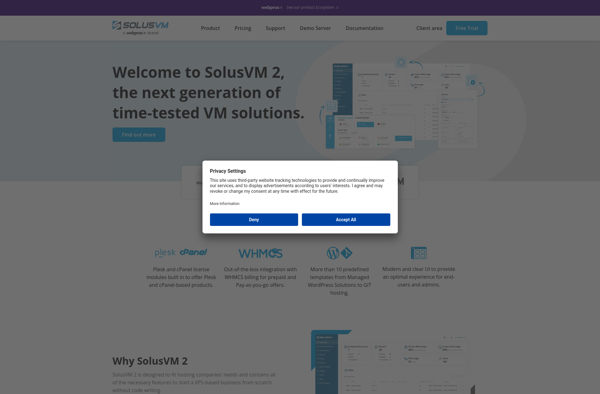
SolusVM is a powerful open-source virtualization management system that enables hosting providers to easily administer virtual private servers (VPS), cloud servers, Xen servers, OpenVZ containers and Linux KVM virtual machines through a intuitive web-based interface.Some of the key capabilities offered by SolusVM include:Automated provisioning of virtual machines and containersAllocation of...
WebVirtMgr is an open-source web-based interface for managing virtual machines through libvirt. It provides a GUI to access libvirt functionality for managing domains, networks, storage pools and more.Some key features of WebVirtMgr include:Ability to connect to local or remote libvirt hostsVM management - start, stop, pause, reboot VMsConsole access -...
VMmanager is an open source virtual machine manager for Linux operating systems. It provides a graphical user interface to help manage virtual machines powered by KVM hypervisor and QEMU emulator.Some of the key features of VMmanager include:Intuitive GUI for virtual machine management operations like create, delete, start, pause, clone and...
OpenNode Cloud Platform is an open source platform optimized for building and running serverless applications and microservices in the cloud. It allows developers to focus on writing code without worrying about managing underlying infrastructure.Some key features of OpenNode include:Fully managed containers - OpenNode handles provisioning, scaling, load balancing, health monitoring,...
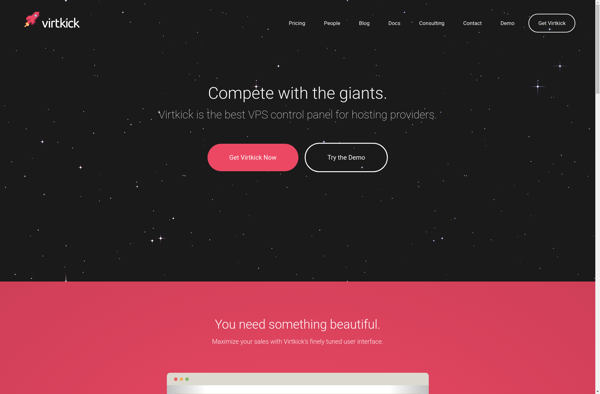
Virtkick is a virtual machine management and automation platform used by developers, IT teams, and managed service providers to easily deploy and manage virtual infrastructure. It works across public clouds like AWS, Azure, and Google Cloud as well as private clouds and on-premises environments running VMware, Hyper-V, KVM, and more.Key...
Cloudmatic is a user-friendly cloud-based website and application development platform suitable for business owners, marketers, designers, and developers looking to create professional websites and web apps quickly without needing to know how to code.With Cloudmatic, users can choose from a wide variety of modern, customizable templates and use the intuitive...
Feathur is an open-source feature store designed to help teams effectively manage machine learning features across the full model lifecycle. As models move into production, Feathur enables you to log, store, and retrieve large volumes of features for model training and inference.Key capabilities include:Scalable storage for features using Redis or...
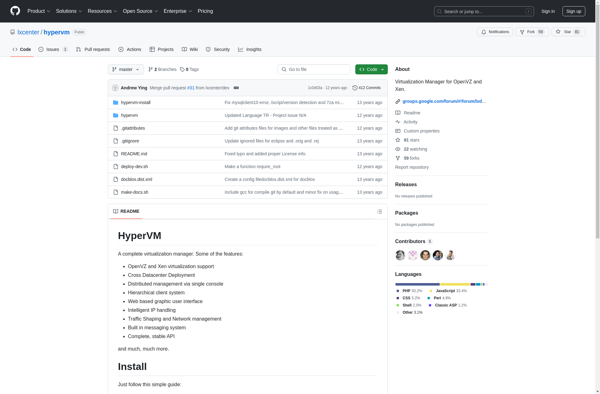
HyperVM is an open-source and free type 1 hypervisor software that enables you to create and manage virtual machines on the Linux operating system. It leverages kernel virtualization capabilities such as KVM to provide a lightweight and high-performance virtualization solution.Key features of HyperVM include:Creates and manages Linux and Windows-based VMsIntegrates...