Wavium is an open-source deep learning platform for deploying AI models into production. It allows data scientists and engineers to operationalize neural networks for computer vision, NLP, speech recognition, and more on both cloud and edge devices.
Deploy AI models into production with Wavium, an open-source deep learning platform for computer vision, NLP, speech recognition and more on cloud and edge devices.
What is Wavium?
Wavium is an open-source machine learning operations (MLOps) platform designed to help teams streamline the deployment of deep learning models into production environments. It provides infrastructure, services, and tools that facilitate the full model development lifecycle from data preparation to continuous integration/continuous delivery (CI/CD) pipelines for deployment on cloud infrastructure or edge devices.
Key capabilities of Wavium include:
Integrated development environment (IDE) - Wavium Studio provides data scientists and engineers a user-friendly interface to build, version, and deploy models using popular frameworks like TensorFlow, PyTorch, and Keras.
Model management - Track experiments, compare model versions, view lineage, and store a central catalog of productionized models.
Model monitoring - Monitor key performance metrics of models post-deployment and get alerts for model drift or degraded performance.
MLOps orchestration - Automate model building, testing, validation, staging, and deployment with reusable CI/CD pipelines tailored for machine learning.
Edge and cloud deployment - Package trained models and deploy them to distributed edge devices or scale them on cloud platforms like AWS, GCP, and Azure.
Model governance - Apply model risk analysis, explainability techniques, adversarial robustness testing, and data quality checks.
With its end-to-end platform, Wavium aims to make the process of taking deep learning models to production more efficient, robust, and scalable for data science teams across industries like manufacturing, telecommunications, healthcare, and more.
Medium is an online publishing platform developed by Evan Williams and launched in 2012. It allows users to publish their own stories, articles, and essays on a variety of topics. Medium is designed for ease of reading, with clean formatting and typography.Some key features of Medium include:Users can publish their...
Hugo is an open-source static site generator created by Steve Francia in 2013. It is written in Go programming language and optimized for speed, ease of use, and configurability.Some key features of Hugo include:Extremely fast build times as it generates static HTML contentSupports Markdown as well as JSON, YAML and...
What Is WordPress?WordPress is the world's most popular content management system, powering over 40 percent of all websites on the internet. Originally created as a blogging platform in 2003, it has evolved into a full website builder and application framework used for everything from personal blogs to enterprise websites and...
Blogger is a popular free blog publishing service run by Google. It allows anyone to easily create and manage a blog for free without needing to know any coding. Blogger has an easy-to-use WYSIWYG editor interface that allows users to create blog posts containing text, images, videos, links, and more.Some...
Write.as is an online writing and blogging platform focused on simplicity and privacy. It was created as an alternative to more complex blogging platforms like WordPress and Medium.Some key features and benefits of Write.as include:Minimalist interface to avoid distractions while writingNo ads, analytics tracking or email harvestingWriters fully own and...
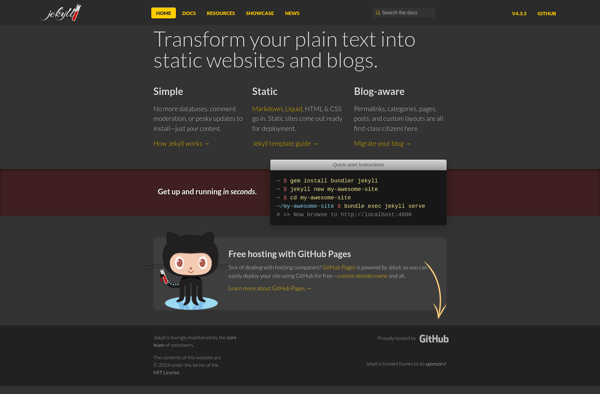
Jekyll is an open-source static site generator that allows you to build fast, secure websites and blogs using plain text Markdown files instead of traditional databases. It takes your content, renders Markdown and Liquid templates, and produces a complete, static website that can easily be hosted on GitHub Pages, Amazon...
What Is Squarespace?Squarespace is a website builder and hosting platform known for its design-forward templates and all-in-one approach. It provides everything needed to build and run a website — hosting, domains, templates, e-commerce, email marketing, and analytics — without requiring any coding.Key FeaturesSquarespace offers over 100 professionally designed templates that...
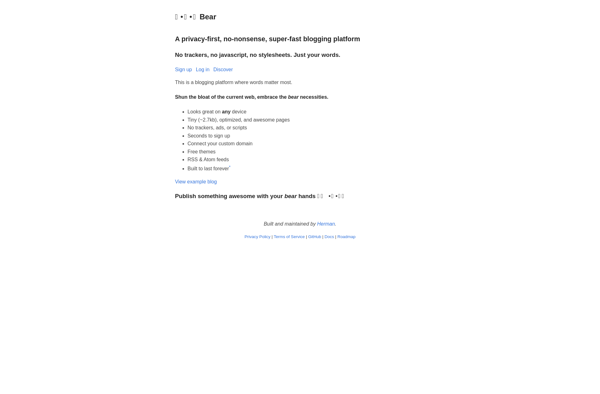
Bear Blog is a minimalist, flexible blogging and writing platform built specifically for Apple devices like Mac, iPad, and iPhone. It uses Markdown syntax for formatting text, allowing writers to focus on their content rather than complex formatting tools.Some key features of Bear Blog include:Clean, distraction-free interface to stay focused...
DEV Community is a free and open source software development community platform launched in 2019. It allows software developers and programmers to publish technical articles, take part in discussions, ask questions, and generally connect with other developers.Some key features of DEV Community include:Article publishing - Developers can publish articles on...
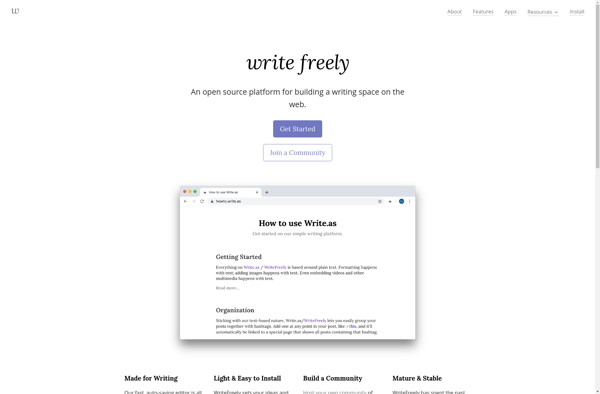
WriteFreely is an open source software for writing and publishing blogs and websites. It is designed for creative writers and bloggers who want to focus on their writing without getting distracted by complex settings or giving up control of their content.Some key features of WriteFreely include:Simple, distraction-free editor to write...