Way Cooler is an open-source and customizable tiling window manager for Linux aimed at developers and power users. It focuses on customization, extensibility, and high performance using the Rust programming language.
Way Cooler: Customizable Tiling Window Manager for Linux
Open-source and highly customizable tiling window manager for Linux, built with Rust, targeting developers and power users seeking high performance and extensibility.
What is Way Cooler?
Way Cooler is an open-source, customizable tiling window manager for Linux designed for developers, sysadmins, and power users. It is written in Rust for high performance and aims to provide extensibility and customizability without sacrificing speed or stability.
Some key features of Way Cooler include:
Tiling window management - Apps open fullscreen and can be arranged in various layouts
Customizable via Lua config files and Rust extensions
Supports multiple monitors and hybrid tiling
High performance thanks to Rust and GPU acceleration
Extensible and hackable since everything is done via IPC
Supports standard Linux desktop features like notifications, keybindings, statuses
Where Way Cooler shines is its focus on extensibility and hacking. Developers can easily extend functionality by writing Rust crates or Lua scripts. It interoperates well with other Linux tools via DBus. And its codebase is clean and easy to dive into for customization.
Overall, if you want a super fast, flexible tiling window manager where everything is customizable, Way Cooler is a modern option to check out. It brings the speed of i3 with more hackability and less legacy baggage.
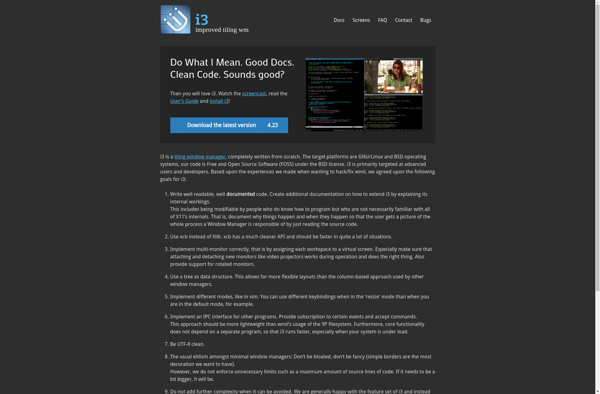
i3 is a dynamic tiling window manager designed for Linux and BSD operating systems. Unlike stacked or floating window managers, i3 uses a layout system that divides the screen into adjustable tiles to display application windows.Some key features of i3 include:Tree-style container-based window management - windows are arranged in containers...
Sway is a digital storytelling app developed by Microsoft as part of the Microsoft Office family of products. It allows users to create interactive reports, presentations, personal stories, newsletters, training modules and more using a simple drag and drop interface.One of the key features of Sway is its built-in design...
Hyprland is a fast, lightweight and customizable Wayland compositor geared towards power users. It features dynamic tiling, allowing windows to be arranged efficiently while also supporting floating and fullscreen modes. Configuration is done mainly through YAML files, providing fine-grained control over most aspects of the compositor.Some key features of Hyprland...
Openbox is a stacking window manager for the X Window System, derived from Blackbox 0.65.1. It is written in C and licensed under the GNU General Public License.Here are some key features of Openbox:Highly configurable - Openbox allows extensive customization of window decorations, menus, keybindings and more through XML configuration...
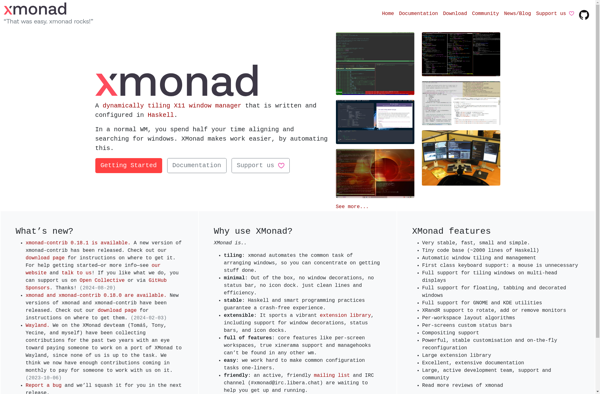
Xmonad is a highly configurable and customizable tiling window manager for Linux and other Unix-like operating systems. It is written and configured in Haskell, which allows advanced users to easily modify and extend its functionality.Some of the key features of Xmonad include:Dynamic tiling - It automatically arranges windows in a...
bspwm is a tiling window manager for Linux that represents windows as leaves in a full binary tree. It features multi-monitor support, per-monitor workspaces, gaps between windows, custom keyboard and mouse bindings, and external configuration and control via bspc.Some key features of bspwm include:Window tiling and automatic space allocation based...
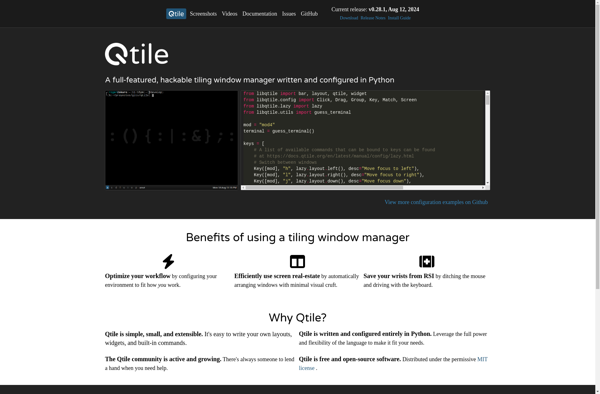
Qtile is a dynamic tiling window manager for Linux that is designed to be simple, lightweight, and extensible. It is written in Python and uses OpenGL for rendering. Some key features of Qtile include:Customizable layouts and workflows - Qtile supports floating, monocle, max, grid, spiral, and other layouts. You can...
Fluxbox is a lightweight and highly customizable open source window manager for the X Window System on Linux. It aims to be fast, lightweight, and stay out of the user's way so they can focus on their applications.Some key features of Fluxbox include:Minimal system resource usage for good performance on...