AdLinx.it is an online ad management platform that allows publishers and bloggers to manage ads across multiple websites and ad networks. It provides centralized reporting, ad trafficking, real-time statistics, and optimization tools to maximize ad revenue.
Manage ads across multiple websites and ad networks with AdLinx.it's centralized reporting, ad trafficking, real-time statistics, and optimization tools to maximize ad revenue.
What is AdLinx.it?
AdLinx.it is an ad management platform designed specifically for online publishers and bloggers to optimize and maximize their ad revenue. It provides a single dashboard to manage ad campaigns across multiple websites, ad networks, and ad exchanges.
Key features of AdLinx.it include:
Centralized reporting and statistics across all ad units, allowing publishers to easily track performance.
Tools to automatically optimize ad positioning and rotation to increase CTR and revenue.
Support for display ads, native ads, popup ads and more from networks like Google AdSense, Media.net, Revcontent and others.
Options to set priority, weightage and capping per ad unit.
A/B testing capabilities to test multiple ad combinations.
Customizable ad layouts and design options.
Daily payouts with multiple payment options.
AdLinx.it provides advanced analytics including real-time views of RPM, click rates, impressions, customizable reports and more. The platform aims to save time, boost revenue and provide transparency for publishers managing a portfolio of websites and ad campaigns.
AdLinx.it Features
Features
Centralized ad management across multiple websites and ad networks
Real-time reporting and analytics for ad performance
Ad trafficking and optimization tools to maximize ad revenue
Supports multiple ad formats and networks
Customizable ad layouts and placements
Audience targeting and segmentation
Pricing
Subscription-Based
Pros
Streamlines ad management across multiple properties
Provides detailed performance insights and optimization recommendations
Supports a wide range of ad formats and networks
Customizable ad layouts and targeting options
Potential to increase ad revenue through optimization
Cons
May require a learning curve for users unfamiliar with ad management platforms
Potential integration challenges with existing website or ad network setups
Pricing may be a concern for smaller publishers or bloggers
bit.ly is one of the most widely used URL shortening services on the web. Launched in 2008, bit.ly allows users to shorten, share, track and manage long and unwieldy URLs.Some key features of bit.ly include:Shortening long URLs into compact links that are easy to share, type and rememberCustomizable shortened links...
Catbox is a cloud storage and file sharing service that offers an alternative to popular services like Dropbox. Some key features of Catbox include:Free and paid plans available - Catbox offers a free plan with 10GB of storage as well as paid plans for individuals and teams with more storage...
TinyURL is a popular URL shortening service launched in 2002 that allows users to shorten long, unwieldy URLs into condensed, more readable links. Some key features of TinyURL include:Shortens long URLs into links with fewer characters to make them easier to share, tweet, or print on promotional materialsRedirects shortened URLs...
YOURLS (Your Own URL Shortener) is an open source URL shortening service that allows you to host your own URL shortener on your own web server. Some key features of YOURLS include:Lightweight and easy to install on basic PHP hostingAllows you to create custom short URLs using your domain name...
Lstu is an open-source, self-hosted web application for managing, archiving, and sharing links. Developed as an alternative to commercial tools like Pocket and Wallabag, Lstu enables users to bookmark web pages, archive their content for offline access, organize links with tags and folders, search through link metadata, and export links...
Akari is a free link shortening and tracking service that allows users to shorten long URLs into shorter, more readable links. Some key features of Akari include:Shorten links and track their click-through rates to see how many people are accessing themCreate custom branded short URLs with your domain to maintain...
adf.ly is a URL shortener and advertising platform launched in 2009. It allows users to shorten links and earn money from the ads displayed on those links. Some key features of adf.ly include:Shorten long URLs into shorter, more shareable linksEarn money from the ads displayed on your shortened links. Rates...
Shorte.st is a popular free URL shortener service that allows users to shorten long, unwieldy URLs into short, easy to remember and share links. Some key features of Shorte.st include:Free to use with no signup requiredCustom shortened URLs - choose your own custom ending for the shortened linksClick analytics and...
Polr is an open-source, lightweight link shortening web application. It allows users to host their own private URL shortener and provides detailed analytics on shortened links and traffic.Some key features of Polr include:Open-source codebase available on GitHubLightweight and easy to install on a server or virtual private serverCustomizable interface, themes,...
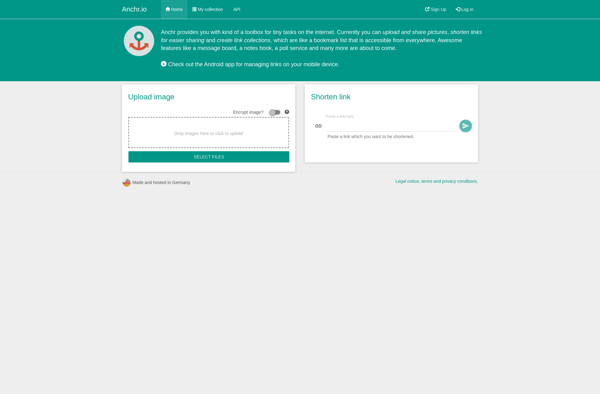
Anchr.io is a robust URL shortener and link management platform that helps teams and individuals simplify their long, complex links for easier sharing, tracking and branding.With Anchr.io, users can shorten links, customize their shortened URLs with a branded domain, view click analytics to optimize their links, collaborate with a team,...
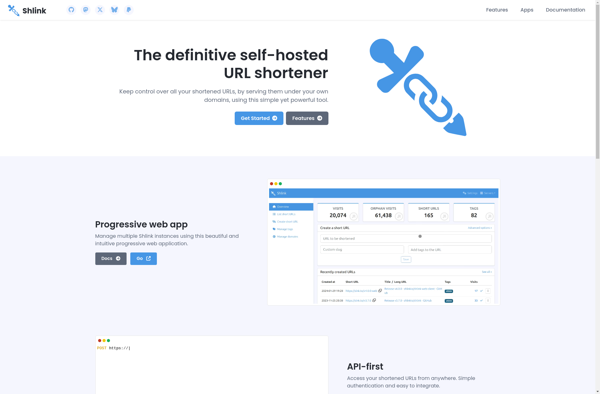
Shlink is an open source self-hosted URL shortener application. It allows users to host their own URL shortening service and provides features like:Shorten URLs and share themManage and organize shortened URLs in tagsGet click reports on shortened links with details like browser, country, referrer, etc.API access to programmatically create and...
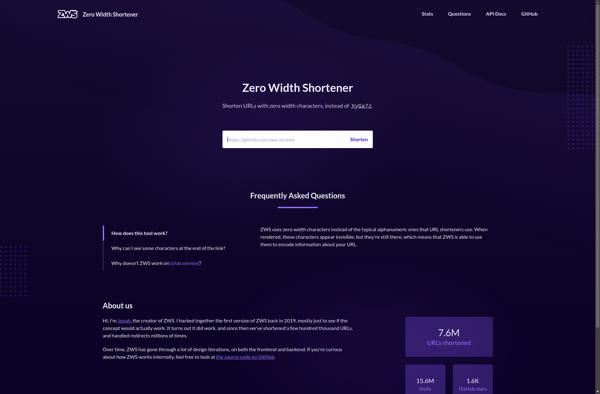
Zero Width Shortener is a free online service that allows users to shorten links and URLs while keeping the original destination address intact. It works by inserting invisible Unicode characters known as zero-width characters into the URL, shortening it visually while still directing to the original long URL.Unlike traditional URL...