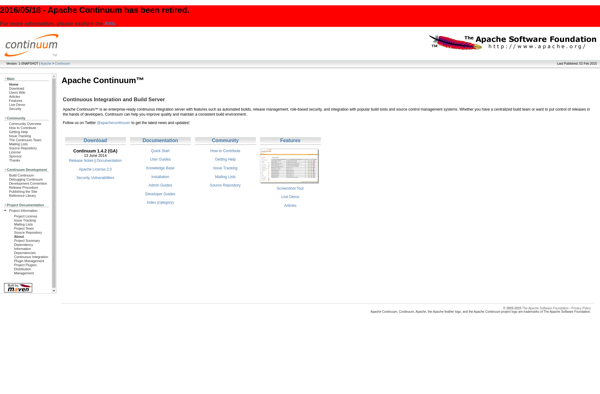
Apache Continuum is an open-source continuous integration server that automates builds, testing, and deployment for Java applications. It integrates with build tools like Maven and Ant and source control systems like Subversion and Git.
Automate builds, testing, and deployment for Java applications with Apache Continuum, an open-source continuous integration server integrating with Maven, Ant, Subversion, and Git.
What is Apache Continuum?
Apache Continuum is an open-source continuous integration and delivery application originally created by the Apache Software Foundation. It is designed to automate builds, testing, and deployments for Java applications.
Key features of Apache Continuum include:
Automatically building Java applications on a configurable schedule (e.g. nightly builds)
Running unit, integration and functional tests
Managing dependencies with Maven and Ant
Supporting version control tools like Subversion, Git, CVS
Deploying artifacts to servers or repositories
Sending notifications about build status via email or RSS
Web-based interface for monitoring builds and managing Continuum
Role-based access control for users
Pluggable architecture that can be extended via Java APIs
Apache Continuum aims to increase developer productivity by automating repetitive tasks around the build, test and deployment phases. It improves software quality by catching issues early through continuous integration. Using Continuum allows organizations to deliver software more rapidly and reliably.
What Is Jenkins?Jenkins is the most widely used open-source automation server for continuous integration and continuous delivery (CI/CD). It automates building, testing, and deploying software, enabling development teams to integrate code changes frequently and catch issues early.Key FeaturesJenkins supports pipeline-as-code through Jenkinsfiles, which define build, test, and deployment stages in...
What Is Travis CI?Travis CI is a continuous integration service that automatically builds and tests code changes pushed to GitHub repositories. It was one of the first CI services to offer free builds for open-source projects, making it a foundational tool in the open-source ecosystem.Key FeaturesTravis CI uses a .travis.yml...
Octopus Deploy is an automated deployment server designed to simplify the process of deploying applications and infrastructure across multiple environments and servers. Here are some key things to know about Octopus Deploy:- It provides a centralized UI and API to manage and track deployments across dev, test, staging, and production...
Bamboo is a continuous integration and continuous delivery server developed by Atlassian. It allows software development teams to automate building, testing and deploying applications.Key features of Bamboo include:Automated builds and tests - Automatically run builds and tests whenever code is committed to keep the team informed of integration issues.Release management...
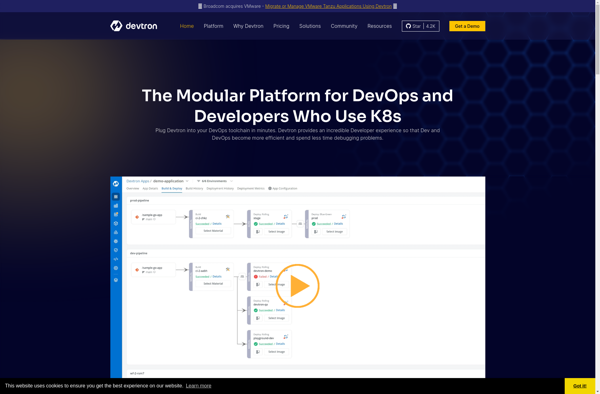
Devtron is an open-source software delivery workflow and DevOps accelerator built to optimize developer experience. It provides end-to-end visibility and insight into CI/CD pipelines, enabling faster delivery with reduced failures.Key features of Devtron include:Pipeline visibility - Dashboards to monitor build logs, test coverage, security scans etc. Provides complete traceability into...
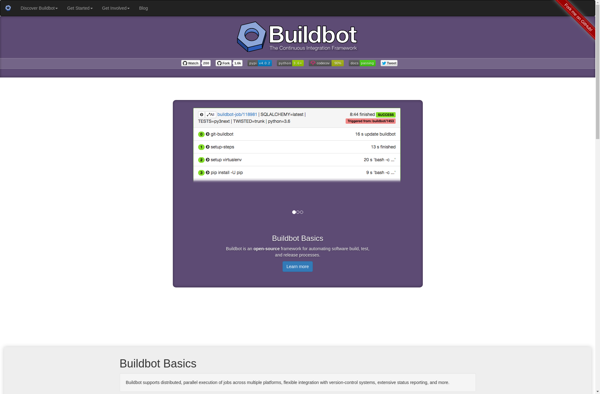
Buildbot is an open-source continuous integration and continuous delivery application that allows software development teams to automate the build, test, and release processes. It provides a customizable workflow engine that allows you to define your build steps, run tests, generate reports, and integrate with version control systems.Some key features of...
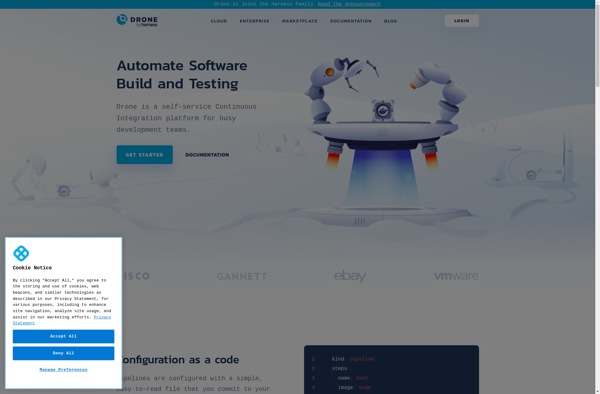
Drone.io is an open source continuous delivery platform built with Docker that allows developers to build, test, and deploy code easily and efficiently. Some key features and benefits of Drone.io include:Simple setup using a Docker container and YAML-based configuration pipelineSupports building and testing code written in all major languages like...
Taskcluster is an open source platform optimized for automating software testing and deployment processes. It enables developers to run tasks at scale across a variety of environments including physical, virtual, and containerized infrastructure.Key features of Taskcluster include:Flexible task definition using YAML for specifying dependencies, deadlines, artifacts, routes, scopes and moreScalable...
Percy is a visual testing and review platform used to automate visual reviews in web development and catch UI issues before code gets deployed to production. It integrates seamlessly with GitHub pull requests to let developers preview their work and get visual reviews done faster.Key features of Percy include:Visual diffing...
Bitbucket Pipelines is a continuous integration and delivery service offered by Atlassian that is tightly integrated with Bitbucket cloud. It allows developers to automatically build, test, and deploy their code based on predefined scripts called pipelines.Some key features of Bitbucket Pipelines include:Tight integration with Bitbucket cloud for simplified setup and...