Drone.io is a continuous delivery platform built on Docker, allowing developers to build and deploy code to any environment. It uses a simple YAML configuration file to define pipelines and works with most source code repositories like GitHub and BitBucket.
Drone.io is a continuous delivery platform built on Docker, allowing developers to build and deploy code to any environment. It uses a simple YAML configuration file to define pipelines and works with most source code repositories like GitHub and BitBucket.
What is Drone.io?
Drone.io is an open source continuous delivery platform built with Docker that allows developers to build, test, and deploy code easily and efficiently. Some key features and benefits of Drone.io include:
Simple setup using a Docker container and YAML-based configuration pipeline
Supports building and testing code written in all major languages like Java, Python, Node.js etc.
Easy integration with source code repositories like GitHub, GitLab, Bitbucket, Gitea etc. using webhooks
Enables building docker images and doing docker-based delivery of code
Comes with in-built caching for faster builds
Scalable architecture to handle large volumes of builds and deployments
Has an intuitive graphical user interface to monitor build activity and manage configuration
Open source software with an MIT license, backed by a community of contributors
With its continuous delivery focus, simple yet flexible configuration, and Docker-centric architecture, Drone.io is well-suited for teams practicing CI/CD who want to streamline and automate their build, test and deployment pipelines with containers.
Drone.io Features
Features
Automated build pipelines
Built-in Docker integration
Support for multiple code repositories
YAML-based configuration
Built-in notifications
Role-based access control
Pricing
Open Source
Freemium
Subscription-Based
Pros
Easy to set up
Scalable
Open source and self-hosted option available
Integrates with many tools and platforms
Active community support
Cons
Steep learning curve
Limited integrations compared to some alternatives
Can be complex for larger deployments
Open source version lacks some enterprise features
What Is Jenkins?Jenkins is the most widely used open-source automation server for continuous integration and continuous delivery (CI/CD). It automates building, testing, and deploying software, enabling development teams to integrate code changes frequently and catch issues early.Key FeaturesJenkins supports pipeline-as-code through Jenkinsfiles, which define build, test, and deployment stages in...
What Is Travis CI?Travis CI is a continuous integration service that automatically builds and tests code changes pushed to GitHub repositories. It was one of the first CI services to offer free builds for open-source projects, making it a foundational tool in the open-source ecosystem.Key FeaturesTravis CI uses a .travis.yml...
CircleCI is a continuous integration and delivery platform designed to help developers build, test, and deploy applications with speed and confidence. It provides cloud-based infrastructure for running automated jobs in Linux containers, allowing code to be built, tested, and delivered rapidly and reliably.Some key features of CircleCI include:Automated building, testing...
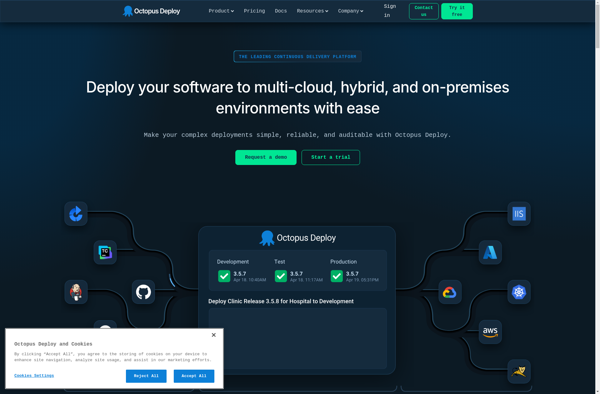
Octopus Deploy is an automated deployment server designed to simplify the process of deploying applications and infrastructure across multiple environments and servers. Here are some key things to know about Octopus Deploy:- It provides a centralized UI and API to manage and track deployments across dev, test, staging, and production...
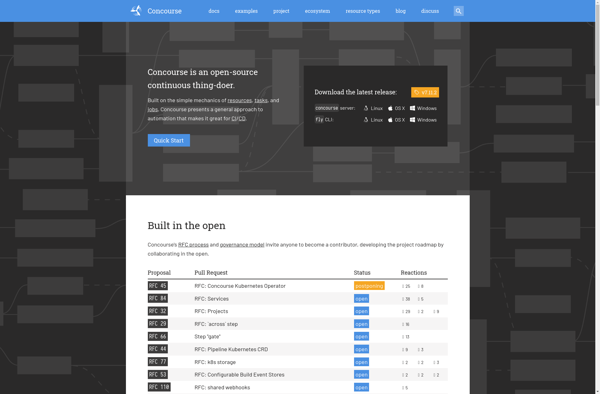
Concourse is an open-source continuous thing platform designed for automation of pipelines in software development. It provides resources and tasks that can be combined into pipelines to automate build, test, and deployment processes.Some key features of Concourse include:Built-in resources for interacting with common infrastructure like GitHub, Amazon S3, and DockerConcept...
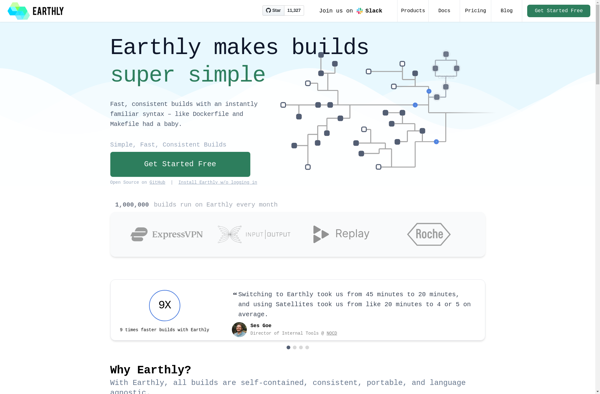
Earthly is an open-source build automation tool designed specifically for monorepo-style codebases. It provides developers a simple way to define their build workflows and dependencies in a declarative Earthfile, then handles executing builds efficiently.Key features of Earthly include:Automatic parallelization - Earthly analyzes dependencies and runs independent build steps in parallel...
Codeship is a cloud-based continuous integration and delivery service that helps development teams test, build and deploy their code quickly and efficiently. Some key features of Codeship include:Fully automated build, test and deployment pipelinesIntegration with GitHub, Bitbucket and GitLab for easy code hosting and managementParallel testing for faster test executionBuilt-in...
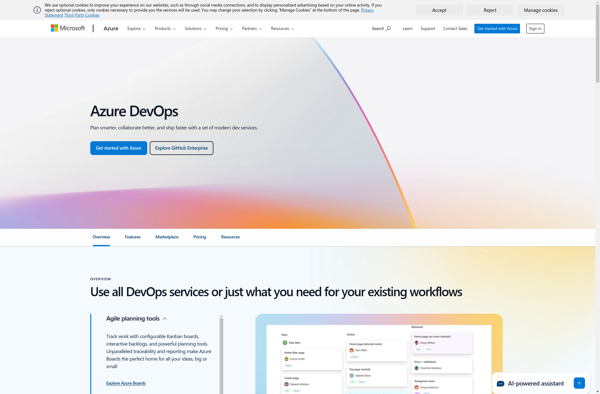
Azure DevOps is a Microsoft cloud-based collaborative development environment that supports Git repositories, Kanban boards, extensive automated builds, load testing, release management and application analytics. Key capabilities include:Version control with Git repositories for source code and integration with Visual Studio and EclipseAgile planning and tracking using Kanban boards with configurable...
DeployPlace is a continuous integration and delivery platform designed to automate the building, testing and deployment of software applications. It aims to improve software quality through rigorous automated testing and faster delivery of updates.Some key features of DeployPlace include:Supports a wide range of languages and frameworks including Java, .NET, Node.js,...
Assembla is a web-based application lifecycle management (ALM) and agile project management tool designed for software development teams. It provides a complete platform for planning, building, and deploying applications.Key features of Assembla include:Ticket tracking - Issue tracking and agile project management with scrum and Kanban boardsSource code management - Git...
Launchdeck is a user-friendly website builder designed to help small business owners, entrepreneurs, bloggers, and anyone else easily create stunning websites. With its intuitive drag-and-drop editor, hundreds of professionally designed templates, and built-in ecommerce functionality, Launchdeck makes it simple for anyone to launch a beautiful, functional website without needing to...
Buildbot is an open-source continuous integration and continuous delivery application that allows software development teams to automate the build, test, and release processes. It provides a customizable workflow engine that allows you to define your build steps, run tests, generate reports, and integrate with version control systems.Some key features of...
Agola is an open-source automation platform designed specifically for software development teams. It provides a simple way to set up continuous integration, deployment, and delivery pipelines without the complexity of traditional CI/CD tools.Some key capabilities and benefits of Agola include:Configuration-as-Code - Pipelines, jobs, tasks, and other components are defined in...
Taskcluster is an open source platform optimized for automating software testing and deployment processes. It enables developers to run tasks at scale across a variety of environments including physical, virtual, and containerized infrastructure.Key features of Taskcluster include:Flexible task definition using YAML for specifying dependencies, deadlines, artifacts, routes, scopes and moreScalable...
Screwdriver is an open source continuous delivery and release automation platform optimized for deploying infrastructure and applications. Some key features and capabilities of Screwdriver include:Automated testing and builds - Screwdriver has built-in functionality to run automated builds and tests as code gets merged, ensuring code integrity and quality.Continuous Delivery pipelines...
Bitrise is a continuous integration and delivery (CI/CD) platform designed specifically for mobile app development teams. It aims to automate the repetitive parts of building, testing and deploying mobile apps so developers can focus on writing code.Some key capabilities and benefits of Bitrise include:Supports native iOS and Android apps, as...
Apache Continuum is an open-source continuous integration and delivery application originally created by the Apache Software Foundation. It is designed to automate builds, testing, and deployments for Java applications.Key features of Apache Continuum include:Automatically building Java applications on a configurable schedule (e.g. nightly builds)Running unit, integration and functional testsManaging dependencies...
GreenhouseCI is a cloud-based continuous integration and delivery (CI/CD) platform that helps software teams automate building, testing, and deploying their applications. Some key capabilities and benefits of GreenhouseCI include:Automated build pipelines - Configure pipelines with steps to compile code, run tests, security scans, generate artifacts like containers, and deploy to...
Shippable is a continuous integration and delivery platform designed to help engineering teams build, test, and deploy their code quickly and reliably. Some key features of Shippable include:Automated testing every time code is committed to catch bugs and issues earlySupport for all major code repositories and DevOps toolsParallel test execution...
Xinc is an open-source, decentralized chat and communications platform focused on privacy and security. It was first released in 2014 as an alternative to traditional centralized messaging apps like WhatsApp or Telegram.Some key features of Xinc include:End-to-end encryption - All communications between Xinc users are encrypted locally on their devices...
Razorops is a cloud management platform delivered as a service to help businesses effectively utilize the cloud. It allows organizations to easily deploy, monitor, manage, and optimize cloud environments across leading providers like AWS, Azure, and Google Cloud.Key capabilities and benefits of Razorops include:Cloud deployment automation to quickly stand up...
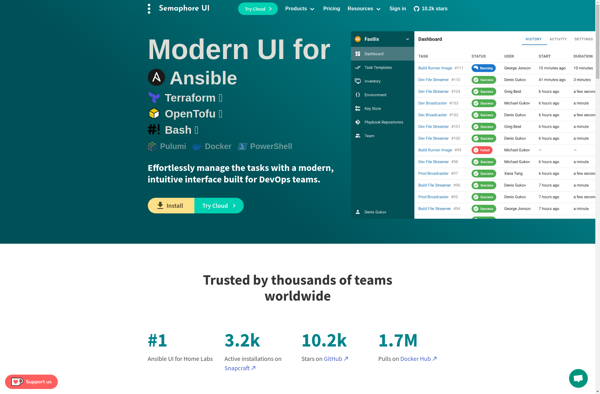
Ansible Semaphore is an open source web-based graphical front-end for managing Ansible playbooks. It provides a user-friendly interface for running playbooks on remote servers without needing direct access to the Ansible command-line tools.Key features of Ansible Semaphore include:Web-based UI for kicking off Ansible playbooks and viewing execution logs in real...
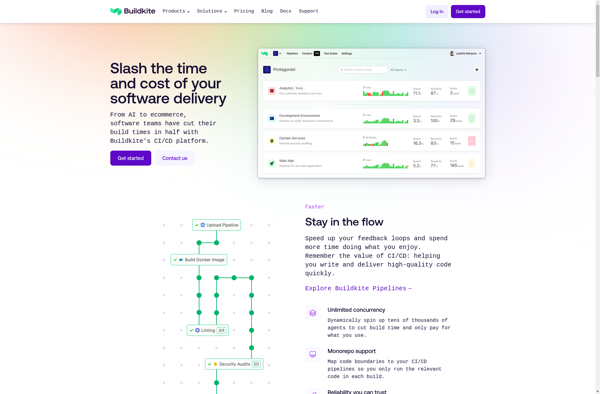
Buildkite is a continuous integration and continuous delivery platform optimized for software development teams. It allows developers to automatically build, test and deploy their code changes frequently and efficiently.Some key features of Buildkite include:Easy parallelization - Buildkite makes it simple to run tests and jobs in parallel across multiple agents...
Vexor.io is a visual website and application builder platform that makes it easy for anyone to create professional, responsive websites and web applications without needing to know how to code.With Vexor.io's intuitive drag-and-drop interface, users can select from a wide range of ready-made content modules like text, images, videos, galleries,...