Vexor.io is a visual website and application builder that allows anyone to create responsive sites and web apps easily with drag and drop modules, without coding. It has features like flexible templates, forms, popups, ecommerce, analytics, and more.
What is Vexor.io?
Vexor.io is a visual website and application builder platform that makes it easy for anyone to create professional, responsive websites and web applications without needing to know how to code.
With Vexor.io's intuitive drag-and-drop interface, users can select from a wide range of ready-made content modules like text, images, videos, galleries, counters, blogs, and more to build their sites exactly how they envision. It also provides flexible templates and layouts to choose from to get started quickly.
Some key features and benefits of Vexor.io include:
Drag-and-drop website builder with over 100 customizable modules
Mobile responsive design across all sites for optimal viewing on any device
Built-in ecommerce functionality to easily sell products/services
Forms and lead capture tools to collect visitor information
Popups, announcements and other conversion tools to increase engagement
Detailed analytics to track and improve site performance
Flexible templates and design options for unique sites
Easy customization and styling through an intuitive Style Manager
With Vexor.io's wide range of features, non-technical users can create everything from simple landing pages to full-featured online stores and web applications to suit their business or organizational needs.
What Is Jenkins?Jenkins is the most widely used open-source automation server for continuous integration and continuous delivery (CI/CD). It automates building, testing, and deploying software, enabling development teams to integrate code changes frequently and catch issues early.Key FeaturesJenkins supports pipeline-as-code through Jenkinsfiles, which define build, test, and deployment stages in...
What Is Travis CI?Travis CI is a continuous integration service that automatically builds and tests code changes pushed to GitHub repositories. It was one of the first CI services to offer free builds for open-source projects, making it a foundational tool in the open-source ecosystem.Key FeaturesTravis CI uses a .travis.yml...
CircleCI is a continuous integration and delivery platform designed to help developers build, test, and deploy applications with speed and confidence. It provides cloud-based infrastructure for running automated jobs in Linux containers, allowing code to be built, tested, and delivered rapidly and reliably.Some key features of CircleCI include:Automated building, testing...
JetBrains TeamCity is a continuous integration and continuous delivery server developed by JetBrains for software development teams. It automates building, testing, and deploying applications to help streamline the software development lifecycle.Some key features of TeamCity include:Customizable build configurations and build chains to automate compiling, running tests, generating reports, deploying applications,...
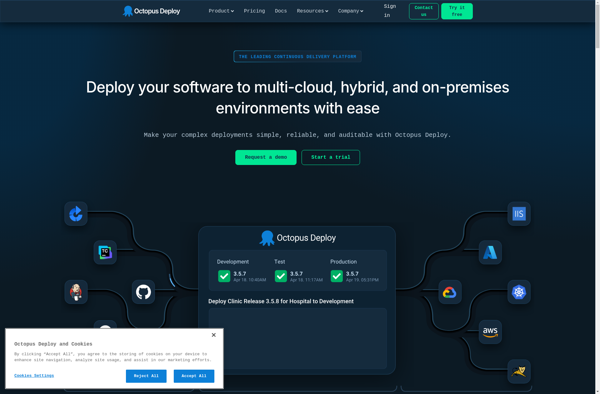
Octopus Deploy is an automated deployment server designed to simplify the process of deploying applications and infrastructure across multiple environments and servers. Here are some key things to know about Octopus Deploy:- It provides a centralized UI and API to manage and track deployments across dev, test, staging, and production...
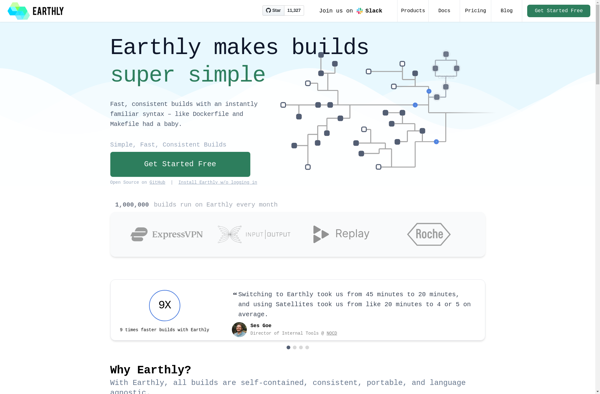
Earthly is an open-source build automation tool designed specifically for monorepo-style codebases. It provides developers a simple way to define their build workflows and dependencies in a declarative Earthfile, then handles executing builds efficiently.Key features of Earthly include:Automatic parallelization - Earthly analyzes dependencies and runs independent build steps in parallel...
Codeship is a cloud-based continuous integration and delivery service that helps development teams test, build and deploy their code quickly and efficiently. Some key features of Codeship include:Fully automated build, test and deployment pipelinesIntegration with GitHub, Bitbucket and GitLab for easy code hosting and managementParallel testing for faster test executionBuilt-in...
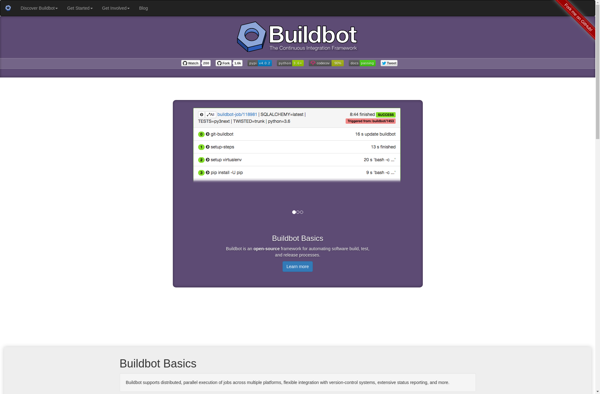
Buildbot is an open-source continuous integration and continuous delivery application that allows software development teams to automate the build, test, and release processes. It provides a customizable workflow engine that allows you to define your build steps, run tests, generate reports, and integrate with version control systems.Some key features of...
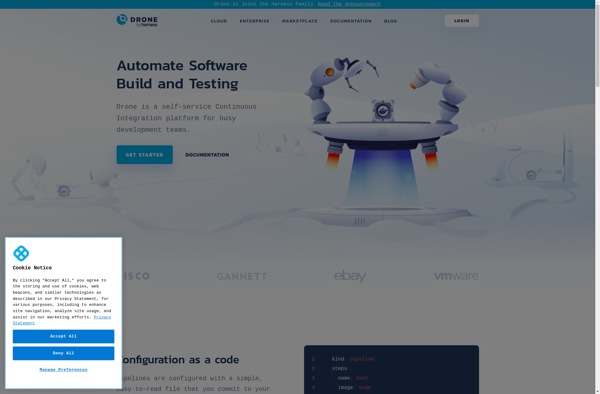
Drone.io is an open source continuous delivery platform built with Docker that allows developers to build, test, and deploy code easily and efficiently. Some key features and benefits of Drone.io include:Simple setup using a Docker container and YAML-based configuration pipelineSupports building and testing code written in all major languages like...
Percy is a visual testing and review platform used to automate visual reviews in web development and catch UI issues before code gets deployed to production. It integrates seamlessly with GitHub pull requests to let developers preview their work and get visual reviews done faster.Key features of Percy include:Visual diffing...
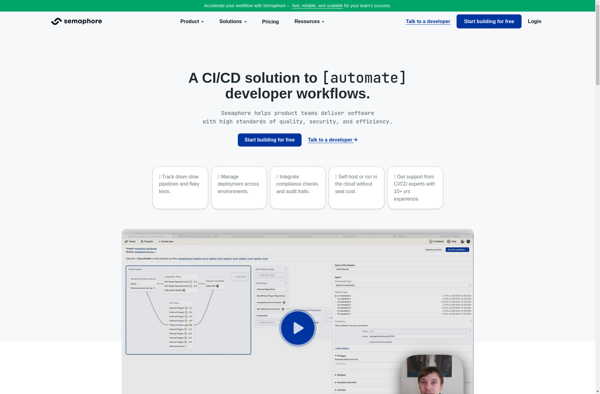
Semaphore is a hosted continuous integration and continuous delivery (CI/CD) platform designed for agile development teams. It allows developers to easily automate their development pipelines to test, build and deploy software applications faster and more efficiently.Some key features of Semaphore include:Fast and reliable CI/CD pipelinesSupport for a wide range of...
Xinc is an open-source, decentralized chat and communications platform focused on privacy and security. It was first released in 2014 as an alternative to traditional centralized messaging apps like WhatsApp or Telegram.Some key features of Xinc include:End-to-end encryption - All communications between Xinc users are encrypted locally on their devices...