Screwdriver is a lightweight open source continuous delivery and release automation platform. It helps developers easily build, test, and deploy their code and facilitates faster and simpler delivery of apps and services.
Screwdriver: Lightweight Open Source Continuous Delivery
A lightweight open source continuous delivery and release automation platform for easy code building, testing, and deployment, facilitating faster app and service delivery.
What is Screwdriver?
Screwdriver is an open source continuous delivery and release automation platform optimized for deploying infrastructure and applications. Some key features and capabilities of Screwdriver include:
Automated testing and builds - Screwdriver has built-in functionality to run automated builds and tests as code gets merged, ensuring code integrity and quality.
Continuous Delivery pipelines - Screwdriver makes it easy to set up CD pipelines that move code from commit to production efficiently and reliably.
Infrastructure-as-Code - Template-based approach allows defining and deploying infrastructure in a repeatable way.
Pluggable architecture - Screwdriver has a modular architecture with pluggable build and test engines, enabling flexibility.
Dashboard and notifications - Centralized dashboard provides visibility into pipelines and their executions, with notifications on failures.
Role based access control - Control user access to pipelines and configurations based on roles.
Runs natively on Kubernetes - Screwdriver leverages Kubernetes to provide scalability and resilience.
Some of the key benefits of using Screwdriver include improved software delivery speed and frequency, better collaboration between teams, faster time-to-market, and reduced failures in production. Its continuous testing and deployment capabilities help enhance software quality and reliability.
Screwdriver Features
Features
Continuous integration and delivery
Pipeline configuration as code
Built-in Docker container management
Dashboard for monitoring builds and deployments
Integrations with GitHub, Bitbucket, etc.
Role-based access control
Scalable infrastructure
Pricing
Open Source
Free
Pros
Open source and free to use
Lightweight and easy to set up
Supports many languages and frameworks
Good for small teams getting started with CI/CD
Active community support
Cons
Limited features compared to enterprise CI/CD tools
What Is Jenkins?Jenkins is the most widely used open-source automation server for continuous integration and continuous delivery (CI/CD). It automates building, testing, and deploying software, enabling development teams to integrate code changes frequently and catch issues early.Key FeaturesJenkins supports pipeline-as-code through Jenkinsfiles, which define build, test, and deployment stages in...
What Is Travis CI?Travis CI is a continuous integration service that automatically builds and tests code changes pushed to GitHub repositories. It was one of the first CI services to offer free builds for open-source projects, making it a foundational tool in the open-source ecosystem.Key FeaturesTravis CI uses a .travis.yml...
CircleCI is a continuous integration and delivery platform designed to help developers build, test, and deploy applications with speed and confidence. It provides cloud-based infrastructure for running automated jobs in Linux containers, allowing code to be built, tested, and delivered rapidly and reliably.Some key features of CircleCI include:Automated building, testing...
JetBrains TeamCity is a continuous integration and continuous delivery server developed by JetBrains for software development teams. It automates building, testing, and deploying applications to help streamline the software development lifecycle.Some key features of TeamCity include:Customizable build configurations and build chains to automate compiling, running tests, generating reports, deploying applications,...
Concourse is an open-source continuous thing platform designed for automation of pipelines in software development. It provides resources and tasks that can be combined into pipelines to automate build, test, and deployment processes.Some key features of Concourse include:Built-in resources for interacting with common infrastructure like GitHub, Amazon S3, and DockerConcept...
Earthly is an open-source build automation tool designed specifically for monorepo-style codebases. It provides developers a simple way to define their build workflows and dependencies in a declarative Earthfile, then handles executing builds efficiently.Key features of Earthly include:Automatic parallelization - Earthly analyzes dependencies and runs independent build steps in parallel...
Codeship is a cloud-based continuous integration and delivery service that helps development teams test, build and deploy their code quickly and efficiently. Some key features of Codeship include:Fully automated build, test and deployment pipelinesIntegration with GitHub, Bitbucket and GitLab for easy code hosting and managementParallel testing for faster test executionBuilt-in...
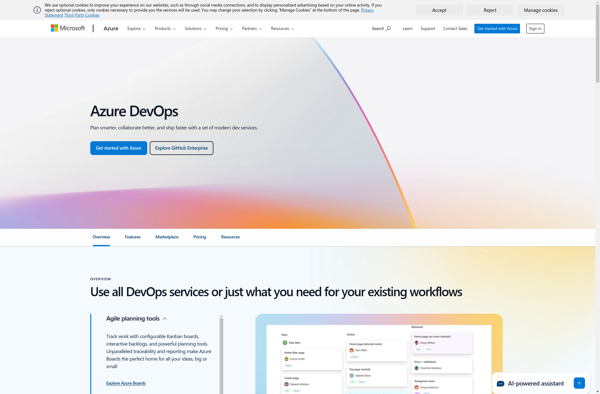
Azure DevOps is a Microsoft cloud-based collaborative development environment that supports Git repositories, Kanban boards, extensive automated builds, load testing, release management and application analytics. Key capabilities include:Version control with Git repositories for source code and integration with Visual Studio and EclipseAgile planning and tracking using Kanban boards with configurable...
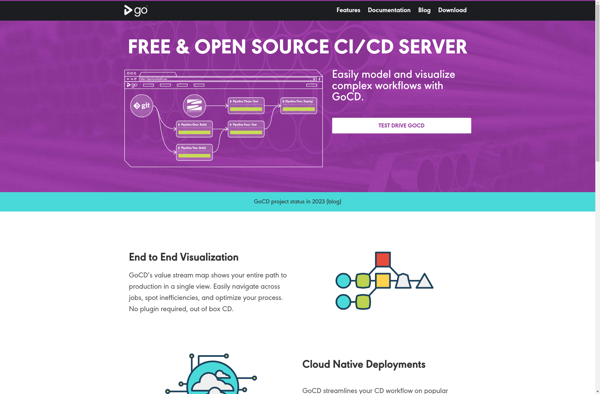
GoCD is an open source continuous delivery and release automation server created by ThoughtWorks. It provides end-to-end visibility and traceability into the software delivery value stream, allowing teams to continuously build, test, package and deploy applications.Some key features of GoCD include:Modeling deployment workflows with build pipelines and stagesManaging dependencies between...
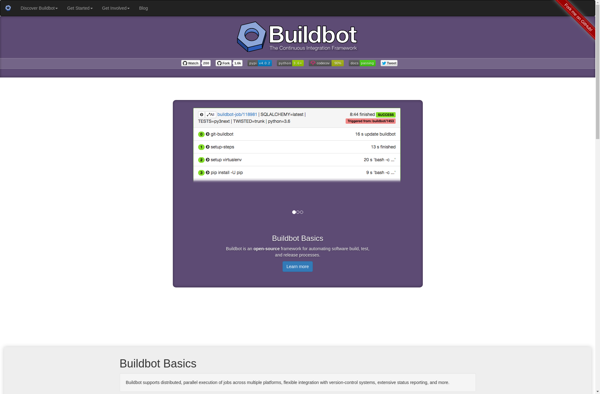
Buildbot is an open-source continuous integration and continuous delivery application that allows software development teams to automate the build, test, and release processes. It provides a customizable workflow engine that allows you to define your build steps, run tests, generate reports, and integrate with version control systems.Some key features of...
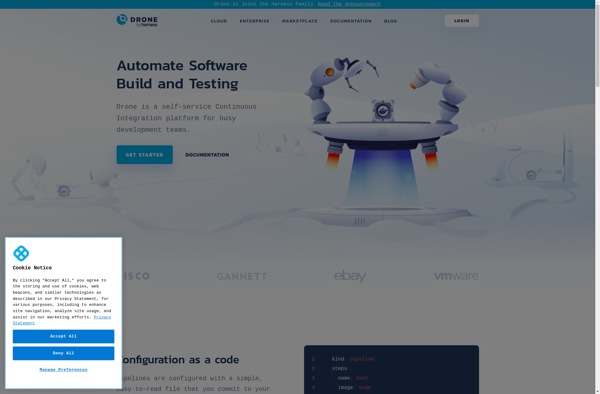
Drone.io is an open source continuous delivery platform built with Docker that allows developers to build, test, and deploy code easily and efficiently. Some key features and benefits of Drone.io include:Simple setup using a Docker container and YAML-based configuration pipelineSupports building and testing code written in all major languages like...
Agola is an open-source automation platform designed specifically for software development teams. It provides a simple way to set up continuous integration, deployment, and delivery pipelines without the complexity of traditional CI/CD tools.Some key capabilities and benefits of Agola include:Configuration-as-Code - Pipelines, jobs, tasks, and other components are defined in...
Percy is a visual testing and review platform used to automate visual reviews in web development and catch UI issues before code gets deployed to production. It integrates seamlessly with GitHub pull requests to let developers preview their work and get visual reviews done faster.Key features of Percy include:Visual diffing...