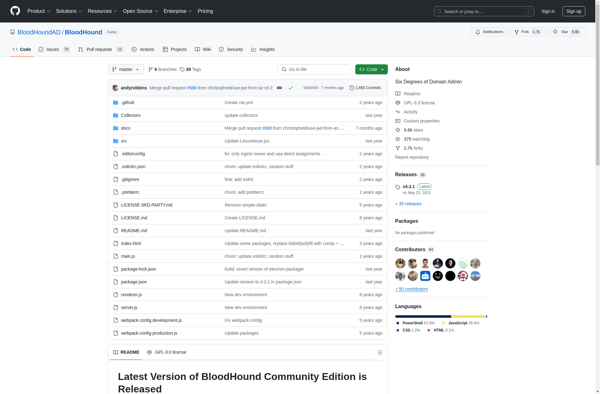
BloodHound is an open source security tool used to analyze Active Directory environments and find relationships between different objects. It helps identify attack paths that could potentially allow an attacker to escalate privileges.
Analyze Active Directory environments and identify potential attack paths with BloodHound, a powerful open source security tool.
What is BloodHound?
BloodHound is an open source security software used to analyze Active Directory environments to find relationships and paths between different Active Directory objects and identify potential ways for an attacker to escalate privileges and move laterally within the network.
It uses graph theory to analyze the extracted data, map out the relationships, and highlight possible attack paths that could allow an attacker to compromise privileged accounts. BloodHound does not perform any exploitation itself, it is used as a security analysis tool.
Some key features and capabilities of BloodHound:
Identifies shortest path to privilege escalation such as finding the shortest path from a regular user account to a domain admin account
Highlights accounts with most admin-like privileges to prioritize security hardening efforts
Models the impact of implementing various security policies to identify policy gaps
Integrates with other tools through APIs and data export in multiple formats
Intuitive and flexible graphical interface to visualize attack paths
BloodHound is commonly used along with other offensive security tools as part of red team planning and identifying areas of improvement to strengthen the overall Active Directory security posture.
BloodHound Features
Features
Graph database showing relationships between Active Directory objects
Identifies privilege escalation paths and access control vulnerabilities
Visualizes effective permissions and trusts
Integrates data from LDAP and Kerberos
Built on Neo4j graph database
Pricing
Open Source
Pros
Open source and free to use
Powerful visualization of AD environments
Helps identify attack vectors and security holes
Large user community providing support
Cons
Requires installing Neo4j database
Steep learning curve
Does not fix vulnerabilities, only identifies them
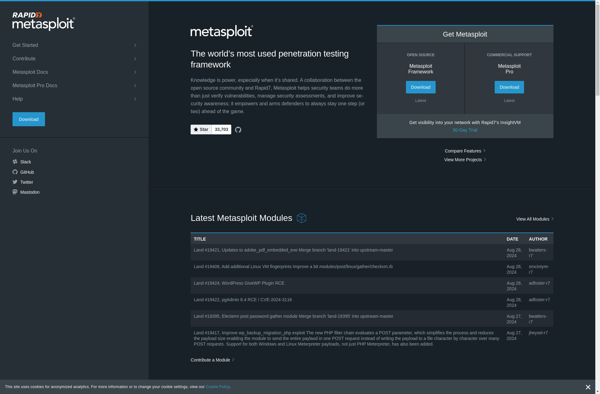
Metasploit is an open source penetration testing framework used by cybersecurity professionals to test the security of an organization's networks and applications. It enables ethical hackers and security teams to identify potential weaknesses and vulnerabilities in a system before they are exploited by malicious actors.Some key features of Metasploit include:Database...
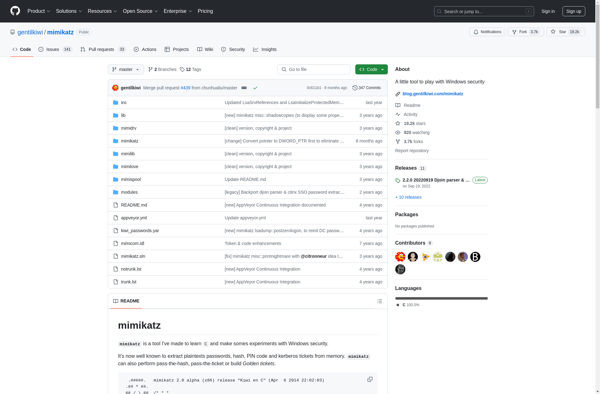
Mimikatz is an open-source utility that enables viewing and saving Windows operating system credentials. Developed by Benjamin Delpy, it is designed to extract plaintext passwords, hash dumps, PIN codes, and kerberos tickets from memory.Mimikatz works by directly accessing the memory of the Windows LSASS (Local Security Authority Subsystem Service) process....
Cobalt Strike is a commercial software platform for Adversary Simulations and Red Team Operations. It provides penetration testers network situational awareness, access to credentials and internal network access, and the ability to mimic the techniques and procedures of advanced threats through its robust scripting engine.Key features of Cobalt Strike include:Beacon...
ZoomEye is a search engine and data mining tool for cyberspace that facilitates the discovery and analysis of devices exposed to the public internet. It functions like a search engine for cyberspace, allowing users to easily search for information on IPs, websites, and other devices.Some key features of ZoomEye include:Search...
The Social-Engineer Toolkit (SET) is an open-source penetration testing framework designed specifically for simulating social engineering attacks. Developed by TrustedSec, SET is intended to be used legally and ethically by security researchers, consultants, red teams, and other IT professionals to test human elements in cybersecurity.SET includes a number of custom...
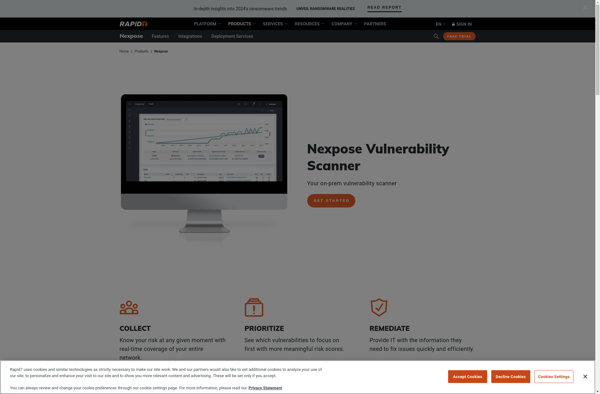
Nexpose is a comprehensive vulnerability management and penetration testing software developed and maintained by Rapid7. It enables organizations to identify security weaknesses across their networks, systems, web applications, databases, and endpoints.Key features of Nexpose include:Asset discovery - Automatically discovers devices, ports, services, vulnerabilities, and misconfigurations on the network.Risk-based vulnerability management...
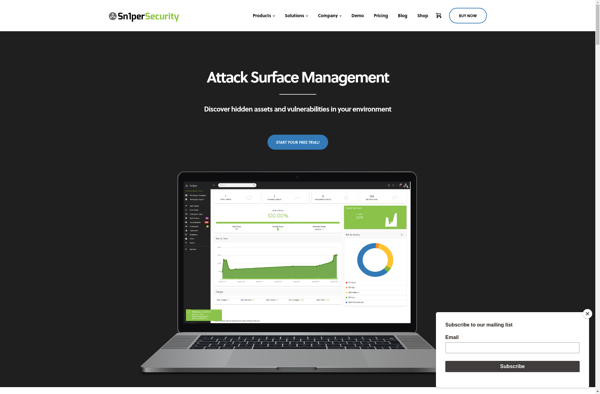
Sn1per Professional is an advanced automated vulnerability scanner used for penetration testing and network security assessments. It is designed to provide comprehensive scanning capabilities to rapidly find security vulnerabilities in web applications, servers, and networks.Key features of Sn1per Professional include:Automated discovery and scanning of web apps, servers, and network devicesHundreds...
Immunity CANVAS is a comprehensive penetration testing platform used to simulate real-world cyber attacks against infrastructure and applications. It helps security professionals and red teams identify weaknesses before attackers can exploit them.Key features of Immunity CANVAS include:Hundreds of exploit modules for testing vulnerabilities across operating systems, network devices, web apps,...
Exploit Pack is an automated penetration testing tool used to help security professionals and web administrators evaluate the security of networks, web applications, databases, and computer systems. It simulates cyber attacks by leveraging known software vulnerabilities and misconfigurations.The tool contains hundreds of exploits and payloads that can be launched individually...
Andspoilt is an open-source app for Android that helps users declutter and better organize the apps on their phone. It works by analyzing app usage data on the device and flagging apps that have not been opened in a long time or are rarely used. Users can then easily uninstall,...