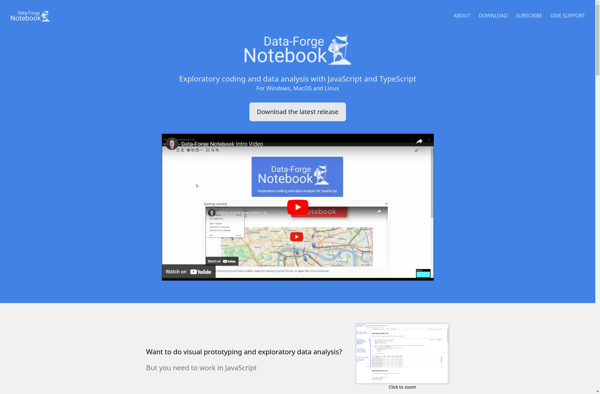
Data-Forge Notebook is an open-source data transformation and analysis tool for JavaScript. It allows you to clean, process, and visualize data in a notebook interface similar to Jupyter.
Data-Forge Notebook: Open-Source Data Transformation Tool
An open-source JavaScript data transformation and analysis tool for cleaning, processing, and visualizing data in a notebook interface similar to Jupyter.
What is Data-Forge Notebook?
Data-Forge Notebook is an open-source data analysis and transformation tool built on JavaScript. It provides a notebook interface similar to Jupyter notebooks that allows you to process, analyze, and visualize data.
Some key features of Data-Forge Notebook include:
In-browser data transformation and analysis using JavaScript
Support for importing CSV, JSON, and other data formats
Data visualization through charts and graphs
Shareable notebooks to collaborate with others
Export results to CSV, JSON etc.
Rich set of data transformation and analysis operations
Data-Forge Notebook is well-suited for cleaning, munging, analyzing, and visualizing small to medium sized datasets. Its notebook interface makes iterative data exploration and sharing results convenient. With support for JavaScript data manipulation libraries like Lodash, Data-Forge Notebook provides a flexible environment for data analysis.
Data-Forge Notebook Features
Features
Notebook interface for interactive data analysis
Built on JavaScript for front-end and back-end development
Transform, clean, process, and visualize data
Import data from CSV, JSON, databases, etc
Statistical analysis, machine learning, and graphing libraries
Share and publish notebooks
Pricing
Open Source
Pros
Open source and free
Runs in browser so no installation needed
Large collection of data manipulation and analysis libraries
Integrates well with JavaScript ecosystem and Node.js
Interactive notebooks good for exploration and sharing
Cons
Less libraries and support compared to Python data science stacks
Not as performant as compiled languages for large datasets
Basic visualization compared to dedicated tools like Tableau
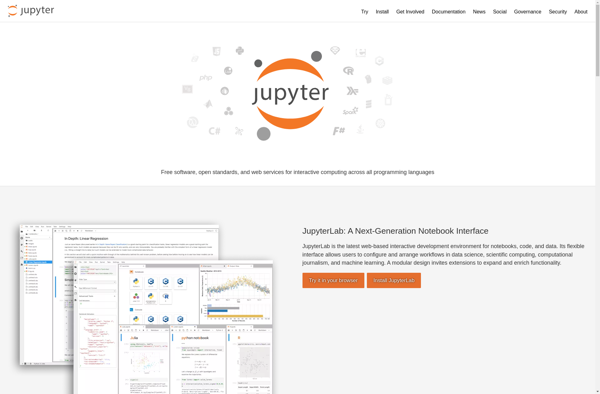
Jupyter is an open-source web application that allows you to create and share documents that contain live code, equations, visualizations and narrative text. It supports over 40 programming languages including Python, R, Julia and Scala.Some key features of Jupyter include:Notebook interface - Combine code, text, visualizations etc. in a single...
IPython is an interactive command shell and notebook environment for the Python programming language. It provides:An enhanced interactive Python shell with unique features for tab completion, object introspection, system shell access, command history retrieval across sessions, and more.An architecture that supports interactive parallel and distributed computing.A web-based notebook interface allowing...
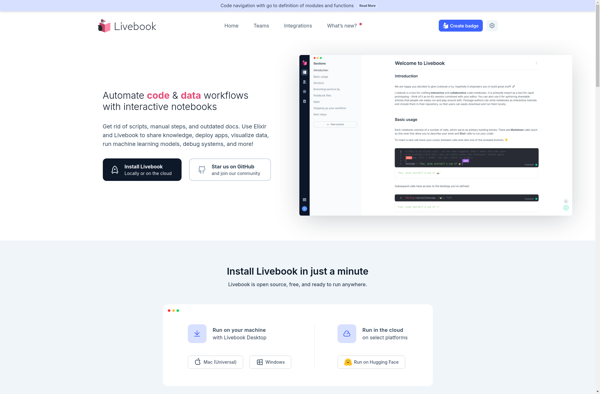
Livebook is an interactive notebook application for data analysis, machine learning, and visualization. It provides a browser-based workspace where you can combine code, visualizations, text, and multimedia into a single document.Some key features of Livebook:Supports Elixir, Python, JavaScript and other languagesConnects to databases like PostgreSQL, MySQL, and RedisIntegrates with common...
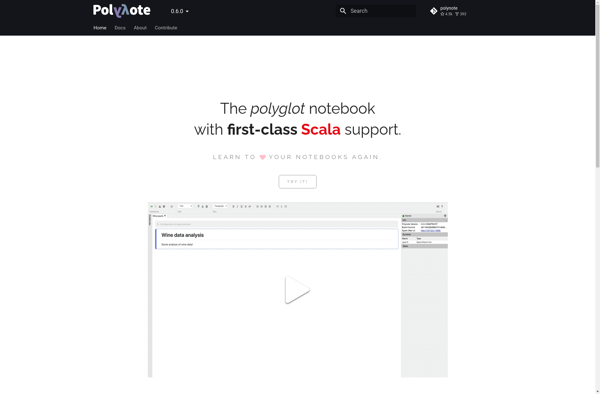
Polynote is an open-source polyglot notebook that allows users to combine Scala, Python, SQL, and other languages in a flexible notebook interface. It is designed for interactive and batch data science workflows with support for visualization, exploration, and production tasks.Some key features of Polynote include:Mix languages freely including Scala, Python,...
Kajero is an all-in-one digital marketing platform designed specifically for ecommerce businesses. It brings together key capabilities like SEO, content marketing, email marketing and more to help online stores drive more organic traffic, generate more leads, and increase sales.Some of the main features Kajero offers include:Keyword research tools to identify...
Iodide is an open-source web-based notebook environment for scientific communication and reproducible research. It allows users to create interactive notebooks that combine code, textual narrative, mathematical expressions, and rich media output. Iodide notebooks run entirely in the browser, allowing for easy sharing and publication of dynamic documents.Some key features of...
Notebook Viewer is an open-source web application designed specifically for viewing and interacting with Jupyter notebooks. It supports all major notebook formats including Jupyter (.ipynb), R Markdown (.Rmd) and more. Some key features include:Rendering of code, equations, visualizations and markdownExecution of code cells with output displayedSearching text, code and output...
Blabr is an emerging open-source video conferencing platform that offers encrypted group video calling for free. Developed by a non-profit organization, it is positioned as a privacy-focused alternative to mainstream tools like Zoom, Google Meet, or Microsoft Teams.Some key features of Blabr include:End-to-end encryption - All video calls are encrypted...