Iodide is an open-source tool for scientific communication and reproducible research. It allows creating interactive notebooks for data analysis, visualization, and explanation. As a web application, Iodide notebooks can be easily shared and published online.
Open-source tool for scientific communication and reproducible research, creating interactive notebooks for data analysis, visualization, and explanation
What is Iodide?
Iodide is an open-source web-based notebook environment for scientific communication and reproducible research. It allows users to create interactive notebooks that combine code, textual narrative, mathematical expressions, and rich media output. Iodide notebooks run entirely in the browser, allowing for easy sharing and publication of dynamic documents.
Some key features of Iodide include:
Support for popular data science languages like Python, Javascript, and HTML/CSS out of the box
Interactive output including tables, charts, interactive DOM elements, and more
First-class support for visualization and exploration of data
Easy export of notebooks to standalone HTML/JS applications for publishing
Integration with popular scientific Python libraries like NumPy, Matplotlib, Pandas, and SciPy
Collaborative editing capabilities for sharing and editing notebooks together
An open ecosystem based on web standards for extension and customization
Overall, Iodide aims to make creating reproducible, shareable, and interactive documents easier for scientists, analysts, engineers, and technical communicators. Its flexibility through language and library support allows it to support a wide range of computational tasks, from statistical analysis to machine learning to digital signal processing and more. With its focus on the browser, Iodide enables seamless sharing and collaboration around data-driven computational narratives.
Iodide Features
Features
Interactive notebooks for data analysis and visualization
Support for JavaScript, HTML, CSS, popular data science libraries
Real-time collaboration for sharing and editing notebooks
Publish and share notebooks online
Integration with GitHub
Import/export notebooks as JSON files
Pricing
Open Source
Pros
Free and open source
Runs entirely in the browser
Support for major data science libraries
Collaboration features
Easy sharing and publishing of notebooks
Cons
Limited compared to desktop-based notebook apps
Less active development and user community than alternatives
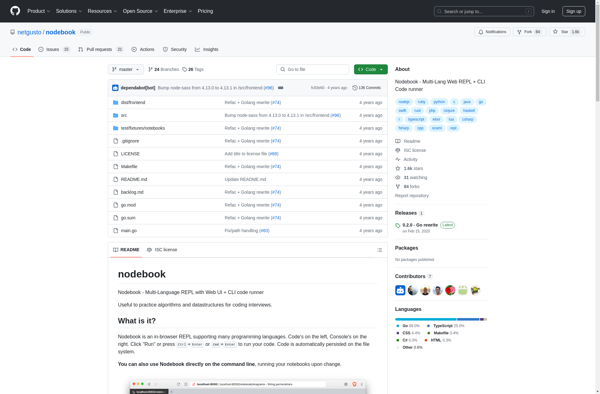
Nodebook is an open-source web-based notebook application designed for data analysis and scientific computing. Similar to Jupyter Notebook, Nodebook allows users to create interactive notebooks that combine live code, rich text elements, mathematical equations, plots and other multimedia.Key features of Nodebook include:Support for JavaScript, TypeScript, Python and R runtimes -...
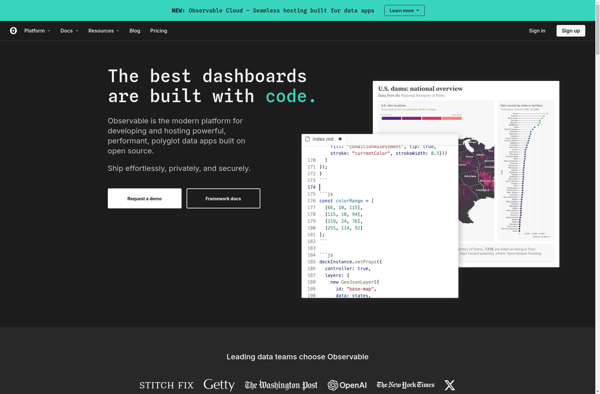
Observable Notebooks is an interactive JavaScript environment for exploratory data analysis and visualization. It allows users to create shareable notebooks that combine executable code, rich output, visualizations, and narrative text.Some key features of Observable Notebooks:Built-in data visualization with D3.js and Vega-LiteReactive variables and cells that update outputs automaticallyAbility to publish...
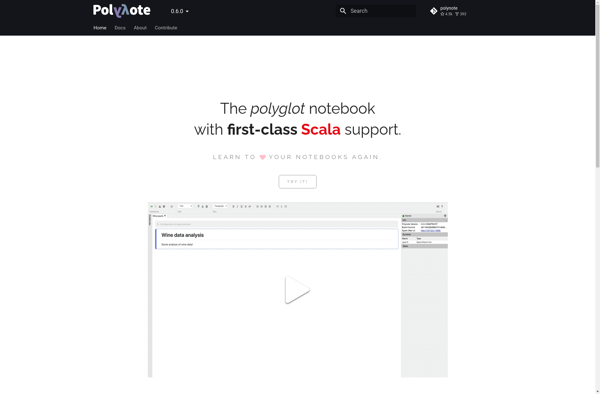
Polynote is an open-source polyglot notebook that allows users to combine Scala, Python, SQL, and other languages in a flexible notebook interface. It is designed for interactive and batch data science workflows with support for visualization, exploration, and production tasks.Some key features of Polynote include:Mix languages freely including Scala, Python,...
Kajero is an all-in-one digital marketing platform designed specifically for ecommerce businesses. It brings together key capabilities like SEO, content marketing, email marketing and more to help online stores drive more organic traffic, generate more leads, and increase sales.Some of the main features Kajero offers include:Keyword research tools to identify...
Calculist is a free, open-source calculator application for Windows. It aims to provide an easy-to-use and customizable calculator with advanced mathematical and programming features.Some of the key capabilities and benefits of Calculist include:Standard, scientific, programmer, date calculation, and converter modesSupports complex numbers, matrices, fractions, exponents, roots, trigonometric functionsHexadecimal, binary, and...
Notebook Viewer is an open-source web application designed specifically for viewing and interacting with Jupyter notebooks. It supports all major notebook formats including Jupyter (.ipynb), R Markdown (.Rmd) and more. Some key features include:Rendering of code, equations, visualizations and markdownExecution of code cells with output displayedSearching text, code and output...
Hyperdeck is a professional disk recorder manufactured by Blackmagic Design that specializes in recording broadcast quality video directly to SSD disks. It connects to computers and other devices via Thunderbolt or SDI interfaces.Some key features of Hyperdeck include:Supports recording in high quality codecs like ProRes and DNxHD for pristine video...
Bl.ocks is an open-source web application created by Mike Bostock, the creator of the D3.js (Data-Driven Documents) JavaScript library. It allows users to easily create, share, and embed interactive data visualizations using D3.The key features and benefits of Bl.ocks include:Open platform for hosting D3 visualizations and code snippetsIntegrated with GitHub...
Blabr is an emerging open-source video conferencing platform that offers encrypted group video calling for free. Developed by a non-profit organization, it is positioned as a privacy-focused alternative to mainstream tools like Zoom, Google Meet, or Microsoft Teams.Some key features of Blabr include:End-to-end encryption - All video calls are encrypted...
Wakari is a cloud-based interactive data analysis platform designed for scientists, engineers, data analysts, and researchers to easily perform analysis on large datasets. It provides access to common data science tools and programming languages without needing to install anything locally.Some key features of Wakari include:Browser-based notebooks for Python, R, Julia,...
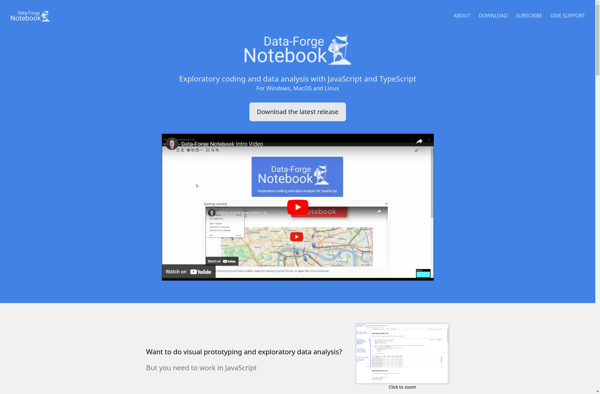
Data-Forge Notebook is an open-source data analysis and transformation tool built on JavaScript. It provides a notebook interface similar to Jupyter notebooks that allows you to process, analyze, and visualize data.Some key features of Data-Forge Notebook include:In-browser data transformation and analysis using JavaScriptSupport for importing CSV, JSON, and other data...