dbt (Data Build Tool) is an open-source SQL modeling framework that enables data analysts and engineers to transform data in their warehouses more effectively. It allows you to build data transformation code in a modular, reusable way.
What is Dbt (Data Build Tool)?
dbt (Data Build Tool) is an open-source SQL modeling framework that enables data analysts and engineers to transform data in their warehouses more effectively. It provides a programming language for managing code and dependencies, allowing complex data transformation logic to be encapsulated into reusable modules known as dbt models.
Some key capabilities and benefits of dbt include:
Modular code: dbt models can be built modularly, with references between models, enabling code re-use and easier maintenance.
Version control integration: dbt can integrate directly with git for easier version control and collaboration.
Testing: dbt includes built-in support for running tests against models to ensure output meets expectations.
Documentation: dbt automatically generates documentation for models, sources, tests etc. in the warehouse.
IDE plugin support: dbt offers plugin support for popular IDEs like Visual Studio Code for easier development.
Cloud support: dbt supports most popular cloud data warehouses like Snowflake, BigQuery, Redshift and Databricks.
Community-backed: dbt is backed by a strong open source community contributing to its ongoing enhancement.
With dbt, data engineers and analysts can achieve higher productivity, better collaboration and increased data integrity. The modular approach also makes dbt models more reusable, maintainable and understandable.
Dbt (Data Build Tool) Features
Features
Modular, reusable SQL code
Version control for data pipelines
Testing framework for data quality
Documentation for data models and lineage
Works with various data warehouses like Snowflake, BigQuery, Redshift
Pricing
Open Source
Pros
Improves productivity for data teams
Enables CI/CD for analytics code
Promotes best practices like testing and documentation
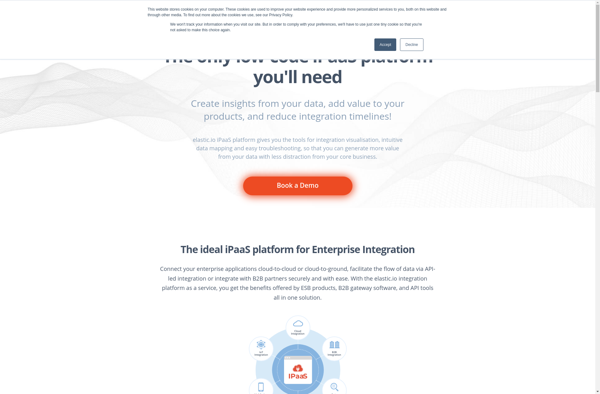
elastic.io is an integration platform-as-a-service (iPaaS) solution designed to help users integrate various applications and services through pre-built connectors and workflows.Some key capabilities and benefits of elastic.io include:Large library of over 300 pre-built connectors to popular apps like Salesforce, Slack, SAP, etc. This eliminates the need for users to develop...
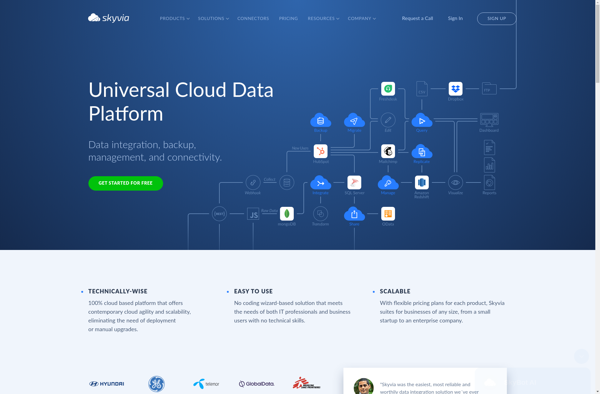
Skyvia is a cloud-native data integration platform designed to help organizations connect, move, and synchronize data between various cloud applications and databases. Some key features of Skyvia include:Visual data integration interface for building data workflows without codingConnectors for databases like SQL, MySQL, PostgreSQL, cloud apps like Salesforce, Dynamics 365, Marketo,...
Jitterbit is an integration and API transformation platform that helps companies quickly connect cloud, SaaS, on-premises and Big Data applications. The intuitive, code-free environment enables both technical and non-technical users to rapidly integrate, transform and deliver data across multiple systems with speed and agility.Key capabilities and benefits of Jitterbit include:Graphical...
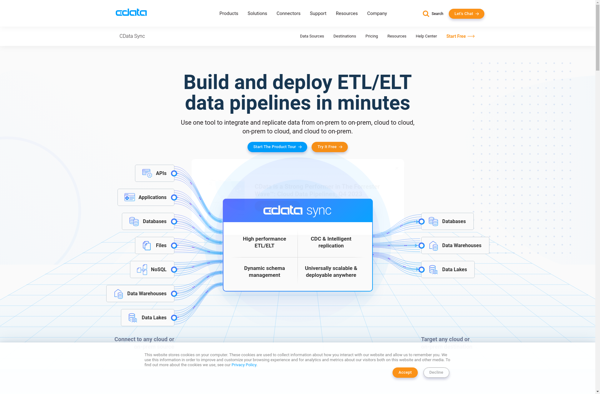
CData Sync is a comprehensive data synchronization and data integration solution used to keep data in sync across multiple systems and locations. It provides bi-directional data synchronization capabilities to ensure consistency between various data sources and destinations.Some key capabilities and benefits of CData Sync include:Bi-directional sync between databases like SQL...
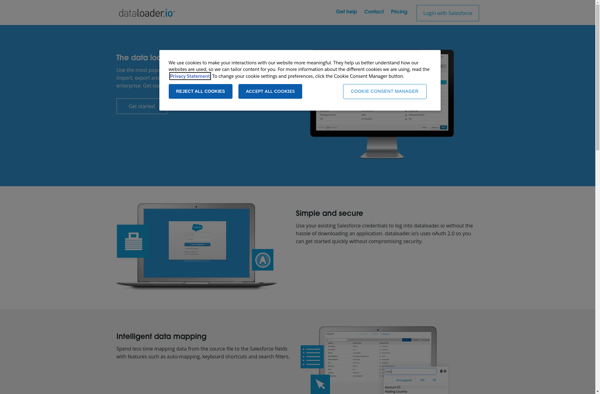
Dataloader.io is an open source tool designed specifically for loading data into databases and data warehouses. It is intended to efficiently move data between various systems and handle common tasks like schema transformations, error handling, and parallel loading.Some key features of dataloader.io include:Support for many data sources and targets including...
Mule ESB is an open-source enterprise service bus and integration platform that allows developers to connect applications together quickly and easily. Some key features of Mule ESB:Lightweight and highly scalable ESB architectureDrag-and-drop graphical editor to simplify integration flowsOver 200 connectors for easy integration with SaaS apps, databases, messaging systems, and...
Mintea is an intuitive and versatile mind mapping and brainstorming application. It enables individual users or teams to visually brainstorm ideas and organize them into mind maps, enhancing creativity, productivity, and collaboration.Key features of Mintea include:Real-time collaboration - Multiple users can work on the same mind map simultaneously, enabling seamless...
Invantive Data Hub is a powerful data virtualization and data governance platform. It provides a single access point to distribute data sources across the enterprise, including databases, applications, cloud services, and more. The software creates a unified virtual data layer that abstracts the technical complexities of integrating disparate systems.Key features...
Invantive Data Loader is an extract, transform, load (ETL) software designed to help businesses efficiently integrate data from multiple sources into destination systems like SAP or Oracle. It provides an easy-to-use interface for mapping data from sources like Excel, CSV files, databases, APIs, and cloud applications to desired destinations.Key features...
Invantive Bridge Online is a cloud-based data integration and ETL (extract, transform, load) platform used to combine data from multiple sources for analysis and reporting. It provides an intuitive graphical interface to connect to various data sources like databases, cloud apps, Excel files, and APIs, allowing you to model data...