Feathercoin is an open source, decentralized cryptocurrency that launched in 2013. It uses a proof-of-work consensus algorithm and aims to improve upon Bitcoin in areas like transaction speed. Feathercoin has low fees, a large supply, and fast block time of 1 minute.
Feathercoin: Open Source, Decentralized Cryptocurrency
Feathercoin is an open source, decentralized cryptocurrency that launched in 2013. It uses a proof-of-work consensus algorithm and aims to improve upon Bitcoin in areas like transaction speed. Feathercoin has low fees, a large supply, and fast block time of 1 minute.
What is Feathercoin?
Feathercoin is an open source, decentralized cryptocurrency that launched in April 2013. It was created by Peter Bushnell based on the Bitcoin protocol but with some key differences.
Like Bitcoin, Feathercoin operates on a proof-of-work consensus algorithm where miners confirm transactions and secure the network in exchange for newly minted coins and transaction fees. However, Feathercoin aims to improve upon Bitcoin in areas like transaction speed, supply, and block time.
Specifically, Feathercoin has a 1 minute block time, much faster than Bitcoin's 10 minutes. This allows for faster transaction confirmation times. Feathercoin also has a higher coin supply and lower transaction fees compared to Bitcoin. Some of the other technical changes include using NeoScrypt as the proof-of-work algorithm rather than SHA-256.
In summary, Feathercoin builds on Bitcoin's design but tweaks some technical parameters to create a cryptocurrency focused on low fees, fast transfers, and high supply.
Monero is an open-source, privacy-oriented cryptocurrency that was launched in 2014. It focuses on providing completely private, untraceable, and secure transactions using advanced cryptography.Some key features of Monero include:Ring signatures - Hide the identity of the sender by mixing it with other transaction outputsRing confidential transactions (RingCT) - Hide the...
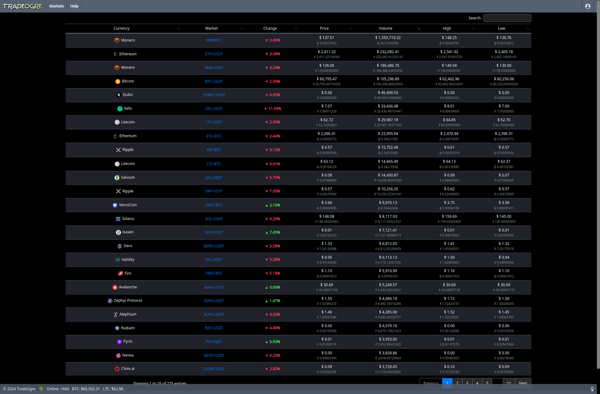
TradeOgre is a cryptocurrency exchange platform that was launched in 2018. It caters primarily to more advanced cryptocurrency traders and investors who value privacy and low fees.Some key things to know about TradeOgre:No KYC (Know Your Customer) requirements - users don't need to provide personal information to create an accountSupports...
Duniter is a free, open-source software that enables communities to create and manage their own complementary currency system. It is built on blockchain technology which allows the currency and transactions to be decentralized and transparent.Some key features of Duniter include:Universal Dividend - All members of the community receive a regular...
Ripple is a real-time gross settlement system, currency exchange, and remittance network developed by Ripple Labs Inc. and released in 2012. Its platform is built around a distributed ledger database, blockchain technology and its cryptocurrency called XRP (ripples) that allows banks and payment providers to transfer money quickly, reliably and...
Litecoin (LTC) is a peer-to-peer cryptocurrency that was created in 2011 by Charlie Lee, an ex-Google employee, as an open source project on GitHub. Litecoin is one of the earliest alternative cryptocurrencies (altcoins) and is often referred to as the silver to Bitcoin's gold. Like Bitcoin, Litecoin is decentralized and...
Dogecoin is an open source peer-to-peer digital currency, favored by Shiba Inu enthusiasts worldwide. What started out as a joke in 2013 has grown into one of the world's most widely used and fastest growing cryptocurrencies.Dogecoin features the face of the popular Shiba Inu dog from the viral 'Doge' meme...
Cardano is an open-source, decentralized public blockchain and cryptocurrency project that started in 2015. It was founded by Ethereum co-founder Charles Hoskinson and built through academic rigor and peer-reviewed research by scientists and engineers around the world.The Cardano blockchain operates the Ada cryptocurrency and is designed to be scalable, interoperable,...
Peercoin (PPC) is a pioneering cryptocurrency that was launched in 2012. It utilizes both proof-of-work and proof-of-stake protocols to secure its network. Peercoin aims to be an energy-efficient cryptocurrency as the proof-of-stake protocol allows coins to be minted, or generated, based on the number of coins a user holds, rather...