Jexia is a low-code platform that allows you to easily build, deploy and manage apps and workflows. It has an intuitive drag-and-drop interface to develop apps fast without needing to write code.
Jexia: Low-Code Platform for Rapid App & Workflow Development
Jexia is a low-code platform that allows you to easily build, deploy and manage apps and workflows. It has an intuitive drag-and-drop interface to develop apps fast without needing to write code.
What is Jexia?
Jexia is a low-code platform designed to help businesses and developers quickly build, manage and deploy apps and workflows. With an easy-to-use drag-and-drop interface, Jexia allows creating full-stack apps without the need to write any code.
Some key features of Jexia include:
Intuitive visual interface to develop apps by connecting workflow blocks
Auto-generated backend APIs and database schemas
Support for UI frameworks like React and Vue.js to build frontend
Collaboration tools to work together on apps
governance, access control and audit logs
Scalable cloud infrastructure with high-availability
Integrations with services like Twilio, Mailgun, AWS S3
Jexia improves developer productivity by abstracting away complex infrastructure and networking code. Its pay-as-you-go pricing allows spinning up apps quickly without big upfront costs. With robust access controls and workflow management capabilities, Jexia is ideal for building internal business apps for teams and enterprises.
Jexia Features
Features
Visual application builder with drag and drop interface
Prebuilt components and templates
Workflow automation
Data integration across multiple sources
Deployment to cloud or on-premise
Collaboration tools
Pricing
Freemium
Subscription-Based
Pros
Low-code platform requires no coding knowledge
Quick and easy app development
Scalable and customizable
Integrates with many data sources and APIs
Has free tier for testing
Cons
Steep learning curve for advanced features
Limited customization compared to traditional coding
Firebase is a backend-as-a-service (BaaS) platform developed by Google that provides developers with a variety of tools and services to help them develop high-quality apps. It handles essential backend functionality like database storage, user authentication, hosting, and more so developers can focus on building user-facing features.Some key features of Firebase...
Supabase is an open-source alternative to Firebase that provides many similar features for building web and mobile applications. Like Firebase, Supabase offers realtime databases, user authentication, file storage, Functions, and more through simple APIs.Some key things to know about Supabase:It has an open source backend based on Postgres, unlike Firebase...
Pushy is a scalable push notification delivery platform designed specifically for sending notifications to mobile devices and web browsers. It handles all the complexities of dispatching mobile push messages across multiple platforms like iOS, Android, and web push behind a simple REST API.With Pushy, developers can segment users, target devices,...
remoteStorage is an open-source cloud storage solution developed to give users control over their data in the cloud. It works by allowing users to store their files and data on remote servers in a decentralized and standardized way.Some key features of remoteStorage include:Decentralized storage - Data is stored on many...
Nakama is an open source server designed specifically for powering social and real-time games and applications. It provides the fundamental backend services needed to develop cross-platform games or apps with social and realtime elements without needing to host your own dedicated game servers.Nakama handles user accounts, data storage, social network...
Etebase is an open source, end-to-end encrypted personal information manager focused on privacy. Unlike other options, Etebase ensures that only users have access to their data - no one else, including Etebase developers, can read it.Users can utilize Etebase to store and organize contacts, calendars, tasks, notes, bookmarks and more....
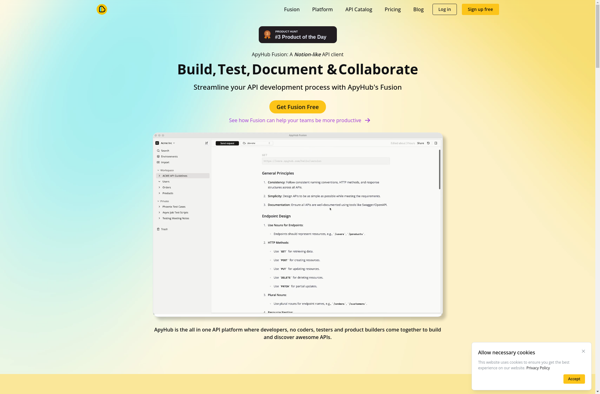
ApyHub is an open-source platform built specifically for Python developers to help manage, execute, and monitor Python applications and scripts. Some key features of ApyHub include:Centralized dashboard to track all your Python scripts and jobsAbility to schedule Cron jobs and timed executions for scriptsShare reusable scripts, functions, and components with...
5apps is an all-in-one business management software platform designed specifically for small and medium sized businesses. It combines popular business solutions like project management, customer relationship management (CRM), team communication, file sharing, time tracking, and help desk ticketing into one easy-to-use cloud platform.Key features of 5apps include:Project management tools for...
RestDB.io is a cloud-hosted NoSQL database service optimized for serverless applications. It provides a simple RESTful API to store and query document-oriented data without needing to manage any servers or infrastructure.Key features of RestDB.io include:JSON-based document store with support for flexible schemasPowerful filtering, sorting, and aggregation of dataRobust API for...
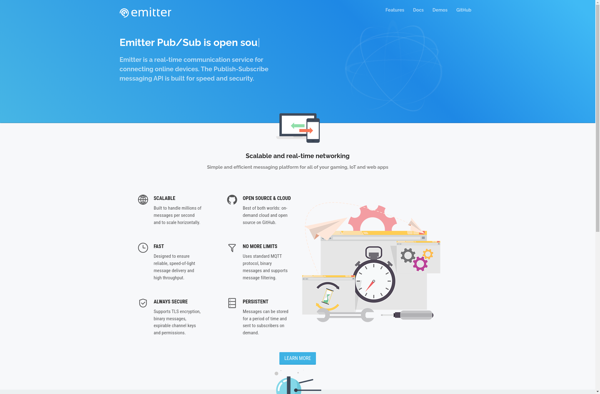
emitter.io is an open-source real-time messaging service designed for connecting online devices and streaming data between clients in real-time. It provides a publish-subscribe messaging API that allows clients to subscribe to named channels or topics and receive messages published to those channels by other clients.Some key features of emitter.io include:Lightweight...
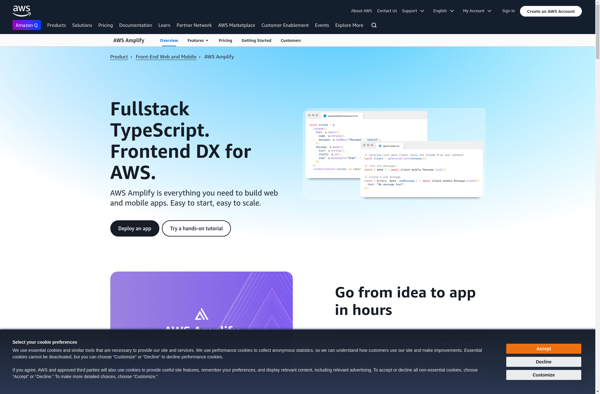
AWS Amplify is a set of tools and services from Amazon Web Services (AWS) designed to help developers quickly build and deploy secure, scalable full-stack web and mobile applications. Amplify handles many of the complexities of modern application development, allowing developers to more easily build real-time mobile and web apps.Some...