Kotlin is a statically typed programming language that runs on the Java virtual machine and can also be compiled to JavaScript. It is designed to interoperate fully with Java code and has many improvements over Java like null safety, functional programming support, and more conci
Kotlin: A Statically Typed Language for Java Virtual Machine
A statically typed programming language that runs on the Java virtual machine and can also be compiled to JavaScript, offering null safety, functional programming support, and more concise syntax.
What is Kotlin?
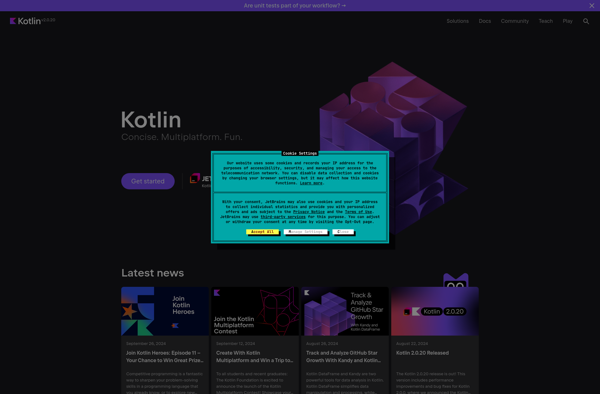
Kotlin is a statically typed programming language that runs on the Java virtual machine and can also be compiled to JavaScript. It is designed by JetBrains to be a better alternative to Java for modern application development.
Some key features and advantages of Kotlin include:
Null safety - Variables in Kotlin can't be null by default which avoids nasty null pointer exceptions. This keeps code safer.
Functional programming support - Kotlin has out of the box support for functional constructs like higher order functions, lambda expressions, operator overloading etc.
Concise and readable syntax - Kotlin gets rid of a lot of boilerplate code like semicolons and parentheses making the code more readable.
Easy Interoperability with Java - Kotlin is designed to seamlessly interoperate with existing Java code. You can have Kotlin and Java code side by side in the same project.
Open source - Kotlin is open source under the Apache 2 License
Some of the major applications using Kotlin include Android development, backend web development, desktop applications etc. It can also be used for scripting. The language is being adopted rapidly by companies due to the benefits it offers over languages like Java and C++.
Kotlin Features
Features
Statically typed language
Runs on JVM
Can be compiled to JavaScript
Full interoperability with Java code
Null safety
Functional programming support
More concise syntax than Java
Pricing
Free
Open Source
Pros
Null safety avoids null pointer exceptions
Functional programming enables cleaner code
Interoperability with Java allows reuse of existing libraries
Python is a high-level, general-purpose programming language that emphasizes code readability and rapid application development. It was created by Guido van Rossum in 1991 and has since become one of the most popular programming languages.Some key features of Python include:Easy to learn syntax that resembles everyday EnglishInterpreted language that can...
C# is an object-oriented, general-purpose programming language developed by Microsoft. It was first released in 2002 as part of the .NET framework, and since then has become one of the most popular programming languages used for building a wide range of applications.Some key features of C# include:Object-oriented - Supports concepts...
JavaScript is a lightweight, interpreted programming language with first-class functions that allows you to implement complex features on web pages. When JavaScript runs in a browser, it can:Access and modify a web page's content and markupRespond to user actionsCommunicate asynchronously using callback functionsAlter a web page's stylingAnimate page elementsJavaScript has...
Nim is an open-source, general-purpose, statically typed, compiled programming language developed by Andreas Rumpf. It combines successful concepts from mature languages like Python, Ada and Modula, offering flexibility and efficiency. Here are some of its key features: Statically typed – Types are checked during compilation which helps catch errors early.Compiles...
TypeScript is an open-source programming language developed and maintained by Microsoft. It is a strict syntactical superset of JavaScript and adds optional static typing to the language. TypeScript is designed for the development of large applications and transpiles to JavaScript. Some key features of TypeScript include:Optional static typing and type...
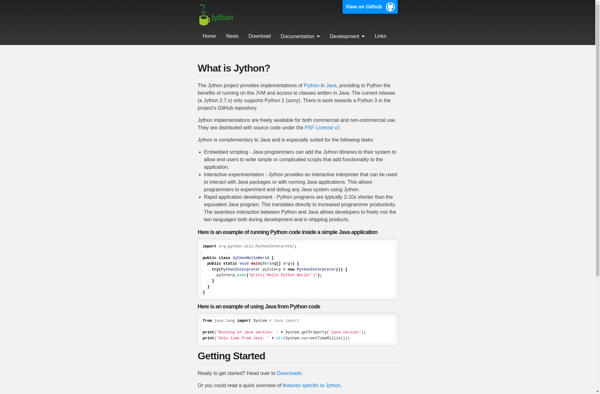
Jython is an implementation of the Python programming language that is designed to run on the Java platform. It allows developers to write Python code that leverages the wide range of Java libraries available. Jython compiles Python code into Java byte code which can then be executed by the Java...
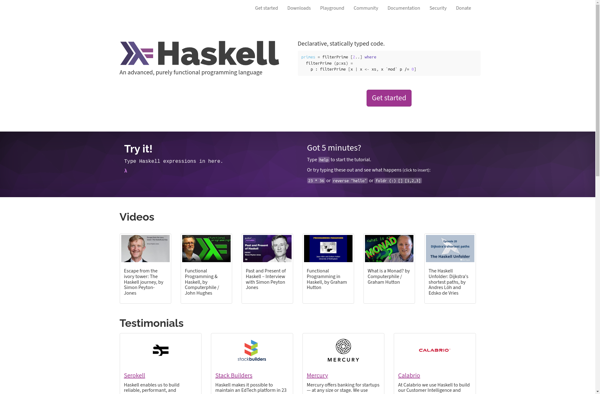
Haskell is a statically typed, purely functional programming language that was designed to have very few implementation dependencies. It has a strong static type system with type inference and non-strict (lazy) evaluation by default. Some key features of Haskell include:Purity - Functions have no side effects, offering referential transparency and...
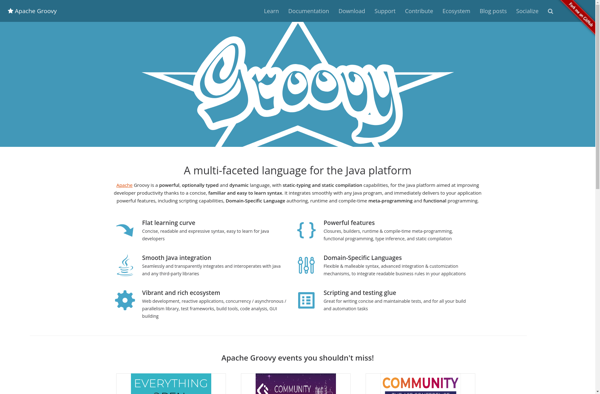
Groovy is an object-oriented programming language for the Java platform. It builds upon the strengths of Java but has additional power features inspired by languages like Python, Ruby and Smalltalk. Groovy nicely integrates with Java, allowing you to leverage existing Java libraries and frameworks.Some of the key benefits and features...
Script# is an open-source, multi-platform scripting language created by Anthon van der Neut in 2002. It is influenced by languages like JavaScript, Python, Ruby, and C# while focusing on simplicity, efficiency, and integration.Some key features and aspects of Script#:Lightweight, interpreted language for general scripting usesStrongly typed but uses type inference...
CoffeeScript is a programming language that compiles into JavaScript. It was created in 2009 by Jeremy Ashkenas as a way to allow developers to write cleaner, more concise JavaScript code.Some of the key features of CoffeeScript include:Optional parentheses and semicolons - semicolons and parentheses are optional in most cases, allowing...
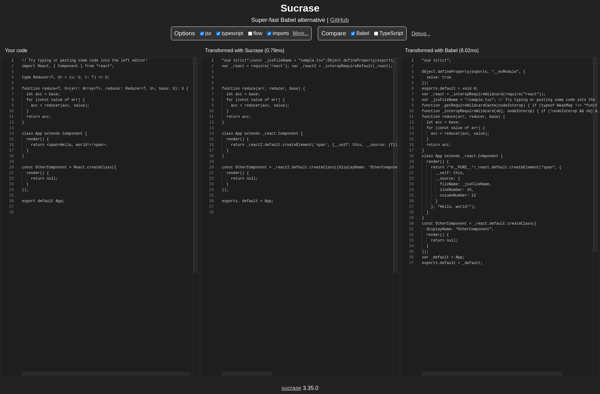
Sucrase is a fast alternative compiler for Babel that allows developers to use the latest JavaScript features in their applications without the performance overhead of transpiling. It focuses specifically on supporting TypeScript, JSX, and Flow out of the box.Some key features and benefits of Sucrase include:Faster than Babel at converting...
IronPython is an open-source implementation of the Python programming language that runs on the .NET Framework. It was first released in 2006 by Jim Hugunin, one of the original creators of JPython (later Jython).The key difference between IronPython and standard CPython implementation is that IronPython is integrated with the .NET...
LiveScript is an open-source programming language that compiles to JavaScript. It was created by George Zahariev in 2012 and is influenced by languages like Python, CoffeeScript, and Ruby.Some key features of LiveScript include:Python-inspired syntax that is designed to be cleaner and more readable than regular JavaScriptOptional static typing for added...
Wyvern is an open-source, cross-platform software tool that helps developers write cleaner, more consistent code. It functions as both a syntax checker and an auto-formatter for various programming and markup languages.Some key features of Wyvern include:Checking for syntax errors, deprecated code, unused variables, and other issuesAutomatically formatting code to conform...
Kaffeine JS is an open-source JavaScript library for building user interfaces and web applications. It was created to provide developers with an easy way to build high-performance sites and apps without having to write a lot of boilerplate code.Some key features of Kaffeine JS include:Reusable UI components like buttons, cards,...
A real-time JavaScript tool is a library or framework that allows web developers to easily add real-time and collaborative features to their applications. These tools utilize WebSockets or other protocols to enable instantaneous updates and communication between the server and multiple clients.Some common use cases for real-time JavaScript tools include:Chat...
Clojure is a dynamic, general-purpose programming language that targets the Java Virtual Machine (JVM). It was designed by Rich Hickey in 2007 with a focus on simplicity, power, and performance.Some key features of Clojure include:Functional programming - Clojure emphasizes programming with immutable values and functions. This facilitates easier reasoning about...
jRuby is an implementation of the Ruby programming language that runs on the Java virtual machine (JVM). It was created in 2001 by Jan Arne Petersen and was later adopted in 2006 by the Sun Microsystems-sponsored Ruby community. jRuby allows developers to use Ruby syntax and libraries while running on...
Objective-J is an extension to the Objective-C programming language that aims to make Objective-C more like JavaScript. It was created by Francisco Tolmasky and adds a layer on top of Objective-C that allows developers to use JavaScript syntax and capabilities within Objective-C code.Some key features of Objective-J include:The ability to...
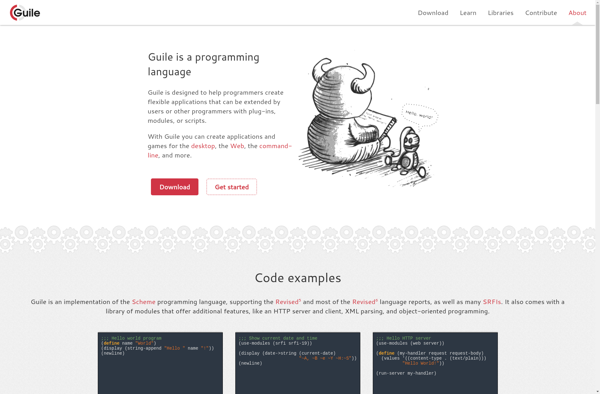
Guile is an open source interpreter and compiler for the Scheme programming language. It was developed by the GNU Project to serve as a user-extensible extension and scripting language for other programs.Some key features and characteristics of Guile include:Implements R5RS and R7RS standards for SchemeCompiles to bytecode to improve performanceCan...