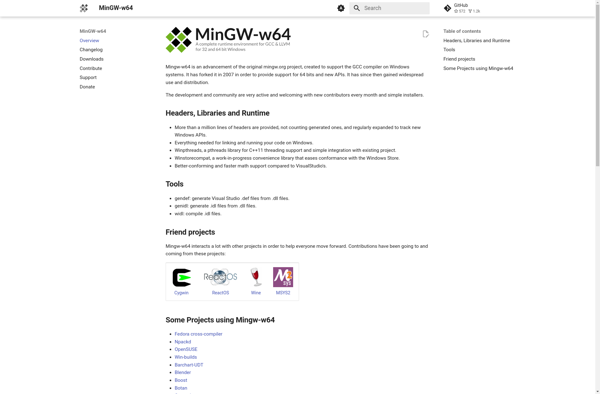
MinGW-w64 is an open source development environment for Windows that allows you to compile native Windows applications using the GCC compiler. It provides ports of GNU development tools and utilities for Windows.
MinGW-w64: Open Source Development Environment for Native Windows App Compilation
MinGW-w64 is an open source development environment for Windows that allows you to compile native Windows applications using the GCC compiler. It provides ports of GNU development tools and utilities for Windows.
What is MinGW-w64?
MinGW-w64 (Minimalist GNU for Windows 64 bit) is an open source development environment for Windows that allows you to compile native Windows applications using the GNU Compiler Collection (GCC). It provides ports of many GNU development tools and utilities for Windows platforms.
Some key features and capabilities of MinGW-w64 include:
Works as a native Windows port of the GNU toolchain, including GCC, GNU Binutils, GNU Make, and GNU Debugger (GDB)
Supports compiling 32-bit and 64-bit Windows applications
Includes a large number of common open source C/C++ libraries and headers for cross-platform development
Interoperable with Visual Studio and various IDEs
Compatible ABI (Application Binary Interface) for compiling code that works with Microsoft's CRT (C Runtime Library)
Available free under open source licenses
MinGW-w64 allows developers to build native Windows software using open source tools and standards compliant C/C++ compilers instead of proprietary tools like Visual Studio. It can lower cost for development setup and enable cross-platform compatibility for Windows applications and tools.
MinGW-w64 Features
Features
Provides a development environment for compiling Windows applications using GCC
Includes ports of GNU development tools like gdb, make, binutils etc for Windows
Supports compiling 32-bit and 64-bit Windows applications
Compatible with the Win32 API
Supports multilib allowing building for both 32-bit and 64-bit targets
Open source under permissive licenses
Pricing
Open Source
Pros
Free and open source
Access to GCC and GNU tools on Windows
Can build native Windows apps without requiring Visual Studio
Active community support and development
Cons
Less integration with Windows IDEs compared to Visual Studio
Steeper learning curve than Visual Studio for Windows development
Limited debugging capabilities compared to Visual Studio
The Windows Command Prompt, also known as the command line, cmd.exe, or simply cmd, is a text-based application included with all versions of the Windows operating system. It allows users to access the computer's file system, run executable files, and configure certain aspects of the OS using text-based commands.The Command...
Cygwin is a large collection of GNU and Open Source tools which provide functionality similar to a Linux distribution on Windows. It provides a Unix-like API, command line tools (bash, ssh, rsync, etc.) and a large number of libraries to port software running on POSIX systems, such as Linux, BSD,...
MSYS2 is a software distribution for Windows that provides a complete Unix-like environment on top of the Windows OS. It includes support for the bash shell, GNU compilers and build tools, and a pacman package manager for installing additional software.Key features of MSYS2 include:Bash shell and common Unix command line...
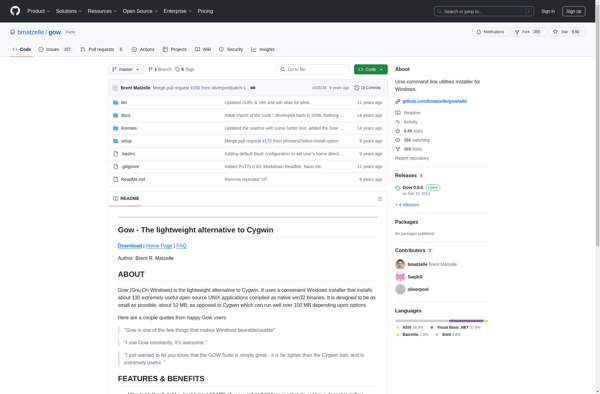
Gow is an open-source terminal emulator and multiplexer for Linux/UNIX systems. It is designed as an alternative to default terminal emulators like GNOME Terminal or Konsole, with more features and customization options.Some of the key features of Gow include:Multiple panes and split layouts - Gow allows splitting the terminal window...
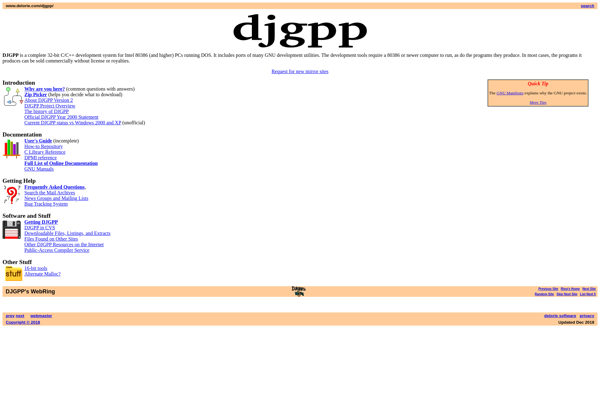
DJGPP (D.J.'s GNU Programming Platform) is a complete 32-bit C/C++ development system for Intel 80386 and higher computers running DOS. It implements a 32-bit protected-mode environment that allows developers to create sophisticated DOS programs that utilize features not available to regular DOS programs.Some key features of DJGPP include:A 32-bit protected-mode...
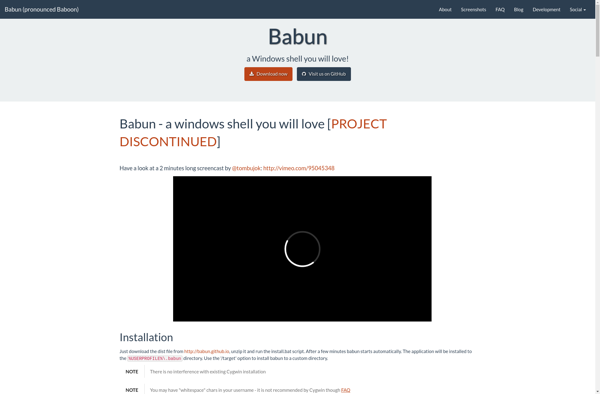
Babun is a Windows shell that aims to provide a better command line experience for developers on the Windows platform. It is based on Cygwin, an open source Linux-like environment for Windows, and comes prepackaged with various command line tools and plugins.Some of the key features and tools included in...
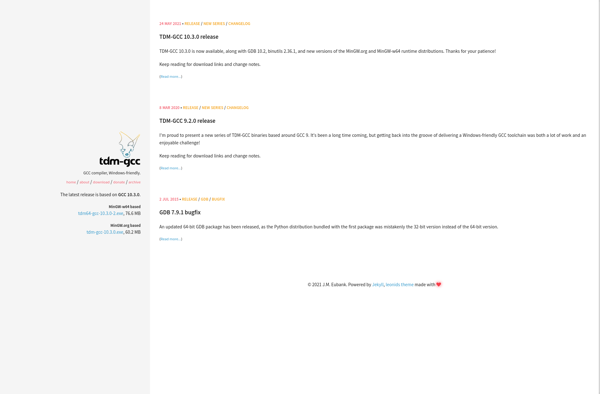
TDM-GCC is an open-source C/C++ compiler suite and tools for Windows based on the GNU compiler collection (GCC). It includes the GCC compiler, GDB debugger, make, and various other GNU tools and libraries required to build C/C++ applications on Windows.Some key features of TDM-GCC include:Easy installation with an automated installer...
The Microsoft Windows Software Development Kit (SDK) is a free set of development tools, libraries, code samples, and documentation provided by Microsoft to help software developers create applications for Windows operating systems. The Windows SDK allows developers to access the Windows application programming interfaces (APIs) and optimize their software for...