PearPC
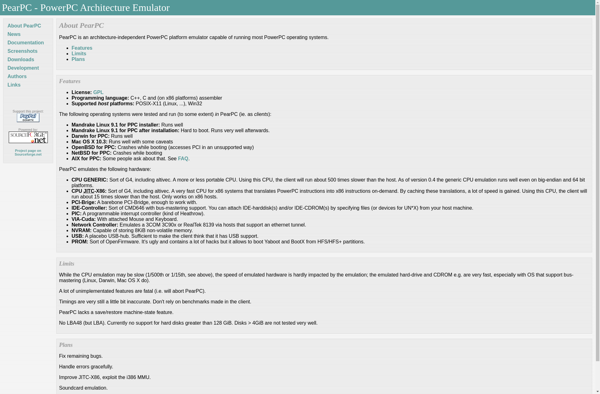
PearPC is an open-source PowerPC platform emulator for Intel x86 personal computers. It allows you to run PowerPC operating systems like Mac OS X and LinuxPPC on an x86 device.
PearPC: Run PowerPC OS on x86
An open-source emulator for running PowerPC platform on Intel x86 personal computers, supporting Mac OS X and LinuxPPC
What is PearPC?
PearPC is an open-source emulator that allows Intel x86 personal computers to run PowerPC platform operating systems, applications, and games. It emulates a PowerPC processor, memory, devices, and peripherals to provide a compatible environment for PowerPC software.
Some key features of PearPC include:
- Emulation of PowerPC G3 and G4 processors for compatibility with a variety of PPC software
- Supports running major operating systems like Mac OS X, LinuxPPC, OpenBSD, FreeBSD, and NetBSD
- Emulation of common PowerPC-based hardware like IDE/ATA, Ethernet, GPUs, PCI, and USB devices
- Reasonably good performance and compatibility with many PowerPC apps & games
- Available for Windows, Linux, and other x86 platforms
While performance and compatibility is not perfect, PearPC provides an accessible way for x86 computer owners to try out PowerPC operating systems and software. It can be a useful tool for developers looking to test PPC apps without needing real Mac or PowerPC hardware.
PearPC Features
Features
- Emulates PowerPC processors
- Runs PowerPC operating systems like Mac OS X and LinuxPPC
- Open source software
- Supports USB and networking
- Can run many PowerPC applications
Pricing
- Open Source
Pros
Allows running PowerPC software on x86 devices
Free and open source
Active development community
Good performance and compatibility
Cons
Limited compatibility compared to real PowerPC hardware
Development has slowed in recent years
Can be complex to set up and configure
Official Links
Reviews & Ratings
Login to ReviewThe Best PearPC Alternatives
View all PearPC alternatives with detailed comparison →
Top Os & Utilities and Emulators and other similar apps like PearPC

QEMU
QEMU is a free and open source hypervisor and machine emulator. It emulates a complete computer system, including the processor, memory, storage, network interfaces and peripherals. This allows you to run software and operating systems written for one machine on a different machine.Some key features of QEMU include:Full system emulation...

Bochs
Bochs is an open source emulator for the x86 architecture, allowing you to run operating systems like Windows, Linux, BSD and others on your computer without needing virtualization support from the CPU. It emulates common x86 hardware, including the CPU, memory, disks, network cards, graphics and more.Some key features of...

Xhypervisor
XHypervisor is an open-source, lightweight Type-1 hypervisor designed for enterprise virtualization. As a bare-metal hypervisor, XHypervisor installs directly onto server hardware to control the hardware and manage guest operating systems.Some key features of XHypervisor include:Efficient resource management using dynamic memory and storage allocationLive migration of virtual machines between hosts with...