RubyMotion
RubyMotion is a toolchain that allows developers to write native iOS, Android, and macOS applications using the Ruby programming language. It provides a bridge from Ruby to the native APIs of the target platform.

RubyMotion: Write Native Apps with Ruby
A toolchain for building native iOS, Android, and macOS apps using Ruby, bridging the gap between Ruby and native platform APIs.
What is RubyMotion?
RubyMotion is a development tool that allows programmers to quickly develop native iOS, Android, and macOS applications using the Ruby programming language. It was created by Laurent Sansonetti and developed by HipByte.
Some key things to know about RubyMotion:
- Allows building high-performance native apps with Ruby code, while still giving access to the full native APIs of the platform
- Apps made with RubyMotion have small memory footprint and good performance since it compiles Ruby code down to native machine code
- Includes bindings for many common native system libraries on each platform so Ruby developers can access native functionality
- Makes it easy to reuse Ruby logic across platforms while still creating tailored native UI for each platform
- Has an active community supporting its development and creating libraries/gems for it
- Uses Ruby, an easy to learn and productive language, so developers can focus on app logic instead of complex native languages
In summary, RubyMotion allows leveraging Ruby's productivity and ease of use to build fully featured, high quality native mobile and desktop apps for major platforms.
RubyMotion Features
Features
- Allows writing native iOS, Android and macOS apps in Ruby
- Provides access to full native platform APIs
- Supports most Ruby gems and libraries
- Includes RubyMotion IDE for coding, debugging and profiling
- Compiles Ruby code to optimized native code
- Integrates with Xcode and Android Studio
Pricing
- Subscription-Based
Pros
Write native apps in Ruby instead of Objective-C/Swift or Java/Kotlin
Leverage existing Ruby knowledge and libraries
Rapid development and prototyping
Clean and expressive Ruby syntax
Good performance via compilation to native code
Active community support
Cons
Less control compared to writing native code directly
Limited debugging capabilities
Not all native APIs are available
Smaller community than native platforms
May encounter Ruby gems not supported
Extra cost compared to free native tools
Official Links
Reviews & Ratings
Login to ReviewThe Best RubyMotion Alternatives
View all RubyMotion alternatives with detailed comparison →
Top Development and Mobile App Development and other similar apps like RubyMotion
Here are some alternatives to RubyMotion:
Suggest an alternative ❐
Xcode
Xcode is an integrated development environment (IDE) developed by Apple for developing software for its platforms, including macOS, iOS, iPadOS, watchOS and tvOS. It is available for free on the Mac App Store.Some key features of Xcode include:Source code editor with syntax highlighting and code completion supportGraphical user interface (GUI)...
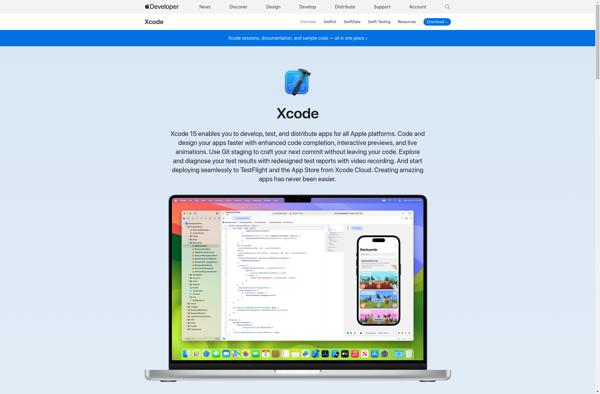

Apple Developer
Apple Developer is a software and services platform from Apple that enables developers to build, test, and distribute apps and web experiences for Apple platforms. It provides access to a range of developer tools, application programming interfaces (APIs), and services to build high-quality apps for iOS, iPadOS, macOS, watchOS, and...

B4X
B4X (Basic4android) is a rapid application development tool for building native apps across multiple platforms including Android, iOS, Windows, Linux, MacOS and Raspberry Pi. It uses a Basic-like programming language that is easy to learn yet powerful enough for professional developers.Some key highlights of B4X:Write Once, Run Anywhere - Develop...

WebDGap
WebDGap is an open-source web application firewall (WAF) designed to protect web applications by filtering, monitoring, and blocking malicious HTTP traffic. It sits between a web application and the Internet, analyzing all incoming and outgoing HTTP/HTTPS requests to identify and block threats like cross-site scripting (XSS), SQL injection, remote file...

Appcelerator Titanium
Appcelerator Titanium is an open-source platform developed by Appcelerator for building cross-platform native mobile apps using JavaScript, HTML5, and CSS3 instead of platform-specific languages like Objective-C (for iOS) or Java/Kotlin (for Android). It enables developers to write code once and deploy to both iOS and Android platforms.Some key features and...


Apache Cordova
Apache Cordova is an open-source mobile application development framework originally created by Nitobi. It enables developers to use standard web technologies like HTML5, CSS3, and JavaScript for cross-platform development, avoiding native development languages like Objective-C for iOS and Java for Android.Cordova wraps the HTML and JavaScript code into a native...

NativeCSS
nativeCSS is an open-source CSS framework designed specifically for building responsive and adaptive web interfaces. It features a modular architecture that allows developers to include only the components they need, reducing code bloat.Some key features of nativeCSS include:Responsive grid system for building layouts that adapt to various screen sizesTypography and...

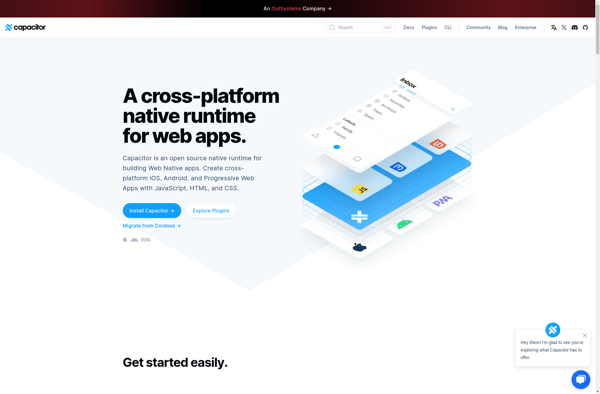
Capacitor by Ionic
Capacitor by Ionic is an open source runtime that allows developers to build cross-platform native apps using web technologies like HTML, CSS and JavaScript. It works by wrapping the web code into native containers to access device features on iOS, Android and the web.Some key features of Capacitor include:Wraps web...

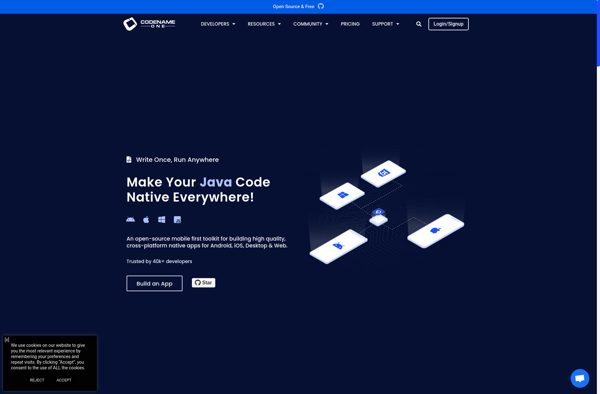
Codename One
Codename One is an open source framework aimed at allowing Java developers to build native mobile applications that can run on multiple platforms including iOS, Android, Windows, and more. Some key aspects of Codename One:Write once, run anywhere - Developers can write code in Java and use the Codename One...

MonoTouch
MonoTouch is an open source software development kit created by Xamarin that allows developers to build native iOS applications using C# and the .NET framework. It provides bindings to native iOS APIs to enable access to platform features such as the accelerometer, camera, GPS, and more.Some key features of MonoTouch...