Samba is an open-source software suite that provides file and print services to SMB/CIFS clients. It allows Linux/Unix servers to interoperate with Windows networks, acting as a file and print server for Microsoft Windows clients.
An open-source software suite providing interoperability between Linux/Unix servers and Windows networks, facilitating file and print services for Microsoft Windows clients.
What is Samba?
Samba is an open-source software suite that provides seamless file and print services to SMB/CIFS clients. SMB (Server Message Block) and CIFS (Common Internet File System) are Windows networking protocols that provide shared access to files, printers, and serial ports between nodes on a network.
Samba allows for interoperability between Linux/Unix servers and Windows operating systems in a heterogeneous network environment. It can make a Linux/Unix machine act as a Windows NT4-style domain controller or member server, providing file and print services to Windows clients. Some key capabilities include:
File and print sharing between Unix and Windows systems
Integrated authentication with Windows domains, including NT domain, Active Directory and NT4 domains
Resource publishing in Windows servers
Transparent file migration between Unix and Windows environments
Accessing files and printers hosted on Windows servers from Linux machines
By implementing the SMB/CIFS protocol on the Linux platform, Samba provides seamless integration between Unix-style and Windows servers. It is widely used in enterprise networks and enables organizations to transition to Linux servers while retaining Windows desktop clients.
Syncthing is an open-source file synchronization application that allows users to synchronize files across multiple devices. It works in a decentralized peer-to-peer model without requiring a central server.Some key features of Syncthing include:Device-to-device synchronization - Files are synchronized directly between devices on a local network without the need for a...
Microsoft Active Directory is a directory service developed by Microsoft for Windows domain networks. It is used to enable the following capabilities in an organization:Centralized management of user accounts and devicesAssignment of access rights and permissions to users and devicesEnforcement of security policiesDomain-based naming and discovery of resourcesSingle sign-on using...
Univention Corporate Server (UCS) is an enterprise-grade Linux distribution and management system tailored for companies and organizations. It brings together common infrastructure services like identity management, file sharing, print and DNS management into one cohesive platform.Some key features of UCS include:Centralized identity management through an LDAP directoryWeb-based administration portal for...
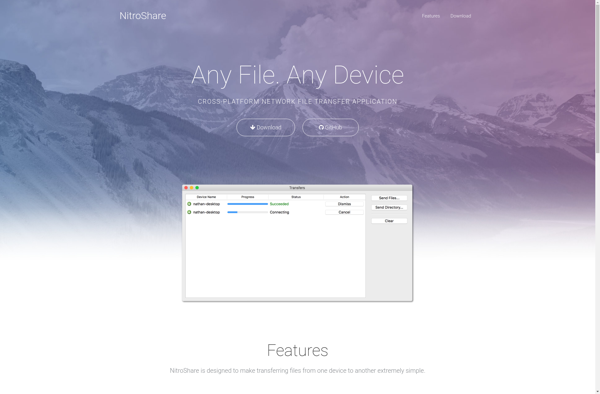
NitroShare is a free and open source application that enables quick and simple file sharing on a local network. It works across platforms including Windows, Mac, and Linux. NitroShare creates a private, secure peer-to-peer connection between devices on the same network to transfer files and folders.Some key features of NitroShare...
The Linux Network File System (NFS) is a distributed file system protocol that allows a user on a client computer to access files over a computer network much like local storage is accessed. NFS allows for mounting all or a portion of a file system on a server. The users...
RazDC is an open-source, self-hosted remote desktop and remote access software. It allows users to connect to computers remotely through a web browser or using the dedicated RazDC client software available for Windows, macOS, Linux, iOS and Android.Some of the key features of RazDC include:Remote Desktop - Remotely control computers...
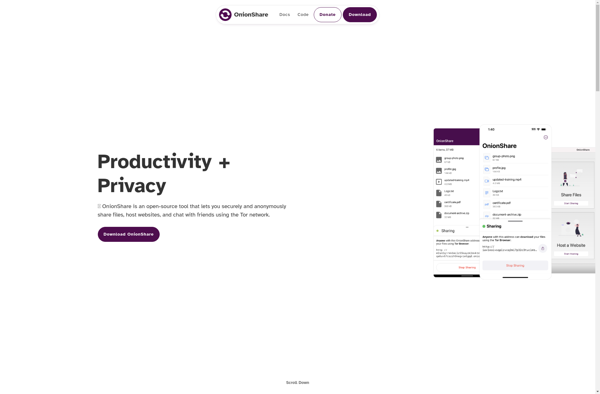
OnionShare is an open-source application that allows users to securely and anonymously share files of any size. It works by hosting a one-time website that is only accessible over the Tor anonymity network. This allows recipients to download files from the sender without revealing the sender's identity or location.Some key...
Artica is an open-source network and application monitoring software that provides complete visibility into networks, servers, and applications. It is designed to monitor the availability, performance, and bandwidth utilization of IT infrastructure components.Key features of Artica include:Automatic discovery of devices on networksMonitoring of network availability and bandwidth usageMonitoring of server...
SambaBox is an open source software suite that enables Linux/Unix systems such as Ubuntu, Debian, CentOS, Fedora and more to provide seamless file and print services to SMB/CIFS clients such as various versions of Microsoft Windows, macOS, and other SMB-enabled devices. It allows non-Windows devices to communicate with Windows networking...
PowerBroker Identity Services is an enterprise privileged access management solution from CyberArk. It enables organizations to secure, control, manage, and monitor privileged access to critical assets, infrastructure, and applications.With PowerBroker, organizations can enforce least privilege policies by granting privileged access only when needed, as well as recording and auditing all...
Magic Wormhole is an open source peer-to-peer file transfer and communication tool developed by Brian Warner. It allows users to securely transfer files and data between computers by coordinating device connections through a shared server. Here's how it works:- It uses a protocol called WebRTC to establish direct, encrypted peer-to-peer...
Sharity is an open-source, self-hosted file sync and share platform that puts an emphasis on security and privacy. It allows users to store their files in the cloud like Dropbox or Google Drive, but with the key difference that all data is encrypted locally on the user's device before being...