Trinity Desktop Environment (TDE) is a free software desktop environment forked from KDE 3.5, providing a lightweight and customizable desktop. It aims to retain the look and feel of KDE 3.5 while adding modern features and improvements.
A free software desktop environment forked from KDE 3.5, offering a lightweight and customizable interface with modern features and improvements, retaining the look and feel of its predecessor.
What is Trinity Desktop Environment (TDE)?
Trinity Desktop Environment (TDE) is a fork of the KDE 3 desktop that aims to continue the KDE 3.5 legacy for Linux and other Unix-like operating systems. It provides a lightweight, stable, fast and customizable desktop environment that resembles the look and feel of the KDE 3.5 releases.
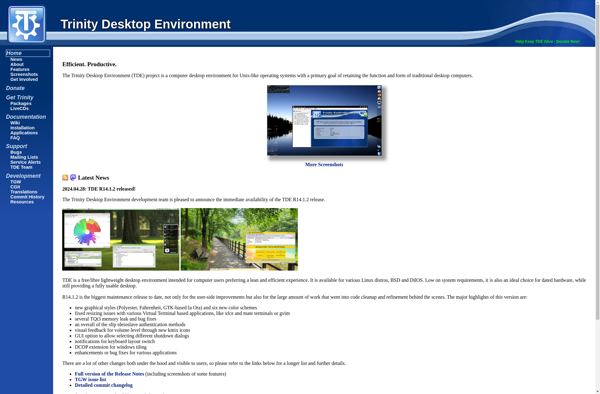
TDE was created in 2009 by Timothy Pearson and continues to be actively developed. It is designed to be a lightweight alternative to modern desktops like GNOME and KDE Plasma, while providing a familiar user interface for those who prefer the classic KDE 3 interface.
Some of the key features of TDE include:
Familiar KDE 3.5 visual style and customizability
Low system resource usage for good performance on older hardware
Stable and mature codebase inherited from KDE 3
Integration of modern features like compositing and hardware acceleration
Backwards compatibility with KDE 3 applications and themes
Enhanced file manager, panel, file transfer, terminal emulator and other apps
TDE continues to evolve with an active development community adding bug fixes, features and compatibility improvements. It provides a lightweight yet full-featured Linux desktop for those looking for the simplicity and efficiency of the KDE 3.5 generation of interfaces.
Trinity Desktop Environment (TDE) Features
Features
Lightweight desktop environment
Forked from KDE 3.5 codebase
Customizable interface and themes
Supports modern hardware and standards
Integrated file manager, panel, and suite of applications
Compatible with many KDE 3 applications
Pricing
Open Source
Pros
Lightweight and fast
Familiar interface for KDE 3 users
Highly customizable and themeable
Active development community
Supports older hardware
Cons
Less modern than newer desktops like KDE Plasma
Limited selection of applications
Fewer features than modern desktop environments
Smaller user and developer community than major desktops
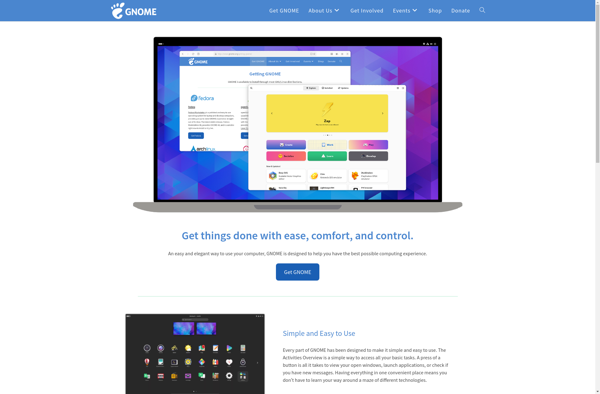
GNOME (pronounced Guh-NOHM) is a highly intuitive and user-friendly desktop environment and graphical user interface that runs on top of a computer's operating system. It is designed to be easy to use, accessible, customizable, and free as in freedom.GNOME includes a set of default applications for common tasks like browsing...
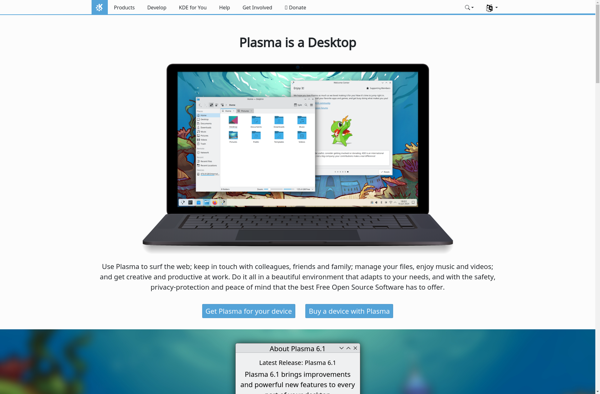
KDE Plasma is a free and open-source desktop environment for Linux and other Unix-like operating systems. It is highly customizable and features a graphical user interface designed for productivity and ease-of-use.Some key features of KDE Plasma include:Customizable interface - Users can rearrange panels, add widgets, change themes, icons, fonts, colors,...
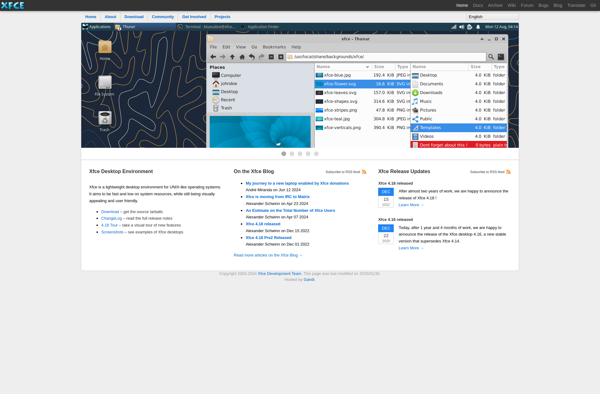
Xfce is a lightweight desktop environment for Linux and other UNIX-like operating systems. It aims to be fast and lightweight, while still being visually appealing and easy to use. Some key features and characteristics of Xfce include:Designed for speed and low resource usage - makes it a popular choice for...
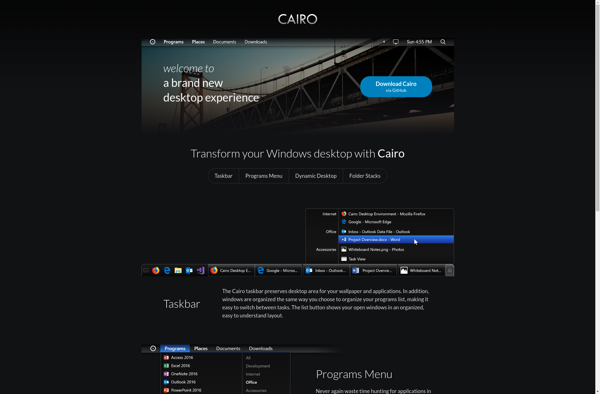
Cairo Shell is a desktop graphical shell designed for Linux operating systems. It aims to provide an intuitive yet powerful user interface for managing applications and files.Some key features of Cairo Shell include:A simple, clean interface with smooth scrolling animations and transparency effectsHighly customizable desktop with support for desktop widgets...
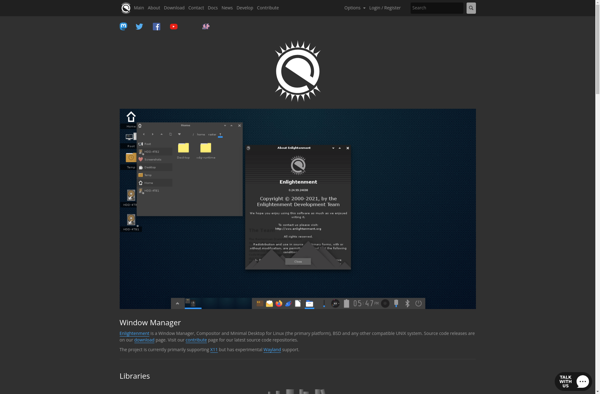
Enlightenment, also known simply as E, is an open source desktop environment and window manager project aimed at providing Linux and BSD users with a lightweight yet visually appealing graphical user interface. Some key highlights of Enlightenment include:Very lightweight and fast, ideal for older hardware or resource constrained environmentsHighly themeable...
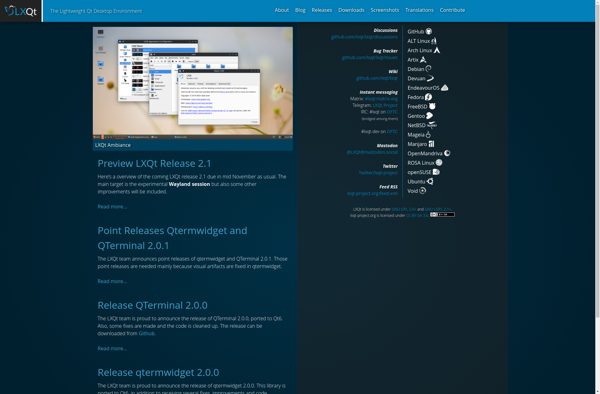
LXQt is a lightweight desktop environment for Linux and UNIX-like operating systems. It is designed to be highly modular and customizable while using relatively few system resources.Some key features of LXQt:Uses the Qt framework for its graphical user interface, allowing integration with Qt appsVery lightweight - ideal for older hardware...
LXDE (Lightweight X11 Desktop Environment) is an open source desktop environment for Linux and other Unix-like operating systems. It is designed to be lightweight, modular, and resource-friendly, making it a good choice for older or less powerful hardware.Some key features and characteristics of LXDE:Very low memory and CPU usage compared...
Cinnamon is a free and open-source desktop environment designed for the Linux operating system. Developed as part of the Mint Linux distribution, Cinnamon aims to provide an elegant and intuitive user experience.Some key features of Cinnamon include:Familiar graphical desktop metaphor interface, making it easy for users coming from Windows or...
EasyPeasy is an Ubuntu-based Linux distribution targeted at netbooks and other systems with relatively low-power hardware specifications. Some key features of EasyPeasy include:Lightweight UI optimized for netbook screensCustomized interface with large icons and easy access to key functionsBundled with popular applications like Firefox, VLC media player, OpenOffice, and moreCarefully tweaked...