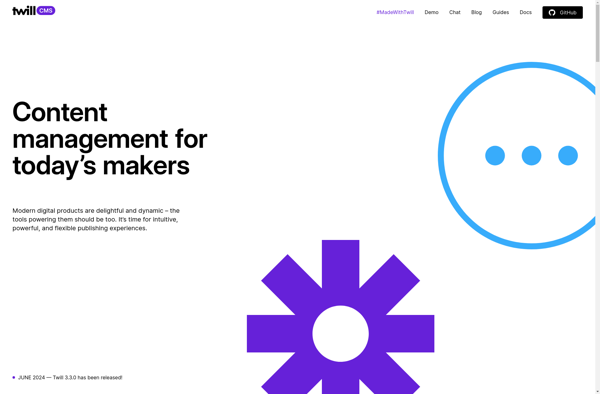
Twill is an open source CMS and framework for Laravel that allows developers to quickly build a custom CMS. It has a simple interface for managing content, users, files, navigation menus, and more out of the box.
Twill is an open source CMS and framework for Laravel that allows developers to quickly build a custom CMS, with features like simple content management, user and file management, navigation menu creation, and more out of the box.
What is Twill?
Twill is an open-source content management system (CMS) and framework built on top of the Laravel PHP framework. It allows developers to quickly scaffold a custom CMS and admin panel for managing content, without having to build everything from scratch.
Some key features of Twill include:
Simple interface for managing pages, posts, navigation menus, users, files, and more
Customizable templates and views using Blade and Vue.js
Modular CMS elements that can be enabled/disabled
Role-based user permissions
SEO-friendly URLs and sitemap
Media library with image cropping
Basic stats dashboard
Built-in authentication and authorization
API support for headless CMS implementations
Active development community
By building on Laravel and other modern PHP libraries like Vue.js, Twill aims to accelerate custom CMS development while handling all the standard functionality developers would otherwise need to build from scratch. It allows focusing effort on the custom/unique aspects of a project.
Twill Features
Features
Modular CMS architecture
Custom content types
User roles and permissions
WYSIWYG editor
Media library
SEO-friendly URLs
Multi-language support
Pricing
Open Source
Pros
Open source and free
Built on Laravel, so takes advantage of its features
Active community support
Extendable and customizable
Modern and intuitive UI
Cons
Less features than some commercial CMSs
Steeper learning curve than beginner-friendly CMSs
Requires technical expertise to customize and extend
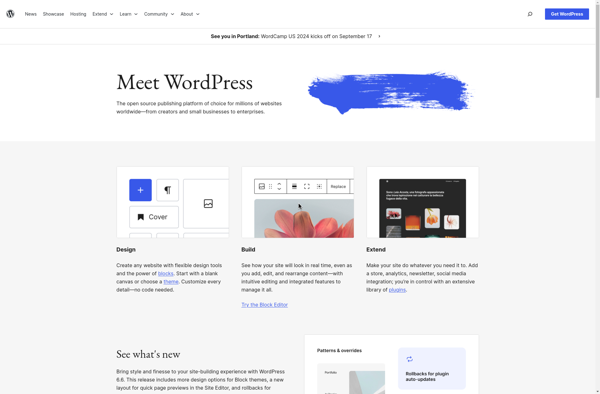
What Is WordPress?WordPress is the world's most popular content management system, powering over 40 percent of all websites on the internet. Originally created as a blogging platform in 2003, it has evolved into a full website builder and application framework used for everything from personal blogs to enterprise websites and...
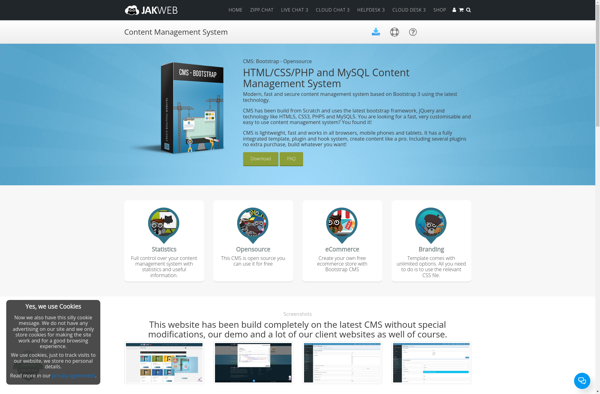
Bootstrap CMS is an open-source content management system built on the popular Bootstrap front-end framework. It provides a user-friendly administrative interface for managing website content without needing to know any code.Some key features of Bootstrap CMS include:Intuitive WYSIWYG content editor for easily creating and formatting content pagesDrag and drop widgets...
Lavalite is an open-source content management system and PHP framework designed to help developers and businesses build custom websites and web applications more efficiently. Some key features and benefits of Lavalite include:Lightweight and fast - Uses modern PHP techniques and optimized code to ensure maximum performance.Easy to customize - Modular...
Fork CMS is an open source content management system built with PHP. It provides a user-friendly interface and dashboard that allows non-technical users to easily manage webpages, blog posts, navigation menus, settings, and more.Some key features of Fork CMS include:Intuitive page and content management - Easily create new pages and...
Drupal is a free and open-source content management system (CMS) written in PHP. It allows users to easily create, manage, and publish content on websites. Some of the key features of Drupal include:Intuitive interface and workflow allows content editors to quickly create, review, edit, publish, and archive webpages with no...
Craft CMS is an open source content management system that provides a flexible and user-friendly platform for managing all aspects of a website. Some key features of Craft CMS include:Intuitive control panel that allows you to easily manage your content, users, assets, fields, and moreOut-of-the-box support for building custom content...
Pimcore is an open-source platform that combines multiple digital experience tools into one centralized system. Key features include:Content Management System (CMS) - Create, manage and publish web content with an intuitive interface. Includes built-in SEO and marketing tools.Digital Asset Management (DAM) - Organize, tag and find digital files like images,...
Adobe Experience Manager (AEM) is a comprehensive web content management system designed to help companies create, manage, and deliver engaging cross-channel customer experiences. Some key features of AEM include:Intuitive drag-and-drop page building and site administration interface for faster content delivery.Powerful digital asset management capabilities for managing images, videos, PDFs, and...
October CMS is an open-source content management system and web platform aimed at developers and digital agencies. It focuses on flexibility, extensibility and ease of use rather than imposing strict requirements on the developer.At its core, October provides a basic set of features including user authentication, account permissions, content workflows...
Winter CMS is an open-source content management system and web application platform based on the Laravel PHP framework. Released in 2014, Winter CMS provides developers and website builders with a robust, modular foundation for creating custom web applications and websites.Some key features of Winter CMS include:Modular plugin architecture - Plugins...
PyroCMS is an open source content management system (CMS) built with the PHP programming language and the CodeIgniter web application framework. It has an intuitive, module-based architecture that allows users to create feature-rich websites and applications without needing to know how to code.Some key features and benefits of PyroCMS include:Modular...